On this page
Search for SaaS link building services and the results promise everything except a spec sheet. Money-back guarantees, mystery networks, lists crowning the same sponsor. We sell in this market too, Technotize runs the practice that fills these orders, we put ourselves first below, and the second sentence of this page is that disclosure, so you can hold it against every claim that follows.
Here is what this page does differently from every list ranking beside it: it treats a service as a specification. A unit, a floor, a turnaround, a replacement policy, a published price where one exists. The providers below are sorted by the model they sell rather than the adjectives they use, each carries a verified track record with its source named, and the published terms across this market, from $30 marketplace links to five-figure retainers, are laid out with sources so you can see exactly which physics you are paying for.
01How we judged these services
A services page owes you sharper criteria than an agency page, because a service is a promise with numbers in it. Three things below: what separates a service from a retainer, the tests applied to every entry, and why the comparison runs on terms instead of logos.
A service is a spec, not a relationship
An agency retainer buys judgment plus hands and tolerates ambiguity; a link building service is supposed to be the opposite. Defined unit: what one delivered link means, where it sits, in what kind of content. Defined floor: the relevance and traffic standard a placement must clear. Defined turnaround and cadence. Defined failure handling: what happens when a link drops, and links do drop. Providers that publish those four lines are selling a service. Providers that answer all four with "it depends" are selling a retainer, which is fine, but it belongs on the agency ranking we published separately, and we sorted this market accordingly.
The tests, written for buyers
Every entry cleared four checks. Terms a buyer can read before a sales call, in public or on request without theater. Screening that survives an audit: real editorial standards, not a network with a rate card. SaaS relevance, because a placement your buyers never see is an invoice line, not an asset. And a record under the model they sell: named outcomes or published casework, attributed, because a spec without evidence is a brochure.
Why we compare terms, not logos
The lists ranking around this page run on award badges and adjectives, and at least two crown the same sponsor. Terms are harder to fake. A provider that publishes $2,500 for ten links has made a claim you can hold it to; a provider that promises "high-authority placements at competitive prices" has said nothing at all. So the table below leads with the model and the published floor, and where a provider prices only by conversation, it says that, plainly, which is itself information.
02The best SaaS link building services in 2026
The order tracks fit for a software company buying link building services for SaaS growth, with the seller of this page ranked first and disclosed as such. Content-led programs that earn links through publishing, the Siege Media model, live on the agency list; this table is for buying placements as a defined service.
| Provider | Model | Published terms | Verified track record (source) |
|---|---|---|---|
| Technotize | Managed editorial program | By scope; cadence 10 to 35 domains/month | Da Vinci: +244 refdomains in 11 mo, steady band (case page) |
| Growthner | Links inside an SEO + GEO program | By conversation, no fixed packages | SaaS and tech only, AI-citation targeting (third-party roundups, own site) |
| saaslinkbuilder | Pay-per-link specialist | Month-end billing, delivered links only | Fintech: 700 to 6,300 visits, 12 mo (cases via Founder Reports) |
| SaaSy Links | Network-scale editorial placements | By conversation | HeyReach: 6.8K to 26.3K visits on 60 links, 12 mo (own case page) |
| Scalerrs | Managed SaaS-only placements | Floor published (DR60+, 10K+ traffic); price by conversation | AutoRFP: 1.4K to 6.7K visits, 15 links in month one (own customer page) |
| Dofollow | Relationship placements | By conversation | Editor-relationship model, B2B SaaS only (Founder Reports) |
| uSERP | Premium placements | By conversation | Premium-tier placement record for funded brands (own materials) |
| Editorial.Link | Senior editorial batches | Published on site | Editorial placements on trafficked pages (own site) |
| Linkbuilder.io | Fully managed service | Published on site | Documented managed process (own site) |
| VH-Info | Packaged outreach + white-label | $2,500/month for 10 links, published | Case gains to 5,000%+ (cases via Founder Reports) |
| Fractl | PR campaign model | Per campaign | Journalist-cited campaign studies (own portfolio) |
| Above Apex | Subscription off-page | Published deliverables, daily monitoring | Replacement terms in writing (own site) |
Source named per claim: client-approved case pages, provider materials, or third-party reporting.
1. Technotize
 Technotizetechnotize.io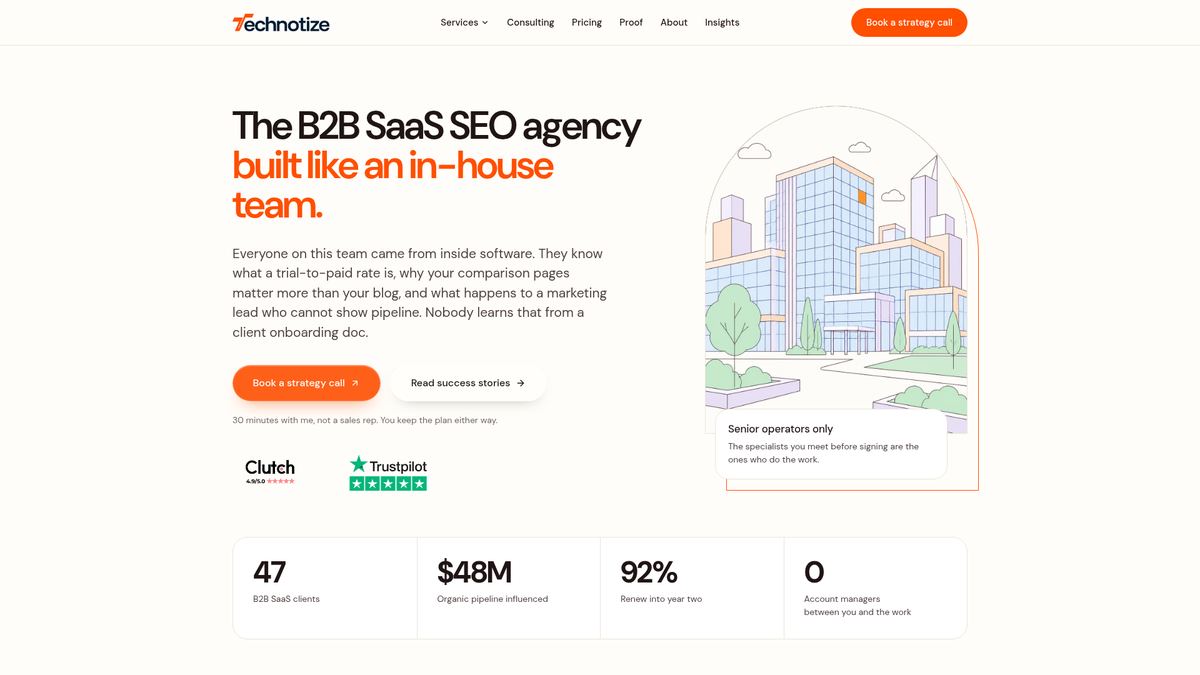
Our service is the managed editorial program: we map the pages a link should move, screen every prospect domain against relevance and traffic standards before outreach begins, and deliver placements as minimal edits inside content editors actually accept, at a cadence of 10 to 35 new referring domains a month depending on scope. Anchors stay boring on purpose; the current campaign runs zero exact-match. Two named engagements show the spec executed: Da Vinci's month-by-month curve and the Workwize compounding both close this page out with sources. Inside full B2B SaaS SEO programs the link work ships alongside the technical and content layers it depends on, which is why the two curves below carry pipeline numbers, not just link counts. Best for SaaS companies that want the spec and the strategy from one accountable team.
2. Growthner
 Growthnergrowthner.com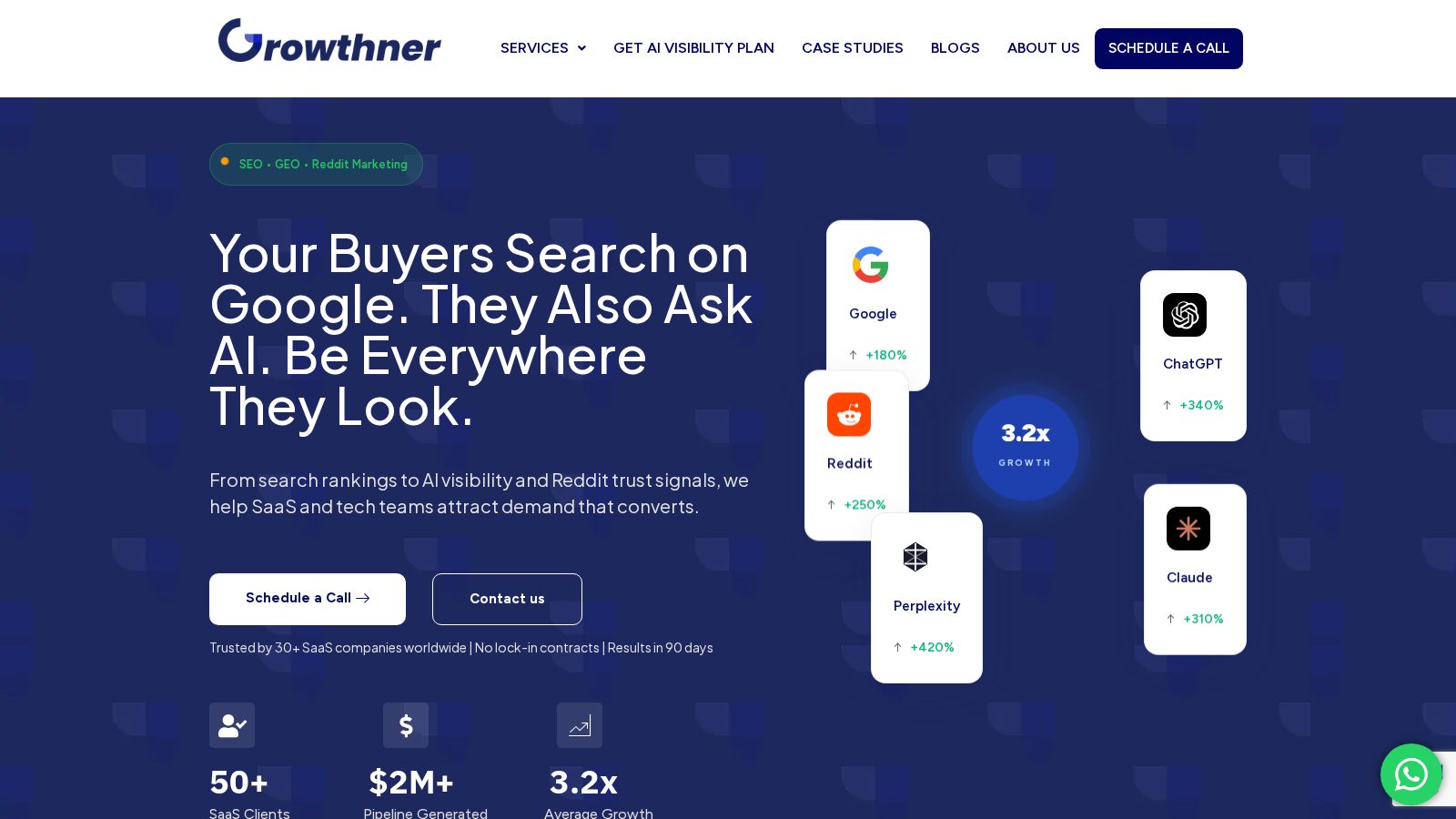
The AI-visibility entry. Growthner sells links as one layer of a B2B SaaS program that also carries technical SEO, GEO, and Reddit, so placements get briefed against two scoreboards: domains that rank, and domains the models cite when they answer. The screen is published, DA 50+ and ideally 80+, real traffic, genuine topical fit, with priority on the publications ChatGPT and Gemini pull from, and outreach is written per editor rather than templated at volume. Formats run to listicle features and brand mentions, and the shop takes white-label work for other agencies. Pricing runs by conversation with no fixed packages, which costs it points on this page's transparency standard, and the proof is thinner than the tiers above it: client counts differ across its own pages, and no dated month-by-month curve is published. Best for SaaS teams buying links against AI citations as well as rankings.
3. saaslinkbuilder
 saaslinkbuildersaaslinkbuilder.com
The cleanest pay-per-link spec in the market. Billing lands at month-end for delivered links only, no upfront retainer, each placement passes a fifteen-step screen, and dropped links get replaced under a one-year guarantee with weekly monitoring, terms documented in Founder Reports' June 2026 review. The model is SaaS-to-SaaS by design, heavy on the listicles and comparison pages buyers shortlist from, which pairs naturally with our niche edit standards as a discipline. Its published cases carry named curves, a fintech client from 700 to 6,300 monthly visits in a year among them, per Founder Reports. Best for teams that want per-unit accountability and the freedom to stop any month.
4. SaaSy Links
 SaaSy Linkssaasylinks.com
The network play, and the only provider here that publishes per-client AI citation counts alongside traffic. SaaSy Links sells editorial placements plus brand mentions across a stated 3,500-partner publisher network, which is a different physics from the relationship-led shops below it: breadth and speed rather than access to publications a rate card cannot reach. Terms run by conversation, which costs it points on this page's transparency standard. What it publishes instead is unusually deep casework: HeyReach from 6,800 to 26,300 monthly visits on 60 placements across 12 months, with 34 ChatGPT and 58 Perplexity citations logged against the same window, and client relationships running 37 and 51 months on its own case pages. Retention at that length is the hardest thing in this market to fake. Best for SaaS teams that want placement volume across a wide network and reporting that already covers the second scoreboard.
5. Scalerrs
 Scalerrsscalerrs.co
The published-floor play from the SaaS-only end of the market: Scalerrs states its placement standard on its own site in checkable terms, DR60+ domains with 10,000-plus monthly visits and real editorial policies, verified in Ahrefs, with placements confined to SaaS and B2B publications and negotiated into the main content rather than footers or sidebars. Clients approve targets before outreach and review every placement, and reporting runs weekly with AI search visibility tracked next to rankings, because the links are built to register on both scoreboards. Price runs by conversation, a fixed monthly line with pause-or-cancel terms per its own materials, which costs it points on this page's transparency standard even though the quality floor is public. Its named link-building casework is specific: Qwilr at 330 percent organic growth, AutoRFP from 1,412 to 6,710 monthly visits with 15 links built in the first month, Qrvey at 400 percent organic click growth, all on its own customer pages. Best for SaaS teams that want a published quality floor and full placement visibility, buying links as one layer of an AI search program.
6. Dofollow
 Dofollowdofollow.io
A single-service shop for B2B SaaS: links, nothing else, placed through standing editor relationships rather than cold volume, per Founder Reports' profile. Pricing runs by conversation, which costs it points on this page's transparency standard, and the relationship model is the reason buyers accept that trade: placements come from publications a rate card cannot reach. Best for companies with strategy in-house that want one specialist owning the placement pipeline.
7. uSERP
 uSERPuserp.io
The premium unit. uSERP sells placements at the authority tier most services never touch, priced accordingly and by conversation, for funded software brands whose categories ignore mid-tier links entirely. As a service purchase it is the least spec-like entry here, closer to buying access than buying units, and that is precisely its value. Best for brands in brutal categories where only the expensive shelf moves rankings.
8. Editorial.Link
 Editorial.Linkeditorial.link
Small senior team, manual editorial placements, published pricing on its own site, and batch sizes deliberately kept low so quality survives, a spec that reads like the opposite of a marketplace. Its own roundup of this market ranks on this exact search, so weigh its self-interest exactly as you weigh ours. Best for buyers who want a handful of durable links a month and terms they can read before the call.
9. Linkbuilder.io
 Linkbuilder.iolinkbuilder.io
The fully managed service with the market's most public paper trail: pricing published, process documented, and a pricing guide that itself ranks on this search result. Manual outreach with AI-assisted prospecting keeps volume up without letting the floor drop, and the hands-off design means the client's job is approving targets, not running campaigns. Best for SaaS teams with no in-house SEO who want the whole function delegated with terms in writing.
10. VH-Info
 VH-Infovh-info.com
The published-package play: $2,500 a month for 10 links, on the site, scaling by tier, with white label SaaS link building available for agencies, terms confirmed in both its own materials and Founder Reports' review. Manual white-hat outreach since 2022, with published case ranges reaching quadruple-digit percentage traffic gains at the top end, per the same review. Best for buyers who want the price before the pitch and a package they can budget in one line.
11. Fractl
 Fractlfrac.tl
The campaign model: original research and data studies built to earn journalist coverage, priced per campaign rather than per link, with outcomes measured in placements no outreach email could buy. It is the slowest and most front-loaded purchase on this page, and the one whose links age best. Best for brands buying press-grade authority and patient enough for the compounding.
12. Above Apex
 Above Apexaboveapex.com
The subscription spec: SaaS-exclusive off-page with published deliverables, daily link monitoring, and permanent placements backed by written replacement terms on its site, plus brand mentions folded into the same subscription. The subscription framing is the differentiator: off-page as a fixed line item with its failure handling written down. Best for teams with content handled internally that want off-page as a predictable monthly line item.
03How to choose a SaaS link building service
Credible specs still leave the matching problem, so here is the buyer's side of the table: the six lines every quote should contain, the outsourcing math, and the fine print that ends evaluations.
The six-line spec every service should publish
Before money moves, get six lines in writing. Unit definition: what counts as delivered. Quality floor: the relevance and traffic standard a domain must clear, stated in checkable terms. Cadence: units per month, and what happens to billing when a month runs short. Content ownership: who writes the surrounding copy and who approves it. Replacement policy: the window and the trigger. And reporting: where each placement lives, verified how, delivered when. Providers that publish these six lines welcome scrutiny of what real outreach involves; providers that dodge them are quoting a mystery.
When to outsource SaaS link building
The build-or-buy math is blunter than most posts admit. A legitimate placement consumes prospecting across dozens of rejected domains, copy good enough for an editor to run, and negotiation hours, call it a workday or more per link, all-in, for someone who already knows the motion. If your team can spend that and wants the relationships as an asset, build. If your growth model needs 10 to 35 new referring domains a month starting now, outsource SaaS link building to a provider whose spec you can audit, and keep strategy in-house so the service stays a tool instead of becoming the plan. The wrong reason to outsource is price; the right reason is cadence you cannot staff.
Red lines in service fine print
Money-back guarantees tied to rankings or authority scores, which advertise desperation and predict churn-and-burn tactics. Sites offered from a list before anyone asked about your buyers, which is inventory introducing itself. Per-link prices in the tens of dollars, arithmetic that only works when screening and content are skipped. Replacement policies that exist verbally but not in the contract. And guest posting sold at volume with no named publications, the oldest costume in the market, worth checking against guest posting programs done with editorial standards before you sign anything.
04What SaaS link building services cost
This market finally publishes enough pricing to map it honestly, so the numbers below are provider-published or independently compiled, with sources named, and our own economics alongside.
Cost per link, by model
The unit price follows the model. Marketplace inventory runs $30 to a few hundred per link across compiled provider pricing, with screening left to you, which is where the real cost hides. Productized pay-per-link tiers cluster from roughly $170 to $600 all-in, the band where published SaaS packages actually sit once screening and content are inside, per provider-published pricing compiled in recent market reviews. Managed programs price monthly, $2,000 to $15,000 across the market's published and reviewed range depending on cadence and tier. Campaign models price per asset, front-loaded, with the per-link math only visible in hindsight. Same word, four different purchases.
The floors providers publish
The checkable points, all attributed: VH-Info posts $2,500 a month for 10 links on its own site. Provider tiers compiled in independent reviews this year include packages at $1,250 for five links and roughly $170 to $250 per placement at the productized end. Editorial.Link and Linkbuilder.io both publish pricing on their sites. At the program end, reviewed retainers for SaaS-focused providers start around five figures monthly. Published floors do a quiet second job: they tell you which providers expect to be compared, and comparison is exactly what a buyer wants sellers to fear.
How to read a link building quote
Take any quote and ask what fraction survives contact with a real editorial process. A defensible unit price divides into prospecting labor across mostly rejected domains, content an editor accepts, placement negotiation, and monitoring overhead. Quotes far below the published band skipped a step, usually screening. Quotes far above it should itemize what the premium buys, tier of publication, content depth, exclusivity, or they are charging for the logo. And any quote is incomplete without the six-line spec above attached; a price without a spec is a number, not an offer.
05What link services feed now: Google and the answer engines
The quiet upgrade to this whole market is that placements now report to two systems, and the second one is pickier about the same things the first always rewarded.
One placement, two scoreboards
Backlinko's ranking-factor analysis found the top Google result holding almost four times the backlinks of everything beneath it, and that arithmetic has not moved. What moved is the second payoff: the AI assistants buyers now consult cite the outlets that earned their authority the same way, a point a16z's note on where search moved makes from the investor side, links were the old engine's currency and the new engines still read them. In our client tracking, AI citations arrived on the far side of the referring-domain curve, never ahead of it, and the GEO versus SEO breakdown documents that ordering. The market implication for a services buyer: the same boring editorial placement now compounds on two surfaces, while Google's link spam rules discount the shortcuts on both. That is a repricing in favor of the legitimate end of the table above, and the agencies selling AI visibility mostly stand on exactly this layer.
Cadence, the part services get wrong
Bought links tend to arrive the way they were bought: in lumps. Lumpy profiles read as transactions to any system studying patterns, and every system studying links studies patterns. The spec to demand is monthly cadence with a band, not a quarterly dump, and the discipline to hold it, because a profile that grows a little every month for a year is telling a story inventory cannot fake. It is also, not coincidentally, how the two engagements below were run.
06Receipts from the model we sell
We asked every provider above for terms you can check, so here are ours executed: two named clients, month-by-month sourcing, client sign-off.
Da Vinci: 20 to 35 domains a month, on schedule
Eleven months, 113 to 357 referring domains, held inside a 20-to-35-per-month band the entire run, which is the cadence chapter above turned into a chart. Organic multiplied 25 times over the same window, with AI citations showing up only after the authority did, in that order. Da Vinci's referring-domain curve publishes the monthly numbers with their sources.
Workwize: what compounding looks like at month 22
The long version of the same spec: 130 to 1,413 referring domains across 22 months, with organic becoming the company's leading pipeline source and inbound peaking at $1.16M a month. No month in that run would impress a volume seller; the sum embarrassed every alternative channel. The Workwize numbers sit on the case page, month by month, client-approved.
07FAQ
What is the best SaaS link building service?
It depends on which model your gap calls for: a managed program when you need strategy and delivery together, a pay-per-link specialist when you want unit accountability, a PR campaign when you need press-grade authority, a marketplace almost never. The best SaaS link building service for you is the one whose six-line spec, unit, floor, cadence, content, replacement, reporting, survives being read.
How much do SaaS link building services cost?
Published and reviewed pricing clusters at $170 to $600 per link at the productized end, $2,000 to $15,000 a month for managed programs, and per-campaign pricing for PR models. Marketplace links from $30 exist and are the most expensive option on the page once cleanup is priced in.
What's the difference between a link building service and an agency?
A service is a defined spec: unit, floor, cadence, replacement, price. An agency is a relationship that includes judgment, strategy, and hands, priced as a retainer. Buy the service when strategy lives in-house; buy the agency when it does not; never pay retainer prices for a spec sheet.
Are pay-per-link services safe?
The model is fine; the floor decides. Pay-per-link with real screening, editorial placements, and a replacement policy is the most accountable purchase in this market. Pay-per-link from inventory, at prices that cannot include screening, is how profiles end up needing the cleanup work that costs more than the links did.
Do links still matter for AI search visibility?
Yes, indirectly and stubbornly: the sources AI assistants cite skew toward domains with earned authority, and in our client data citations followed the referring-domain curve rather than preceding it. The placements a legitimate service delivers now work two scoreboards, which is the best argument for buying the boring kind.