
Da Vinci Case Study: 157 Placements, 25x Organic Growth
Da Vinci sells cloud warehouse management software to third-party logistics companies. Eleven months, starting near 100 visits a month. The contract was twelve pieces and twenty placements a month, and this page shows what was delivered against it.








'%3e%3cpath%20d='M148.2,46.557a8.907,8.907,0,0,1-9.087-9.146,9.059,9.059,0,1,1,18.118,0,8.9,8.9,0,0,1-9.031,9.146m9.031-23.812v4.2a12.8,12.8,0,0,0-10.295-4.889c-8.284,0-14.438,6.615-14.438,15.357s6.154,15.358,14.438,15.358a12.8,12.8,0,0,0,10.295-4.889v4.2h6.442V22.745Z'%20transform='translate(-90.069%20-11.701)'%20fill='%230E0E13'%20fill-rule='evenodd'/%3e%3cpath%20d='M200.531,52.769c6.845,0,12.252-3.336,12.252-9.433,0-6.384-5.868-7.88-10.584-8.915-3.566-.806-6.384-1.5-6.384-3.8,0-2.013,2.358-2.991,5.234-2.991A11.6,11.6,0,0,1,208.7,30.51l3.394-4.545a17.333,17.333,0,0,0-11.159-3.911c-6.326,0-11.675,2.992-11.675,9.031,0,6.442,5.924,7.937,10.641,9.03,3.451.8,6.326,1.554,6.326,3.854,0,2.07-2.53,3.221-5.809,3.221a12.29,12.29,0,0,1-8.742-3.451l-3.337,4.544a18.093,18.093,0,0,0,12.194,4.486'%20transform='translate(-90.069%20-11.701)'%20fill='%230E0E13'%20fill-rule='evenodd'/%3e%3cpath%20d='M184.607,45.637h-5.513a2.776,2.776,0,0,1-2.769-2.769V28.612h4.049a4.245,4.245,0,0,0,4.233-4.233V22.745h-8.282V15.153h-6.442V42.868a9.237,9.237,0,0,0,9.211,9.211h5.513Z'%20transform='translate(-90.069%20-11.701)'%20fill='%230E0E13'%20fill-rule='evenodd'/%3e%3cpath%20d='M214.033,22.745,226,50.486l.409.947L224.9,54.88l-3.47,7.933h6.556l1.328-3.039L233,51.344l12.506-28.6h-6.556l-4.153,9.5-4.666,10.671-.426.973-.789-1.831-6.509-15.086-1.823-4.224Z'%20transform='translate(-90.069%20-11.701)'%20fill='%230E0E13'%20fill-rule='evenodd'/%3e%3cpath%20d='M123.415,38.393l-.113.236c.038-.078.076-.157.113-.236m.694-1.8c-.027.087-.054.173-.083.259.029-.086.056-.172.083-.259M110.891,52.769c-11.848,0-20.822-8.857-20.822-20.533S99.043,11.7,110.891,11.7a20.532,20.532,0,0,1,18.132,10.066l-6.031,3.482.06.11a13.884,13.884,0,0,0-25.965,6.877,13.883,13.883,0,0,0,25.966,6.874l-.061.112,6.031,3.482a20.53,20.53,0,0,1-18.132,10.065'%20transform='translate(-90.069%20-11.701)'%20fill='%230E0E13'%20fill-rule='evenodd'/%3e%3c/g%3e%3cpath%20d='M3.4,28.812a3.4,3.4,0,1,1-3.4,3.4,3.4,3.4,0,0,1,3.4-3.4'%20fill='%230E0E13'%20fill-rule='evenodd'/%3e%3cpath%20d='M71.258,32.181v24.15a8.054,8.054,0,0,1-8.031,8.03h0a8.054,8.054,0,0,1-8.031-8.03V32.237l0-.056,0-.055v-.1A8.055,8.055,0,0,1,63.227,24h0a8.055,8.055,0,0,1,8.031,8.031v.15Z'%20fill='%230E0E13'%20fill-rule='evenodd'/%3e%3cpath%20d='M63.227,0h0a8.054,8.054,0,0,1,8.03,8.031V32.125a8.055,8.055,0,0,1-8.03,8.031h0A8.055,8.055,0,0,1,55.2,32.125V8.031A8.055,8.055,0,0,1,63.227,0'%20fill='%230E0E13'%20fill-rule='evenodd'/%3e%3cpath%20d='M40.526,9.508h0a8.055,8.055,0,0,1,11.357,0L68.921,26.545a8.055,8.055,0,0,1,0,11.357h0a8.054,8.054,0,0,1-11.357,0L40.526,20.865a8.055,8.055,0,0,1,0-11.357'%20fill='%230E0E13'%20fill-rule='evenodd'/%3e%3cpath%20d='M68.941,26.526a8.055,8.055,0,0,1,0,11.357L51.9,54.92a8.055,8.055,0,0,1-11.357,0h0a8.053,8.053,0,0,1,0-11.356L57.583,26.526a8.054,8.054,0,0,1,11.358,0'%20fill='%230E0E13'%20fill-rule='evenodd'/%3e%3cpath%20d='M69.223,37.585l-.017.019-.122.131-.144.148-.02.019a8.055,8.055,0,0,1-11.357,0l-5.677-5.678,5.7-5.7a8.053,8.053,0,0,1,10.88-.439l.459.458a8.062,8.062,0,0,1,.3,11.04'%20fill='%230E0E13'%20fill-rule='evenodd'/%3e%3cpath%20d='M34.076,25.835A6.378,6.378,0,1,1,27.7,32.213a6.379,6.379,0,0,1,6.378-6.378'%20fill='%230E0E13'%20fill-rule='evenodd'/%3e%3cpath%20d='M17.249,27.207a5.007,5.007,0,1,1-5.006,5.007,5.006,5.006,0,0,1,5.006-5.007'%20fill='%230E0E13'%20fill-rule='evenodd'/%3e%3c/svg%3e)

Eleven months, and what they produced.
A full program: technical work, content and links, on a site starting from almost nothing.
Authority
The base had to move before anything else could.
Visibility
Rankings widened first, then traffic followed.
Demand
And it held after the last invoice.
Authority and traffic numbers from Ahrefs, delivery numbers from the monthly record. All case studies
A full program on a site starting from nothing.
What was contracted, so the delivery can be checked against it.
- Client
- Da Vinci
- Domain
- dvunified.com
- Sector
- Cloud warehouse management for 3PLs
- Scope
- Technical SEO, content, editorial links
- Period
- November 2024 to October 2025
The contract said twelve new articles a month at 1,500 to 2,000 words, four updates, and twenty placements at DR 50 to 80, with a weekly email and a review call every two weeks.
Seven consecutive months met or beat the placement rate. The eighth did not, and it is on the chart below.
Three moves, in order.
A site at DR 19 cannot skip to the third one.
Move 01A base that could hold rankings
The site started near 100 visits a month at DR 19. Before anything could rank, the crawl, the templates and the internal links had to stop working against each other.
Move 02Content for the searches buyers make
Twelve new pieces a month at 1,500 to 2,000 words, plus four updates, aimed at the phrases a 3PL uses when it is choosing a warehouse management system.
Move 03Links at the contracted rate
The contract said twenty placements a month at DR 50 to 80. Seven of the eight months met or beat it. July delivered sixteen, and the chart says so.
157 placements, and the months that missed.
The record as it was delivered, not as it would look tidied up.
What moved, and when it moved.
Five datasets, each with the screenshot it came from.
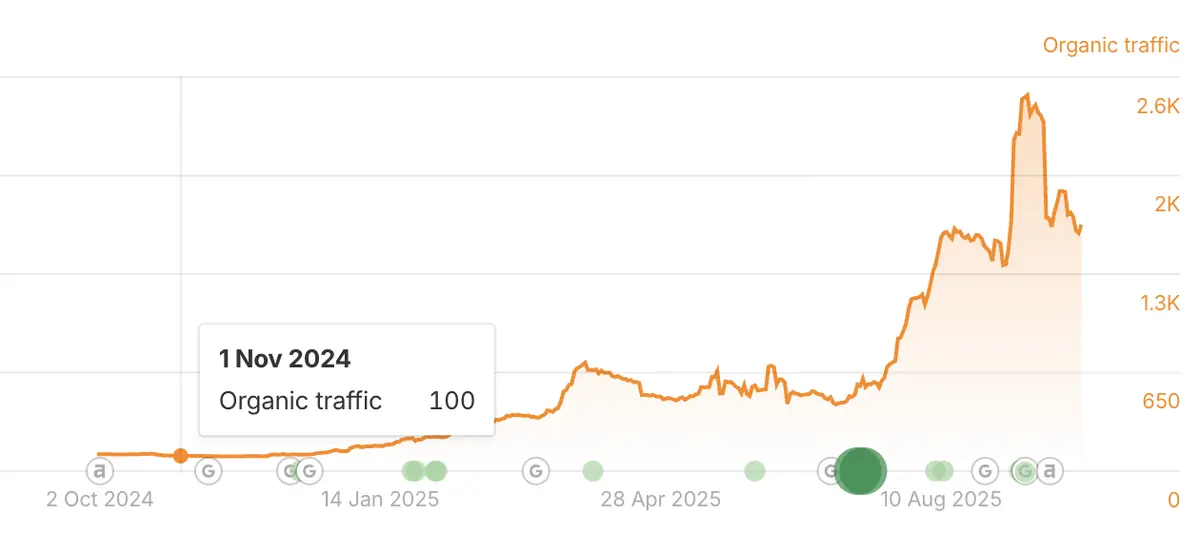
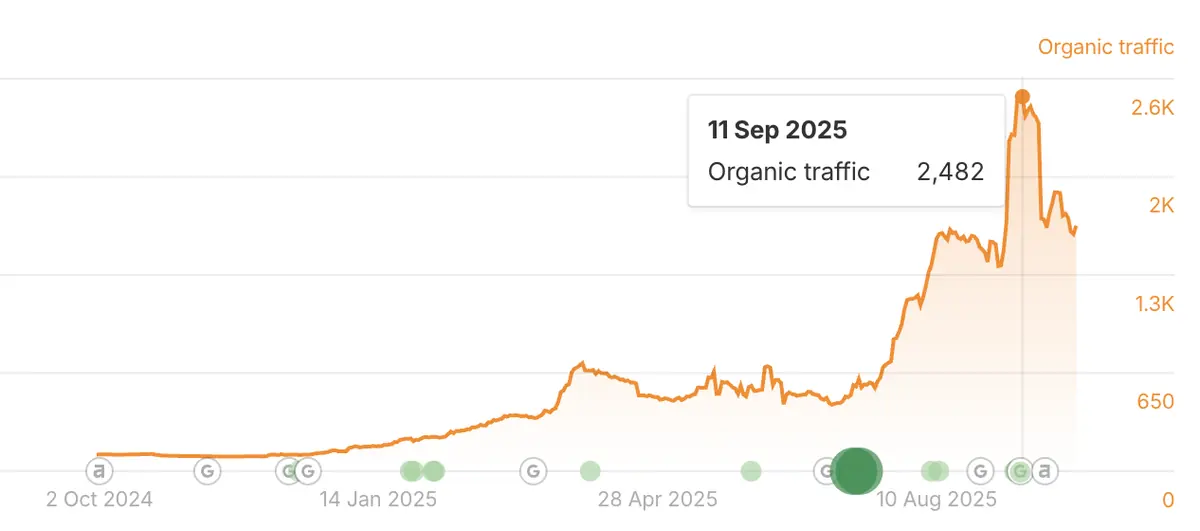
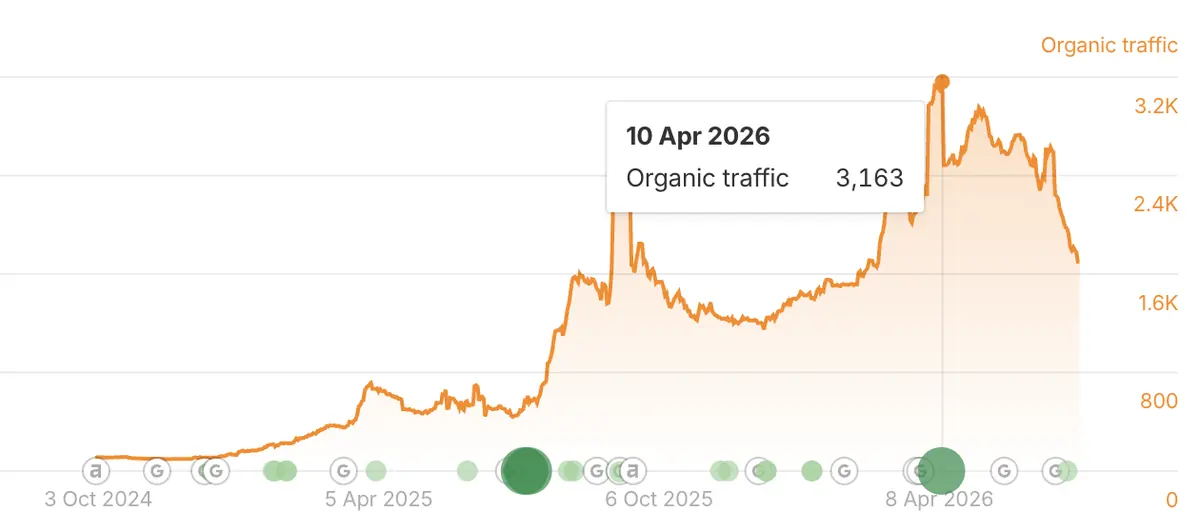
Organic trafficAbout 100 to 2,482 visits a month.
Eleven months, from roughly 100 visits a month to 2,482 on 11 September 2025. That is the 25x this page is named after.
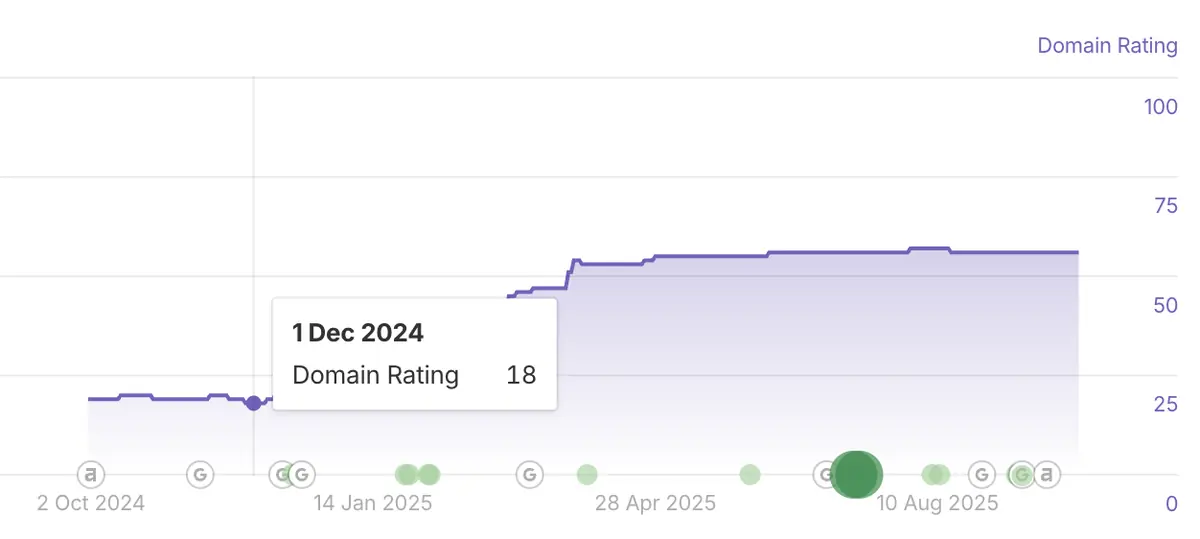
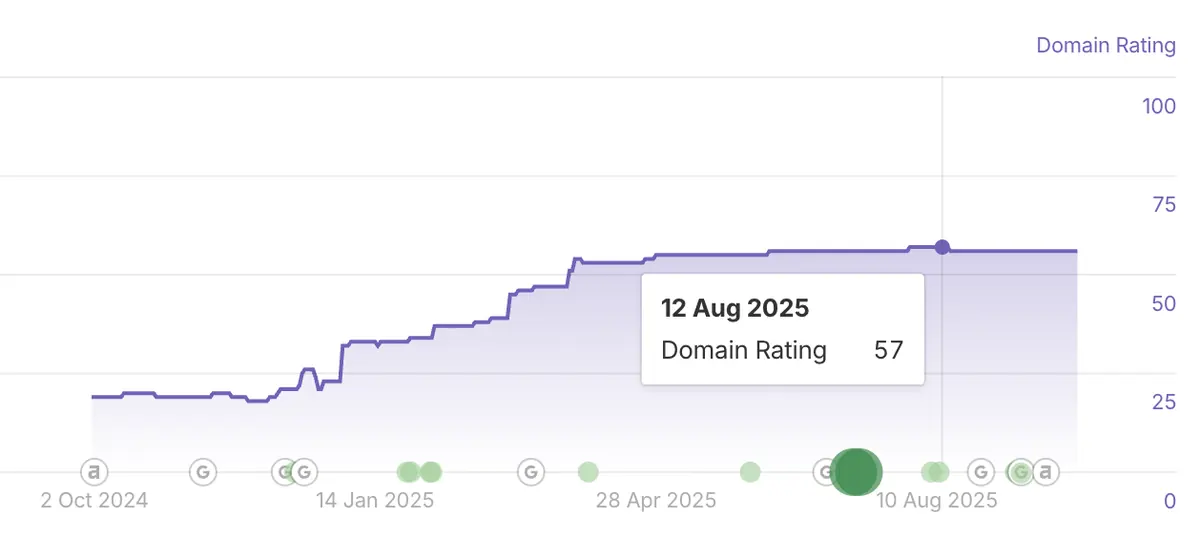
Domain ratingDR 19 to 55.
Domain rating rose from 19 to 55 across the engagement, with a peak of 57 in August 2025. On 18 September 2026, a year after the program ended, Ahrefs showed DR 52.
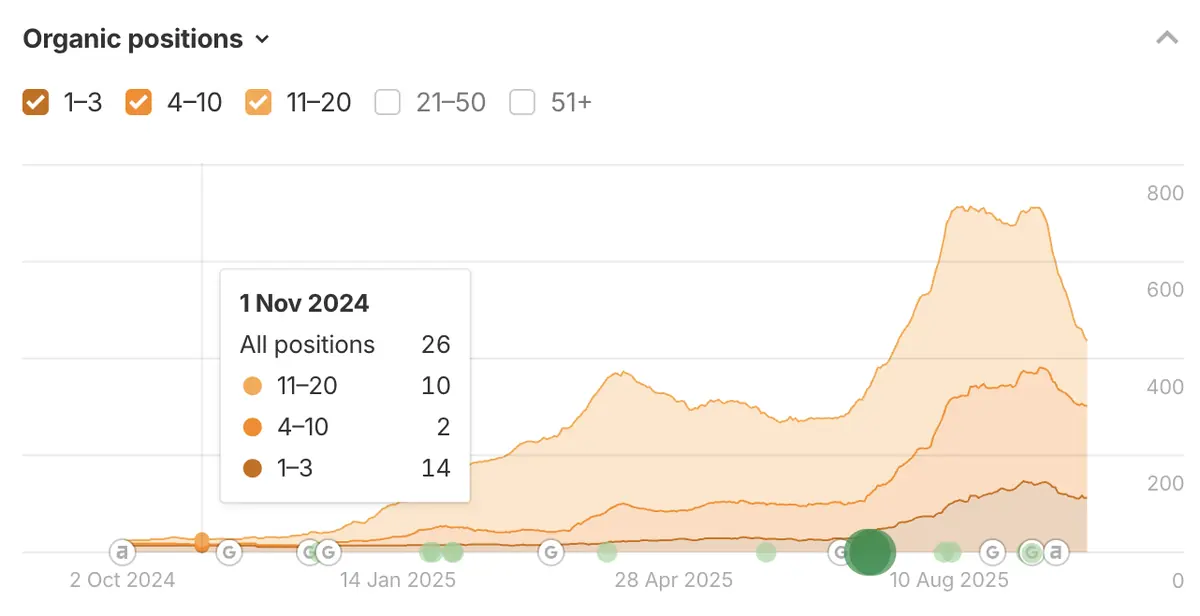
Rankings26 to 712 keywords in the top 20.
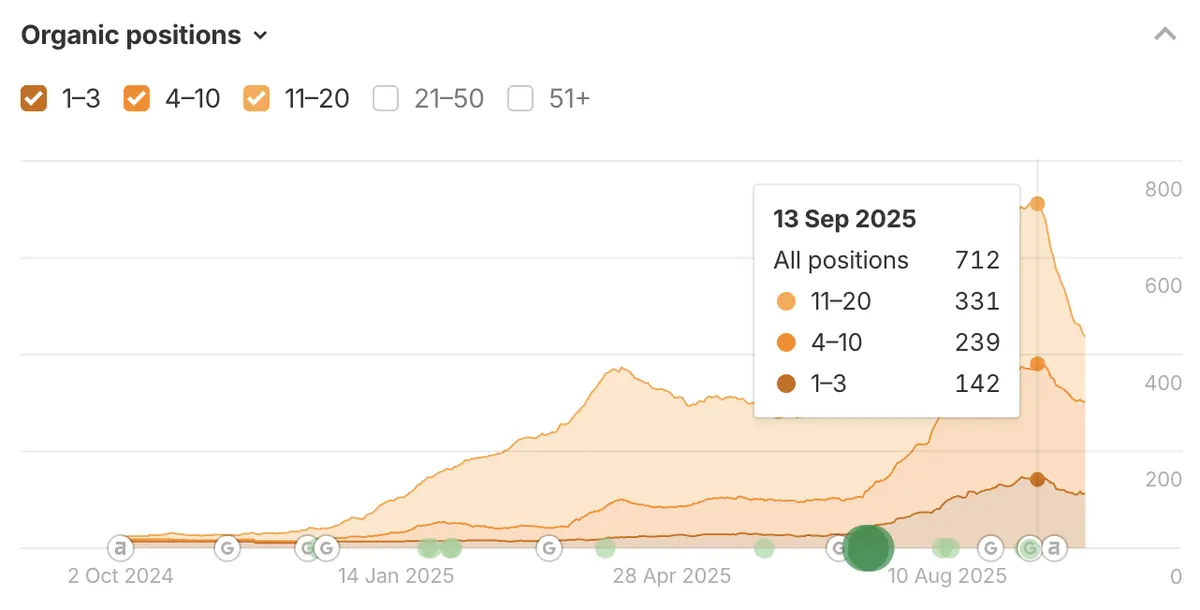
Top-20 keywords widened from 26 to 712 by September 2025, and top-3 rankings went from 14 to 142 over the same period.
AI citations74 citations across six assistants.
Measured with Ahrefs in July 2026, nine months after the last invoice. Most competitors in this category have none.
After the last invoiceIt kept climbing.
Monthly organic traffic peaked at 3,163 in April 2026, twenty-seven percent above the highest month during the engagement. Traffic has come down since: Ahrefs estimated about 1,523 a month on 18 September 2026.
In their words.
On the record, from the CEO.
Technotize built us an organic channel we did not have. Eleven months in, we were ranking for the searches our buyers actually make, and the traffic kept climbing after the engagement ended.
'%20d='M87.574%2073.023C130.316%2097.902%20181.703%2091.996%20181.703%2091.996C181.703%2091.996%20163.793%2045.754%20121.051%2020.875C78.313-4%2026.926%201.902%2026.926%201.902C26.926%201.902%2044.836%2048.145%2087.574%2073.023Z'/%3e%3cpath%20fill='url(%23f3)'%20d='M87.574%20110.969C130.316%2086.09%20181.703%2091.996%20181.703%2091.996C181.703%2091.996%20163.793%20138.234%20121.051%20163.113C78.313%20187.992%2026.926%20182.086%2026.926%20182.086C26.926%20182.086%2044.836%20135.844%2087.574%20110.969Z'/%3e%3cpath%20fill='url(%23f2)'%20d='M91%2061.438C141.094%2061.438%20181.703%2091.996%20181.703%2091.996C181.703%2091.996%20141.094%20122.555%2091%20122.555C40.906%20122.555%200.297%2091.996%200.297%2091.996C0.297%2091.996%2040.906%2061.438%2091%2061.438Z'/%3e%3cg%20clip-path='url(%23fm)'%20fill='%23FFFFFF'%20fill-opacity='.55'%3e%3cpath%20d='M87.574%2073.023C130.316%2097.902%20181.703%2091.996%20181.703%2091.996C181.703%2091.996%20163.793%2045.754%20121.051%2020.875C78.313-4%2026.926%201.902%2026.926%201.902C26.926%201.902%2044.836%2048.145%2087.574%2073.023Z'/%3e%3cpath%20d='M87.574%20110.969C130.316%2086.09%20181.703%2091.996%20181.703%2091.996C181.703%2091.996%20163.793%20138.234%20121.051%20163.113C78.313%20187.992%2026.926%20182.086%2026.926%20182.086C26.926%20182.086%2044.836%20135.844%2087.574%20110.969Z'/%3e%3c/g%3e%3c/svg%3e)
Want the next case study to have your name on it?
Tell us where your program stands today. You hear what we see, how long the honest version takes, and what it costs.
Or email Rizwan