On this page
Profound is the fastest story in marketing software right now. Thousands of people search for its ARR growth and its Series B funding every month, and most of what they find is recycled press releases. This page is the version with sources: the full funding timeline verified against the original coverage, the honest answer on ARR (including the part nobody else will say plainly), and what the money pouring into AI search optimization actually means for a company like yours.
One thing before the numbers. We are an SEO agency that runs AI search optimization as a service, which makes Profound something between a neighbor and a competitor. We think that makes this analysis more useful, not less, because we work the same problem from the other side of the tool-versus-service line. You will get our read on where that line sits, and you can weigh it knowing where we stand.
01The short version
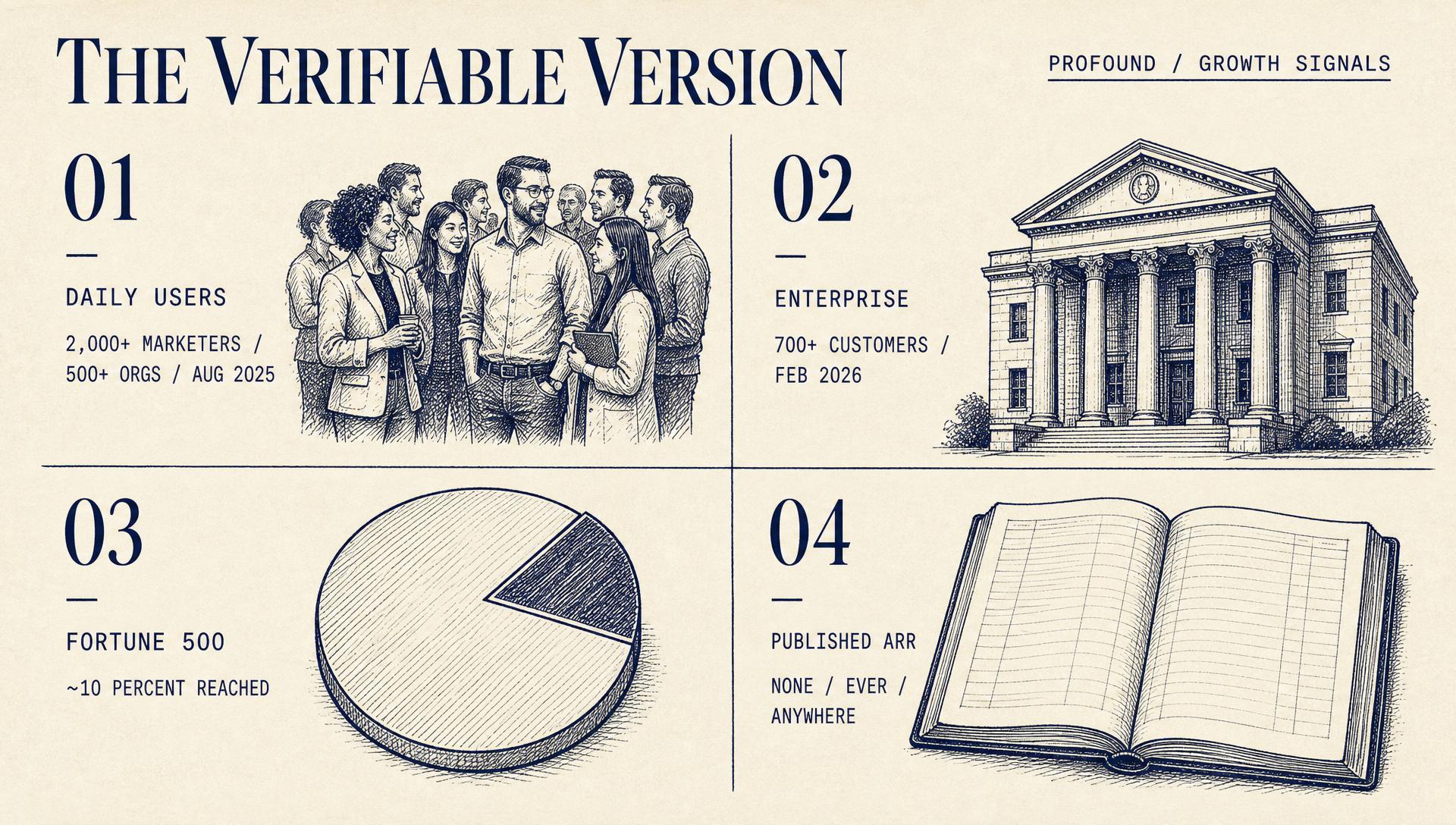
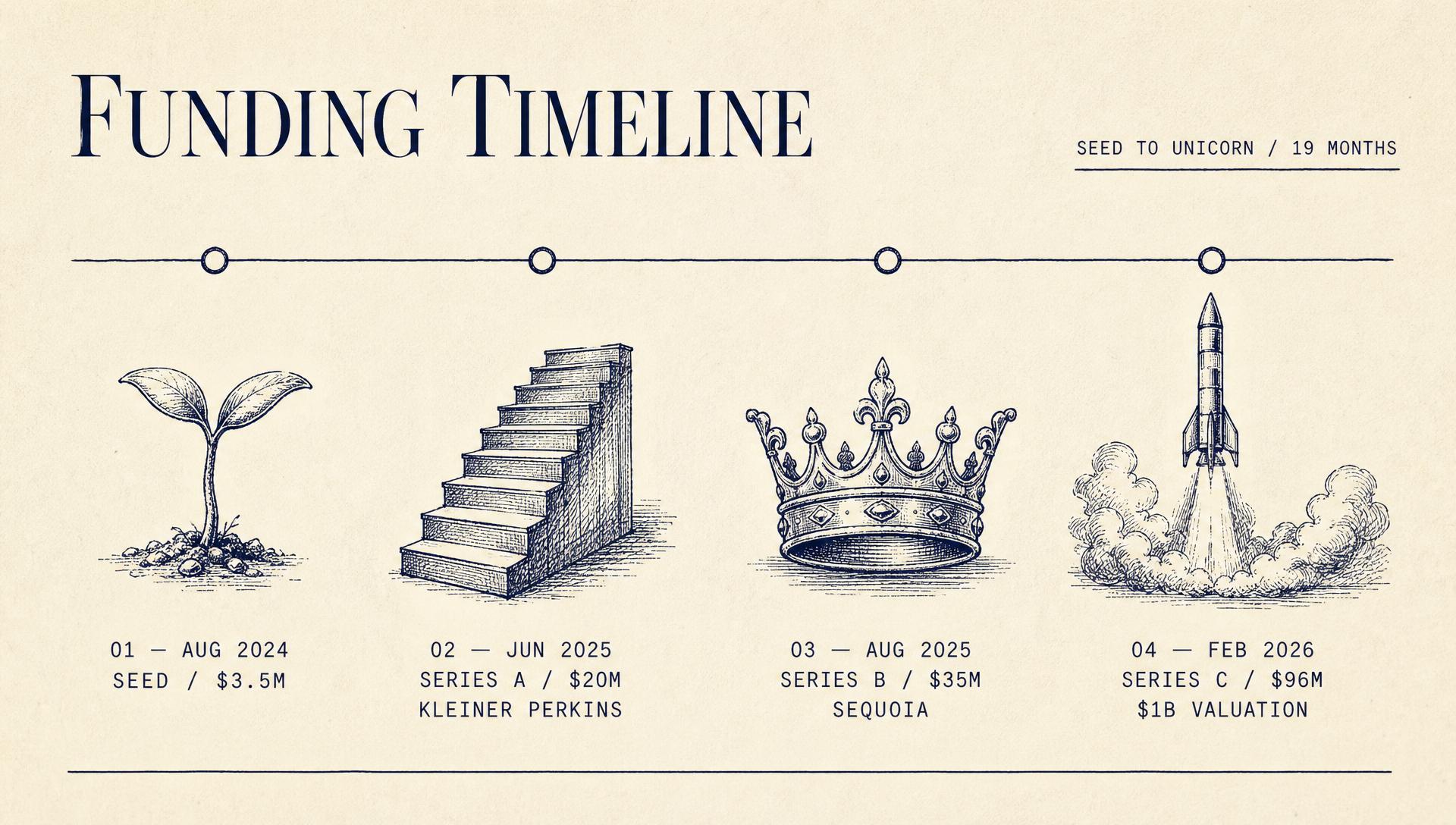
If you came for the facts, here they are, each one sourced further down. Profound, founded in New York in August 2024 by James Cadwallader and Dylan Babbs, raised a $3.5M seed at launch, a $20M Series A led by Kleiner Perkins in June 2025, a $35M Series B led by Sequoia in August 2025, and a $96M Series C led by Lightspeed in February 2026 at a $1 billion valuation. Total raised: $155 million. Customer base at the Series C: more than 700 enterprise customers including roughly 10 percent of the Fortune 500. Published ARR: none, anywhere, ever. Everything below is the analysis those facts deserve.
02Profound's ARR growth, what can actually be verified
The single most searched question about Profound is also the one with no public answer. Profound has never disclosed ARR. The Series B and Series C coverage in Fortune, Adweek, and the trade press cites customer counts and valuation, never revenue. PitchBook's profile shows the funding history in full and a blank where revenue should be. When a number is this absent from this much coverage, the absence is the fact: as of July 2026, any specific ARR figure you see attached to Profound is somebody's estimate wearing a suit.
What can be verified is the shape of the growth, and the shape is steep. At the Series B in August 2025, the company reported more than 2,000 marketers across 500-plus organizations using the platform daily, less than a year after launch. By the Series C in February 2026, Fortune reported more than 700 enterprise customers and roughly 10 percent of the Fortune 500, on a team of fewer than 120 people. The named logos moved upmarket fast: Ramp, US Bank, Indeed, MongoDB, DocuSign, and Chime at the B; Target, Walmart, and Figma added by the C. And the revenue anecdotes that did leak are specific: Adweek reported that Airbyte tripled its ChatGPT visibility in a week and converted it into a six-figure customer.
Here is the honest read. A company does not go from a $58.5M total raise to a $1 billion valuation in six months unless investors saw revenue momentum that justified it, and Sequoia then Lightspeed both re-priced upward with full access to the books. The growth is real. The specific number is not public, and a page that respects your intelligence says so instead of inventing one.
03The Series B funding round, and the rounds around it
The Series B is the round that put Profound on every marketer's radar, so it deserves the detail. On August 12, 2025, Profound announced a $35 million Series B led by Sequoia, with continued participation from Kleiner Perkins, Khosla Ventures, Saga VC, and South Park Commons, bringing total funding to $58.5 million. Fortune's coverage framed it as one of the more aggressive early bets on answer engine optimization, and Cadwallader described the shift away from classic SEO as a "Game of Thrones power shift". Sequoia partner Anas Biad joined the board.
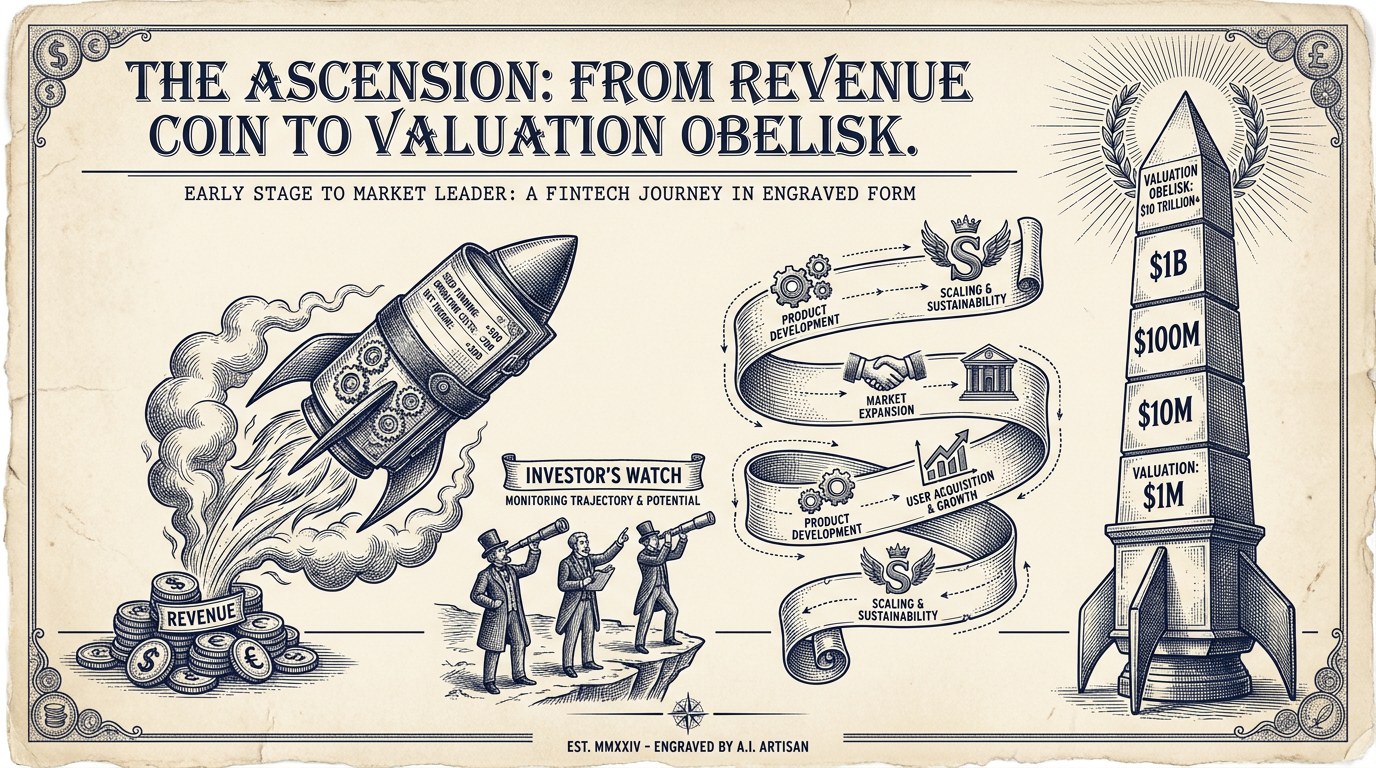
The context around that round is what makes the velocity visible. The $3.5M seed in August 2024 backed a four-person team, with Keith Rabois, Saga, South Park Commons, Scott Belsky, and Balaji Srinivasan on the cap table. Ten months later came the $20M Series A led by Kleiner Perkins, announced on Profound's own blog in June 2025 alongside the company's stated ambition to help brands "connect with one new customer, Superintelligence". Six months after the B, Lightspeed led the $96M Series C at the $1 billion mark, with Sequoia, Kleiner Perkins, Evantic, Saga, and South Park Commons all staying in. Four rounds, 19 months, $155 million. Whatever else is true about this category, the smartest growth-stage investors in the world just spent 18 months outbidding each other for it.
04Why money is flooding into AI search optimization
Venture math this aggressive needs a market shift behind it, and this one is measurable from three directions. Buyer behavior first: Google's B2B buyer research from October 2025 found roughly 60 percent of B2B buyers now use tools like ChatGPT or Gemini during the purchase process. That is not a projection, that is the current buying committee. Platform behavior second: Google has pushed AI Overviews and AI Mode into the default search experience, which means even buyers who never open a chatbot are reading synthesized answers instead of scanning ten links. And volatility third, which is the part that built Profound's business case: the company's own research found up to 90 percent of cited sources in AI answers change over time, with different models drawing on largely distinct source sets.
Sit with that last finding, because it explains the entire category. If AI answers were stable, visibility would be a project: earn your citations once, done. Because they churn, visibility is an operation, something you monitor, maintain, and defend monthly. Operations justify subscriptions, and subscriptions justify billion-dollar valuations. Profound's cited-source churn stat is simultaneously its best sales argument and the most honest thing anyone has said about this market.
We see the same volatility from the service side. The AI citation counts we track for clients through Ahrefs move month to month in both directions, and the pages that hold their citations share traits: verifiable claims, clean structure, real authority behind the domain. Which is to say, the shift is real, the spend is rational, and the work underneath it looks suspiciously like SEO done properly.
05What Profound actually does
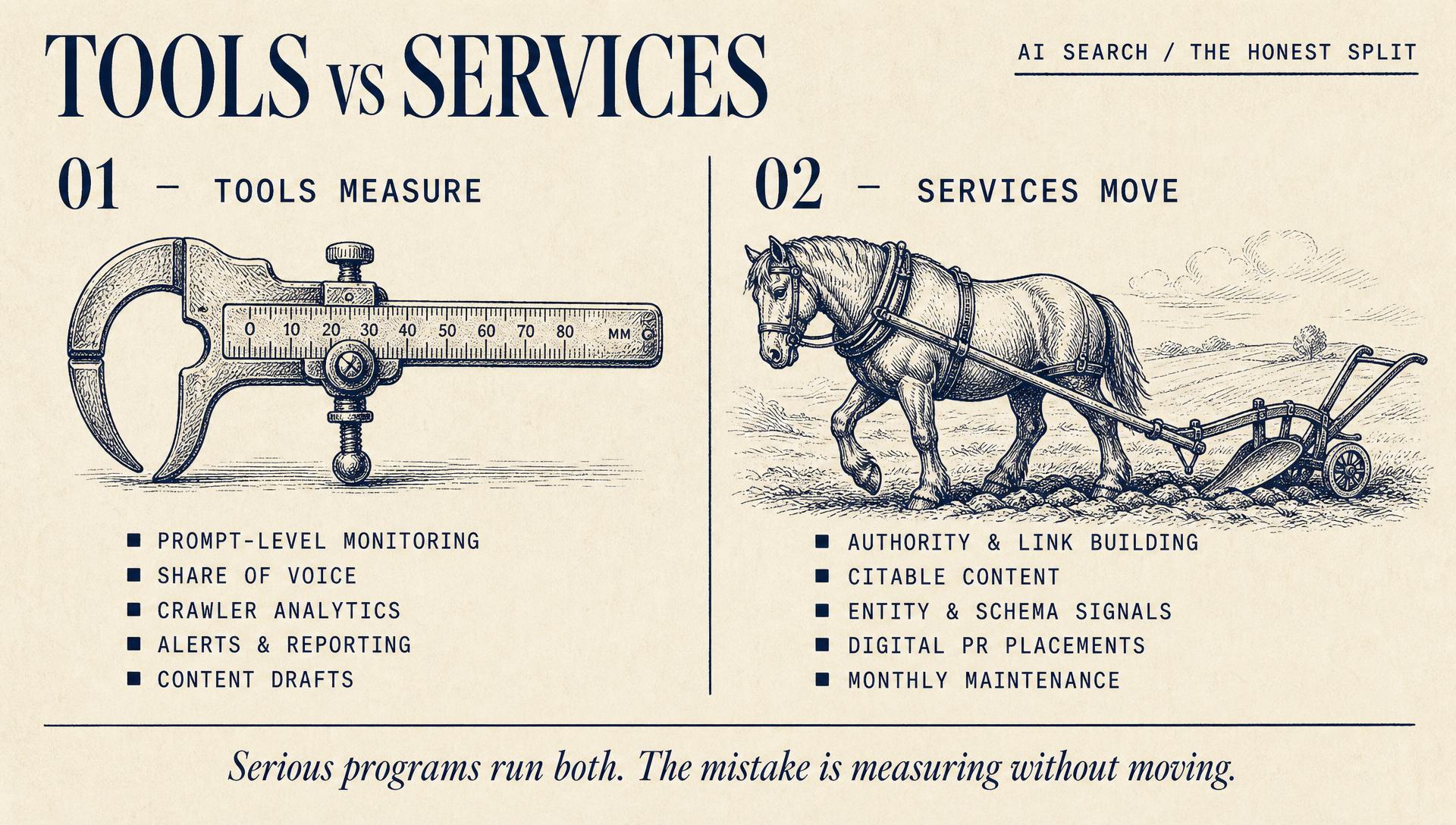
Credit where due, because the product is substantial. Profound monitors how AI systems describe and recommend brands across millions of real prompts, covering ChatGPT, Gemini, Perplexity, Copilot, Grok, Meta's models, and DeepSeek. Its Answer Engine Insights shows where a brand appears and where competitors do, Agent Analytics shows how AI crawlers move through a site, and Conversation Explorer surfaces what people actually ask assistants. On top of the monitoring sits a generation layer, content briefs, drafts, and agentic workflows aimed at closing the gaps the monitoring finds, and a self-serve Lite tier launched in 2025 for smaller teams.
The positioning is unapologetically maximalist. Cadwallader talks about marketers becoming "marketing engineers" and, in Fortune's Series C coverage, pushed back on the category's own hype: "There's this idea that SEO is dead, and I very much disagree". His argument, and ours, is that AI search sits on top of the same foundations classic search rewards. The tool is built for enterprises with the team to act on what it surfaces, and the customer list reflects exactly that.
06What a tool cannot do
Now the part the funding coverage skips. Every capability in the last section is a form of measurement or drafting. None of it is the work that makes an AI system cite you, because that work happens outside any dashboard: earning the authority that makes your domain worth quoting, publishing the specific, verifiable content a model can safely repeat, fixing the entity and schema signals that tell machines who you are, and getting your brand into the listicles, comparisons, and industry publications that AI answers draw from. A dashboard can tell you, with beautiful precision, that you are invisible. It cannot make you citable.
The churn stat cuts the same way. If 90 percent of cited sources can rotate, then whoever keeps their citations is doing continuous work: refreshing proof, holding rankings, defending authority. Buying the monitoring without resourcing the work is how companies end up with a very expensive way to watch themselves lose. And the generation layer, useful as it is, produces drafts that still need what every draft needs: subject-matter truth, editing, and a domain worth publishing them on. Content written for bots by bots, hosted on a DR 20 site with no earned authority, gets exactly the visibility it deserves.
07Tools or services, the honest decision
The decision is a team question, not a product question. Buy the tool when you have in-house people who will act on it weekly: an SEO lead, content resources, and a developer who can ship fixes. Enterprise and late-stage companies with that muscle get real value from Profound-class software, and its customer list is exactly those companies. Buy the service when nobody in the building owns the follow-through, because monitoring without execution is a subscription to your own decline. A service does the measuring and the moving: our AI search optimization service runs AI visibility tracking through Ahrefs' answer data on one side and the authority, content, and entity work on the other, one invoice, one accountable party.
And plenty of serious teams run both, a tool for daily monitoring and share-of-voice, a partner for the heavy work the tool surfaces. If that split is where you land, the only mistake is paying enterprise software prices before anyone is assigned to open the dashboard. Sequence it: work first, instrumentation as the work scales.
08What this means if you run a B2B SaaS
Read Profound's rise as a market signal aimed directly at you. Enterprises are now paying enterprise prices just to see how AI talks about them, which means the AI answer layer is officially where buying decisions form, and mid-market SaaS companies have a window that will not stay open: most of your competitors are not yet doing the work, so the citations are winnable at mid-market cost. We have watched it happen from the operator side. Da Vinci, a warehouse management platform we took from DR 19 to 55, now holds 74 citations across Google AI Overviews, AI Mode, ChatGPT, Perplexity, Copilot, and Gemini, measured through Ahrefs, in a category where most competitors have no AI presence at all. Workwize, our longest engagement, built an AI referral channel that now produces leads alongside classic organic. Neither client bought a monitoring seat to get there; both bought the work, and the numbers sit on their public case study pages with sources they control.
So the practical takeaway from all the funding noise is simple. The problem Profound raised $155 million against is real and already priced into how your buyers buy. Whether the answer is their software, our kind of service, or both depends on your team, and the one wrong answer is doing nothing while your category's AI answers get written without you.
09FAQ
What is Profound?
Profound is an AI visibility platform founded in New York in August 2024 by James Cadwallader and Dylan Babbs. It monitors how AI systems like ChatGPT, Gemini, Perplexity, and Copilot describe and recommend brands, and layers content generation and agentic workflows on top of the monitoring.
How much funding has Profound raised?
$155 million across four rounds: a $3.5M seed in August 2024, a $20M Series A led by Kleiner Perkins in June 2025, a $35M Series B led by Sequoia in August 2025, and a $96M Series C led by Lightspeed in February 2026 at a $1 billion valuation.
What is Profound's ARR?
Not public. Profound has never disclosed ARR, funding databases list no revenue figure, and press coverage cites customer counts instead: more than 700 enterprise customers and roughly 10 percent of the Fortune 500 as of the Series C in February 2026. Any specific ARR number you encounter is an estimate.
Is Profound worth the price?
It depends on who will act on it. Teams with in-house SEO and content capacity get real value from the monitoring and gap analysis. Teams without that capacity end up paying to watch problems nobody is assigned to fix, and are usually better served having the work done first.
Do I need a tool or an agency for AI search optimization?
It is a team question. In-house capacity to execute weekly points to a tool. No in-house capacity points to a service that measures and does the work. Many companies run both, a tool for monitoring and a partner for authority, content, and entity work.