On this page
Generic search intent classification treats every keyword as having a single intent (informational, navigational, commercial, transactional) and produces content calibrated to that single intent. For B2B SaaS programs, the single-intent treatment misses the structural reality: B2B SaaS purchases involve 4 to 9 people on the buying committee, and a single keyword can carry different intents for different committee members.
The framework below covers why generic intent classification fails for B2B SaaS, the four standard intent types and where they break for B2B SaaS specifically, the five buying committee personas and their typical intents, the persona-stage matrix that calibrates intent across the journey, the content production adjustments the multi-stakeholder reality requires, and the four common calibration failures that produce content misaligned with how buying committees actually search.
01Why generic search intent classification fails for B2B SaaS
Generic search intent classification developed for single-buyer search contexts where one person runs a query and consumes content alone. For consumer ecommerce, B2C subscription services, local services, and direct-to-consumer applications, the single-buyer model fits the actual search behavior and the four-intent classification (informational, navigational, commercial, transactional) produces accurate intent labels.
For B2B SaaS programs, the model fits poorly. B2B SaaS purchases involve 4 to 9 people on the buying committee with different roles, different success criteria, and different search behaviors. A single keyword runs through multiple personas' search activity, and the intent each persona brings to the query differs structurally. The end user running "marketing automation workflow" carries informational intent (they want to understand the workflow); the manager running the same query carries commercial intent (they want to evaluate vendors); the executive sponsor running the query carries strategic-evaluation intent that doesn't fit the four standard categories cleanly.
This sits inside the keyword research methodology hub for B2B SaaS programs and connects to the methodology that runs intent classification at Stage 2 enrichment where the methodology specifies manual intent classification as the B2B SaaS-specific override of tool-derived intent. It also connects to the comprehensive B2B SaaS SEO discipline reference at the pillar level.
02The four standard intent types and where they break for B2B SaaS
The four standard intent types map onto buyer behavior well for consumer-style searches but break for B2B SaaS in two specific ways. Break 1: commercial intent for B2B SaaS is structurally extended across the long evaluation cycle. The "I am evaluating vendors" moment that generic classification treats as a single commercial-intent query actually spans 3 to 18 months of evaluation work for considered B2B SaaS purchases. Generic classification flags only the final-stage commercial-intent queries; the multi-month evaluation queries carry commercial intent that generic classification misses.
Break 2: transactional intent for B2B SaaS is rarely the direct-to-purchase pattern transactional intent describes. B2B SaaS purchases run through sales-led or product-led flows that involve demos, trials, security reviews, procurement approval, and contract negotiation. The "transactional moment" generic classification optimizes for is rarely a single search query; it's a multi-touchpoint conversion sequence that the buying committee navigates over weeks to months. ... and the committee dynamics are documented in Gartner's research on the B2B buying journey, which tracks the multi-stakeholder pattern as a primary driver of why keyword strategies must address committee cohorts as distinct intent states rather than as a single buyer profile.
03The five buying committee personas and their typical intents
Five personas dominate B2B SaaS buying committees, with the specific mix shifting by deal size and product category. Persona 1: end user. Tactical workflow queries, "how do I" queries, integration questions. Typical intent: informational (TOFU/MOFU). Persona 2: manager. Team productivity, ROI, vendor comparison queries. Typical intent: commercial (MOFU/BOFU). Persona 3: IT/security stakeholder. Compliance, integration security, data architecture queries. Typical intent: investigative-evaluation (MOFU/BOFU), not cleanly any of the four standard types. Persona 4: procurement function. Pricing, contract, vendor reputation queries. Typical intent: comparative-evaluation (BOFU), also not cleanly standard. Persona 5: executive sponsor. Category-level strategic queries, industry positioning, board-level reporting. Typical intent: strategic-evaluation (TOFU/BOFU depending on stage).
The non-standard intents (investigative-evaluation, comparative-evaluation, strategic-evaluation) sit awkwardly in the four-type framework but represent genuine intent patterns that drive substantial B2B SaaS pipeline. Programs that recognize these patterns as distinct produce content calibrated accordingly; programs that force the patterns into the four-type framework produce content misaligned with how the personas actually search. ... and the mental-model framing draws on research published through LinkedIn's B2B Institute, which has documented the long-tail pattern in B2B buying where the majority of buyers in any category are out-of-market at any given moment, which is why intent-calibrated keyword strategies prioritize mental-availability over conversion capture in the early funnel.
04The persona-stage matrix: calibrating intent across the journey
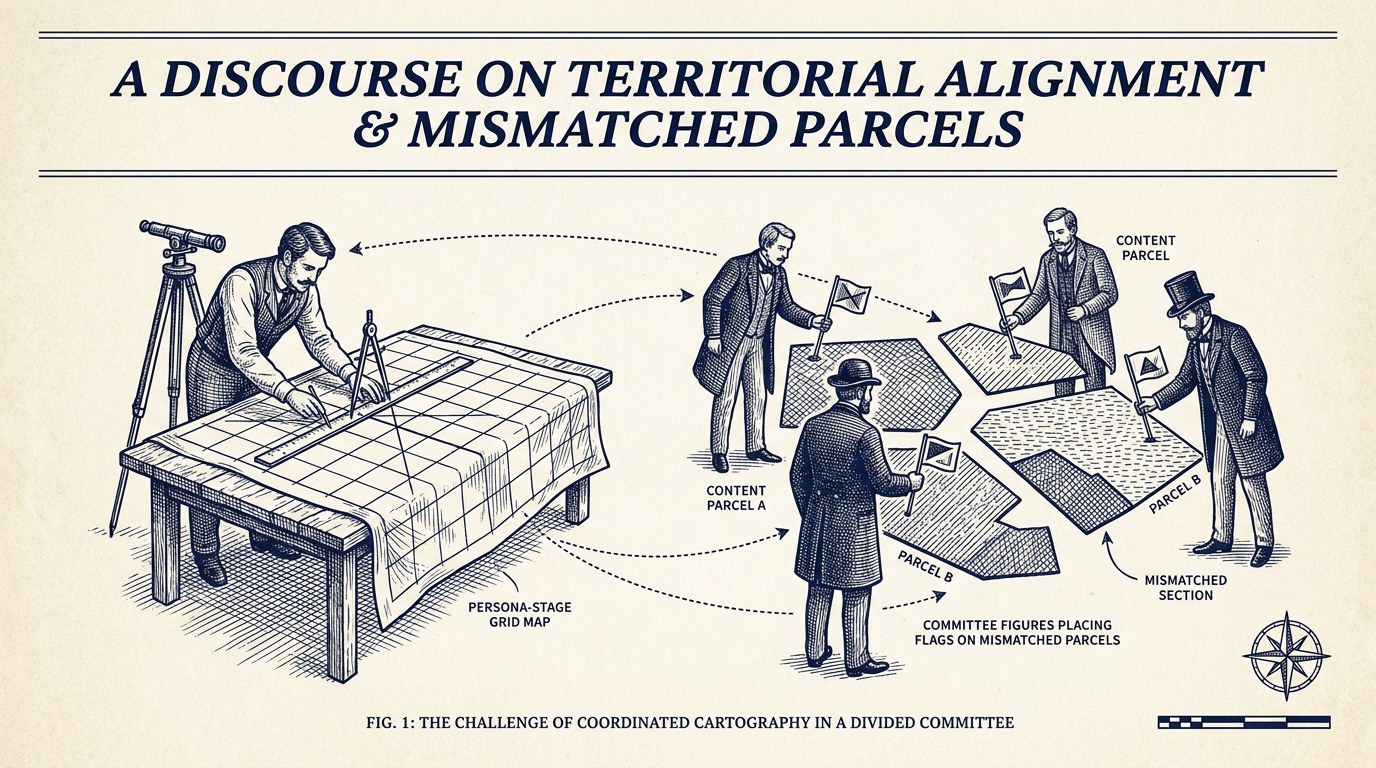
The 5 personas x 4 stages = 20 intent cells matrix. Most B2B SaaS keywords carry strong signal in 2 to 4 cells and weak signal in the others. The calibration discipline identifies which cells dominate for each keyword.
Example calibration for the keyword "marketing automation comparison":
- End-user x TOFU: weak (end users don't typically run comparisons)
- End-user x MOFU: moderate (some end users participate in evaluation)
- Manager x MOFU: strong (primary searcher)
- Manager x BOFU: strong (vendor shortlisting)
- IT x MOFU: moderate (compliance and integration check)
- IT x BOFU: weak (review happens via vendor docs, not comparison content)
- Executive sponsor x MOFU: weak (sponsors don't typically run comparisons)
- Executive sponsor x BOFU: moderate (final approval review)
The dominant cells (manager x MOFU/BOFU) drive content format and depth. The moderate cells (end-user x MOFU, IT x MOFU, executive x BOFU) drive supporting section structure and companion-content opportunities. The weak cells drive what to exclude from the piece. This pairs with the buyer intent mapping framework that operationalizes the persona-stage matrix, and connects to the keyword clustering framework where intent clustering uses the calibrated intent signal.
05Content production adjustments for multi-stakeholder intent
Three patterns adjust content production for multi-stakeholder intent. Pattern 1: section-level persona targeting. The piece structures sections to address different personas explicitly (e.g., "For team leads," "For IT," "For executive sponsors") so each persona finds their section while reading. Pattern 2: companion-content pairing. The primary piece serves the dominant persona; companion pieces serve the secondary personas; internal links connect them. Pattern 3: depth-tier escalation. The piece serves the surface query while linking to deeper resources (technical docs for IT, ROI calculators for managers, board templates for executive sponsors).
The right pattern depends on the persona-stage matrix dominance. Patterns 1 and 3 work when the matrix shows 2 to 3 strong cells across personas. Pattern 2 works when the matrix shows 3+ strong cells across distinctly different personas (which justifies separate companion pieces rather than mixed-persona sections).
06Common intent calibration failures and how to fix them
Four failures recur. Failure 1: defaulting to end-user intent because end users dominate search volume. The fix is explicit persona-stage matrix calibration for every priority keyword. Failure 2: missing the IT/security persona, which carries veto power on B2B SaaS purchases despite lower search volume than other personas. The fix is dedicated IT-persona keyword sourcing during Stage 1. Failure 3: conflating evaluation-stage intent with transactional intent and producing content optimized for the wrong conversion path. The fix is recognizing the four non-standard intent types (investigative, comparative, strategic evaluation) and producing content matched to those intents. Failure 4: treating committee personas as interchangeable in the persona-stage matrix. The fix is persona-specific success criteria that prevent the matrix from collapsing into a single-persona view.
If your program needs an intent calibration audit, book a 30-minute conversation about your intent classification workflow and we will calibrate the persona-stage matrix to your category.