On this page
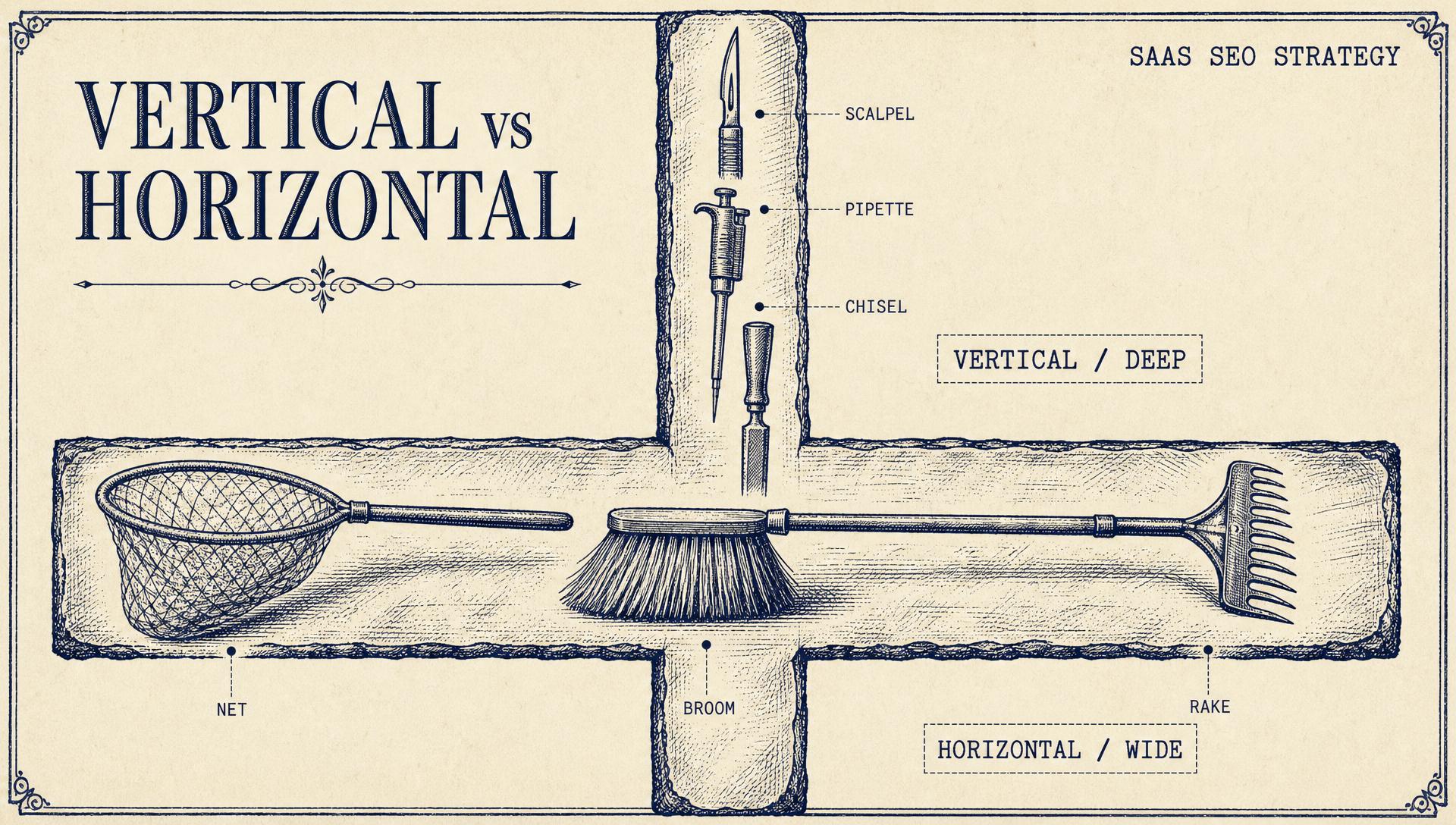
Vertical SaaS serves a specific industry or niche. Horizontal SaaS serves a function across industries. The strategic distinction produces different SEO operating models. Vertical SaaS SEO targets narrow keyword surfaces with deep specificity, competing against generic horizontal alternatives by owning the industry-specific search vocabulary. Horizontal SaaS SEO targets broad keyword surfaces with cross-industry positioning, competing against specialized vertical alternatives through scale and use-case breadth.
The framework below covers the strategic distinction, why vertical and horizontal SaaS SEO require structurally different approaches, the operator playbook for vertical SaaS SEO, the operator playbook for horizontal SaaS SEO, the hybrid model that many B2B SaaS programs run, and the four common failures that produce SEO programs misaligned with strategic positioning.
01Vertical vs horizontal SaaS: the strategic distinction
Vertical SaaS serves a specific industry or niche. Examples: dental practice management software, real estate brokerage platforms, restaurant inventory systems, legal practice management tools. The product is built for one industry vertical and competes against generic horizontal alternatives by serving the specific workflows, regulatory requirements, and integration ecosystem of that industry.
Horizontal SaaS serves a function across industries. Examples: project management (Asana, Monday, ClickUp), CRM (HubSpot, Salesforce, Pipedrive), marketing automation (Marketo, Mailchimp, Brevo). The product is built for a function (project tracking, customer relationship management, marketing workflow) and competes by serving the breadth of use cases that function encompasses across industries.
The strategic distinction produces different SEO operating models because the keyword surfaces, competitive dynamics, and buyer behaviors differ structurally. This sits inside the B2B SaaS SEO strategy operator reference and connects to the comprehensive B2B SaaS SEO discipline reference at the pillar level.
02Why vertical SaaS SEO differs from horizontal SaaS SEO
Three structural differences. Difference 1: keyword surface size and specificity. Vertical SaaS keyword surfaces are narrow (50 to 500 priority keywords for a typical vertical SaaS category) but highly specific. Dental practice scheduling software has a focused buyer intent; the keyword does not attract dental hygienists looking for personal scheduling apps or healthcare administrators looking for hospital scheduling systems.
Horizontal SaaS keyword surfaces are broad (500 to 5,000 priority keywords for a typical horizontal SaaS category) but less specific. Project management software attracts buyers from across industries with different evaluation criteria. The breadth produces higher volume but requires content that addresses multiple use cases per keyword.
Difference 2: competitive dynamics. Vertical SaaS programs compete against a small set of specialized competitors plus the generic horizontal alternatives that buyers consider as backup options. Horizontal SaaS programs compete against a larger set of similarly broad competitors plus vertical specialists that win in specific industries.
Difference 3: AI defensibility. Generic horizontal SaaS content faces AI Search disruption as ChatGPT, Perplexity, and Google AI Overviews answer cross-industry questions directly. Vertical SaaS content with industry-specific depth and operator-language specificity remains the source AI assistants cite because the depth resists generic synthesis. This connects to how AI Search engines retrieve and rank content which covers the AI Search ranking mechanics.
03Vertical SaaS SEO strategy: dominating niche keyword surfaces
The strategy is owning the industry-specific search vocabulary completely. Three operational priorities. Priority 1: industry vocabulary keyword sourcing. Source keywords from industry trade publications, professional association content, industry-specific regulatory documents, and customer interviews with industry-specific operators. The sourcing produces keyword candidates generic SaaS competitors cannot identify without industry domain expertise.
Priority 2: depth content over breadth content. Each priority keyword gets content with industry-operator depth: regulatory references specific to the industry, integration documentation specific to industry-standard tools, case studies from the same industry vertical, terminology that signals industry fluency. The depth produces content that ranks because industry buyers recognize the operator-language as authentic.
Priority 3: industry community presence. SEO links and authority for vertical SaaS programs come from industry-specific publications, trade associations, and industry conferences. Generic SEO link-building tactics that work for horizontal SaaS programs (broad guest posting, generic digital PR) underperform for vertical SaaS programs because the industry buyers do not read the generic-SEO publications.
04Horizontal SaaS SEO strategy: competing in broad keyword surfaces
The strategy is owning the broad functional vocabulary while differentiating through use-case breadth and integration ecosystem. Three operational priorities. Priority 1: use-case content scaling. Horizontal SaaS programs need content addressing the use cases their product serves across industries. The content scales through programmatic SEO patterns covered in the programmatic SEO operator framework for B2B SaaS programs where use-case pages address industry-specific applications.
Priority 2: integration ecosystem coverage. Horizontal SaaS programs serve buyers integrating the product with other tools in their stack. The integration page surface (Salesforce integration, HubSpot integration, Slack integration) drives substantial pipeline. Programs running integration page production at scale capture buyers searching for the integration combinations they need.
Priority 3: comparison content. Horizontal SaaS programs face direct competitive comparison queries from buyers evaluating multiple horizontal alternatives. The comparison page surface captures pipeline at the highest-intent buying moment. The depth on comparison pages determines whether the page ranks against competitor-owned comparison content and against third-party review aggregators. The buyer journey itself varies meaningfully by vertical, which Gartner's research on the B2B buying journey describes as the structural reason vertical-specific positioning consistently outperforms horizontal positioning when targeting specialized buying committees.
05The hybrid model: vertical wedge with horizontal expansion
Many B2B SaaS programs run hybrid strategies: vertical wedge to capture initial industry verticals with deep SEO ownership, then horizontal expansion content as the product reaches feature parity with horizontal alternatives. The hybrid model serves programs aspiring to category leadership beyond a single vertical.
Sequencing matters operationally. The vertical wedge phase (typically 12 to 36 months) builds deep authority in the initial industry with industry-specific content, keyword surfaces, and community presence. The horizontal expansion phase begins once the vertical wedge is producing predictable pipeline contribution. The expansion adds use-case content addressing applications outside the initial vertical, integration page production, and comparison content against horizontal incumbents.
Programs that run both phases simultaneously without sequencing produce diluted SEO authority in both. The vertical content lacks the industry-specific depth that vertical authority requires; the horizontal content lacks the breadth that horizontal coverage requires. The sequencing discipline is what makes hybrid models compound rather than fragment. This connects to the keyword research methodology where Stage 5 prioritization runs different content investment allocations across the phases, covered in the end-to-end B2B keyword research methodology playbook.
06Common vertical and horizontal SaaS SEO failures
Four failures recur. Failure 1: vertical SaaS programs targeting horizontal keyword surfaces and losing to horizontal incumbents. The fix is calibrating keyword targets to the vertical's industry-specific vocabulary even when horizontal keyword volumes look more attractive. Failure 2: horizontal SaaS programs targeting vertical keyword surfaces and losing to vertical specialists. The fix is competing on use-case breadth and integration ecosystem rather than industry-specific depth.
Failure 3: hybrid programs running vertical wedge and horizontal expansion simultaneously without sequencing, producing diluted authority in both. The fix is the 12 to 36 month vertical wedge phase before horizontal expansion. Failure 4: missing AI defensibility calibration that 2026 SEO requires. The fix is content depth specifically calibrated against generic AI synthesis: industry-specific operator language, regulatory references, named case studies, integration specifics that AI assistants cite rather than synthesize.
If you want to scope vertical or horizontal SaaS SEO strategy for your program, book a 30-minute conversation about your strategic positioning and SEO operating model and we will assess whether your current SEO is aligned with your vertical or horizontal positioning.
07FAQ
What's the difference between vertical and horizontal SaaS?
Vertical SaaS serves a specific industry or niche (dental practice management, real estate brokerage platforms, restaurant inventory systems). Horizontal SaaS serves a function across industries (project management, CRM, marketing automation). The strategic distinction produces different SEO operating models because keyword surfaces, competitive dynamics, and buyer behaviors differ structurally. Vertical SaaS programs compete by owning industry-specific search vocabulary; horizontal SaaS programs compete by owning broad functional vocabulary with use-case breadth and integration ecosystem coverage.
How does vertical SaaS SEO differ from horizontal SaaS SEO?
Three structural differences. Keyword surface size and specificity (vertical surfaces are narrow but highly specific; horizontal surfaces are broad but less specific). Competitive dynamics (vertical competes against specialized competitors plus generic horizontal alternatives; horizontal competes against similarly broad competitors plus vertical specialists). AI defensibility (vertical content with industry-specific depth resists generic AI synthesis better than horizontal content). The differences produce different operational priorities for content production, keyword sourcing, and link building.
What is the vertical SaaS SEO strategy?
Owning the industry-specific search vocabulary completely. Three priorities. Industry vocabulary keyword sourcing from trade publications, professional associations, regulatory documents, and customer interviews with industry operators. Depth content with industry-operator language, regulatory references, integration documentation specific to industry tools, and industry-vertical case studies. Industry community presence through industry-specific publications, trade associations, and conferences rather than generic SEO link-building tactics.
What is the horizontal SaaS SEO strategy?
Owning the broad functional vocabulary while differentiating through use-case breadth and integration ecosystem. Three priorities. Use-case content scaling through programmatic SEO patterns where use-case pages address industry-specific applications of the horizontal function. Integration ecosystem coverage with dedicated integration pages for each major third-party tool. Comparison content addressing direct competitive comparison queries from buyers evaluating multiple horizontal alternatives.
What is the hybrid SaaS SEO model?
Vertical wedge to capture initial industry verticals with deep SEO ownership, then horizontal expansion content as the product reaches feature parity with horizontal alternatives. The model serves programs aspiring to category leadership beyond a single vertical. Sequencing matters: the vertical wedge phase (12 to 36 months) builds deep authority; the horizontal expansion phase begins once the vertical wedge produces predictable pipeline contribution. Programs running both phases simultaneously without sequencing produce diluted SEO authority in both.
Continue with the B2B SaaS SEO strategy operator reference
The full strategy sub-pillar covers the operating model, exec buy-in framework, content allocation by funnel stage, and the maturity roadmap that sits behind every cluster post here.