On this page
A B2B SaaS marketing leader who searches for "niche edit services" already understands the tactic. The question that brought them here is which providers do it well, what good work costs, and how to spot the providers who will quietly torch a year of authority work for a $5,000 invoice. The rest of this page answers those three questions.
Editorial niche edits build authority. Farm placements erode it. The price gap between the two, roughly $150 to $800 per quality placement versus $30 to $80 for farm output, is the clearest signal a buyer has before the manual action arrives. Everything below is the operator view from running roughly 1,200 niche edit placements across 23 B2B SaaS programs between 2024 and 2026.
01What niche edit services actually deliver
A niche edit, sometimes called a link insertion, is the placement of a link inside content that has already been published on a third-party website. Unlike guest posting, no new article is created. The editor of the target site adds a link inside an existing paragraph, usually because the link points to a useful resource that improves the article. A niche edit service productizes the whole workflow: discovery of relevant placement pages, outreach to the people who can edit them, negotiation, placement, and verification.
The reason this tactic exists at all is that mature content on the open web stops being updated. The author moves on, the editor stops checking comments, and the article sits there ranking. A niche edit revives the page slightly, adds a contextually relevant outbound link, and earns the buyer a placement that looks more natural than a guest post because it sits inside genuine editorial content rather than a clearly-promoted contribution. For the operator view of how each placement is sourced and verified, see our link insertion operator guide.
How niche edit services differ from random placement buying
A service runs the four steps in sequence: prospect (find pages that already rank for adjacent terms), vet (confirm the page has traffic and the surrounding content fits), outreach (contact the right editor), and verify (check the placement before payment). Random placement buying skips the first three steps. The buyer hands over money, the seller adds the link on whatever page is convenient, and nobody checks whether the placement page has been crawled in the last quarter.
02Why most B2B SaaS programs get niche edits wrong
Most B2B SaaS programs that fail with niche edits fail the same way. They sign up for a bulk package, accept the placements that arrive, and only check the report. Three patterns repeat across the post-mortems we run on incoming clients who tried this before.
The bulk-package pattern
"250 DR 30+ placements for $5,000" is a bulk-package pattern. The math forces farm sourcing. Editorial outreach costs $150 to $300 per placement in time alone before the placement fee, and no service makes margin selling placements at $20 each. What ships under that pricing is almost entirely PBN (private blog network) or sites that exist only to sell links.
The misaligned-vertical pattern
A B2B SaaS HR product accepts placements on lifestyle and parenting blogs because the placements come fast and cheap. The links pass technical authority checks. Six months later, Google's algorithm has classified those sources as low-relevance for the destination, and the placements contribute nothing to ranking the target pages.
The exact-anchor-spam pattern
A program runs 20 niche edits in two months with 18 anchors pointing to the same money page using the same exact-match commercial keyword. Google's spam policies describe exactly this pattern as a manual action trigger. The pattern is algorithmic, not editorial, and the action arrives on the program's timeline, not Google's. The diagnosis and recovery sequence sits inside our broader link insertion playbook.
03The four niche edit service tiers
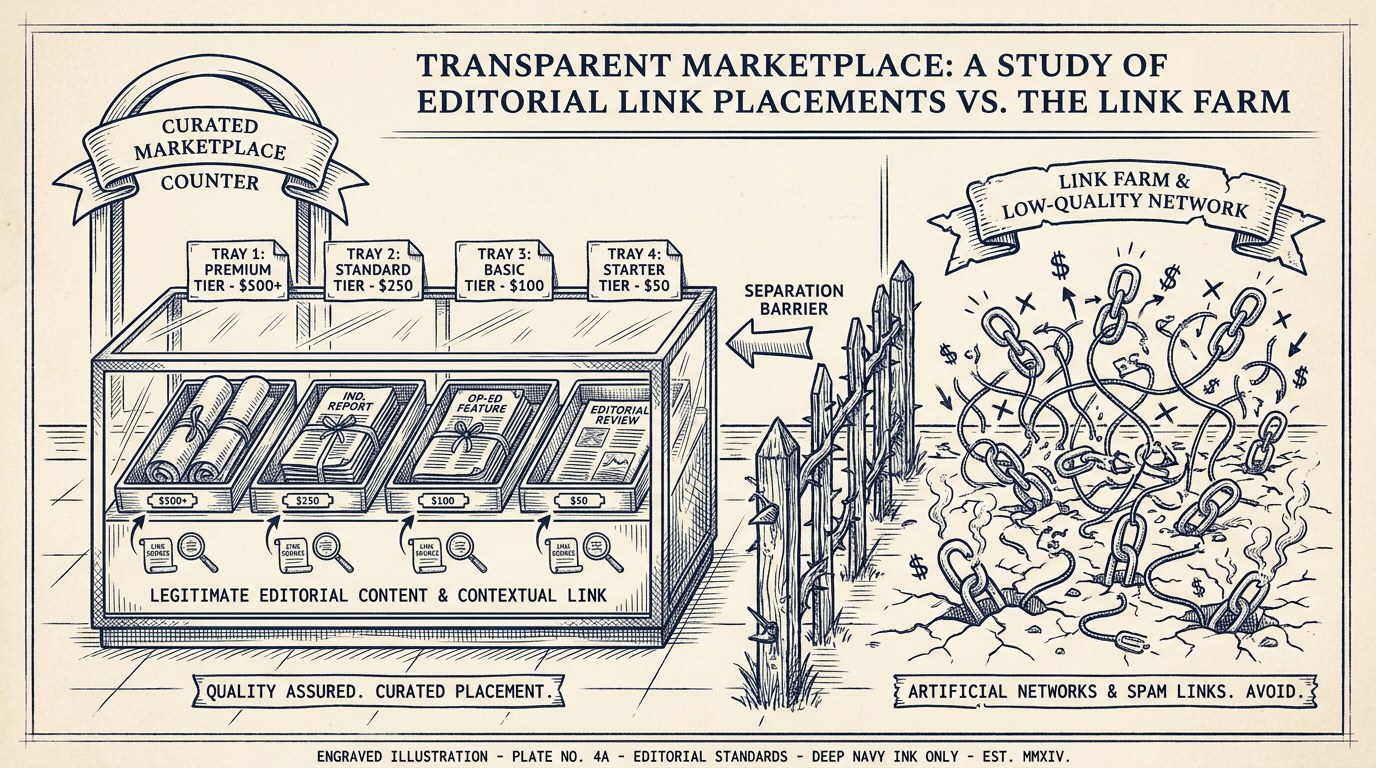
Four service tiers exist in the market, and they sit at different price points for reasons buyers should understand before purchasing. Most service shops offer one or two of these tiers under multiple package names. The tier the buyer ends up with is rarely the tier the sales conversation described.
Tier 1, editorial insertion (free or trade-based)
Editorial insertion is what happens when a writer at the target site genuinely wants the link because it strengthens their article. The cost is the outreach effort: finding the page, contacting the editor with a real reason the link improves their content, and waiting. These placements happen at DR levels the buyer's own program is closing toward, not above it. They are the highest quality and slowest to source. Roughly 5 to 10 percent of placements in a real program come from this tier.
Tier 2, paid editorial ($150 to $800 per placement)
Paid editorial covers the case where the placement is added because of payment, but the editorial decision is real. The page is relevant. The link improves the article. The placement is disclosed (or not, depending on the publisher), and the price reflects the page's traffic and the editor's time. This tier is where most production niche edit work happens. Domain rating, page traffic, and topical fit set the price within the band.
Tier 3, niche-relevant guest-post hybrid
The third tier is technically a guest post but operates like a niche edit. A new short article is published on the placement domain, contains the link, and is then promoted modestly. Price ranges from $300 to $1,200. It looks like a niche edit in the buyer's reporting and provides additional control over surrounding content. The downside is the placement looks newer than an editorial insertion would.
Tier 4, farm placements (warning, not recommendation)
Farm placements live in the $30 to $80 range. They originate from PBNs, expired domains rebuilt as content silos, or sites whose entire business model is selling links. The Technotize team's guide to spotting a niche edit farm covers the diagnostic signals. The short version: if pricing looks too good, it is.
04What a quality niche edit placement looks like
Buyers evaluating a placement they have already received should check five signals before approving the invoice. None of these are subjective. All five can be verified inside ten minutes per placement.
Page traffic baseline
The placement page should rank for at least one keyword with monthly search volume. A page that pulls zero organic traffic is not transferring authority to the linked-to page in any way that compounds. Tools like Ahrefs, Semrush, and Sistrix report this number directly. Below 50 monthly organic visits to the placement page, the placement is not doing the work the buyer was paying for.
Topical relevance of surrounding content
The two paragraphs around the link should be on a topic where the link makes editorial sense. Software pricing pages should not be linked from recipe blogs. The relevance check is a 30-second read of the surrounding paragraphs by someone who understands the buyer's product category.
Anchor positioning
In-paragraph contextual placement, where the anchor is part of natural prose, signals authority better than end-of-article resource lists. Buyers should reject placements where the link sits in a bullet at the bottom of the page next to twelve unrelated links. The full distribution rules sit in our anchor text mix strategy guide.
Outbound link profile of the placement page
The placement page should already link to a moderate number of external sites, not zero (looks promotional) and not 40 (looks like a link farm). Ahrefs research on anchor text and link patterns documents how outbound profiles correlate with placement value.
05Pricing reality for B2B SaaS niche edits
Pricing in this market is opaque on purpose. Reputable services publish ranges. Predatory services publish a single price point that looks attractive next to the ranges. The bands below come from running roughly 1,200 niche edit placements across 23 B2B SaaS programs between 2024 and 2026.
Price ranges by domain rating tier
DR 20 to 35 placements run $80 to $200 when sourced editorially. DR 35 to 50 placements run $200 to $400. DR 50 to 65 placements run $400 to $800. DR 65 and above placements run $800 to $2,500 and become hard to source reliably. Programs paying significantly below these ranges are being sold something different from what they think they are buying.
What inflates the price legitimately
Three things move price up inside the band: the placement page's own traffic and ranking history, the buyer's anchor text preference (exact-match commercial anchors cost more because they carry more risk), and topical specificity. A niche edit on a vertically-relevant SaaS publication costs more than the same DR placement on a general business blog because the relevance multiplier is real.
What signals fraud
A guarantee of DR thresholds anywhere in the proposal is a fraud signal. Domain authority can be manipulated short-term and reputable services know this. Volume discounts that scale aggressively (250 placements at half the per-link price) are a fraud signal. Pricing that does not vary by placement signals that the placements all come from the same network of seller-owned sites.
06The service workflow buyers should expect
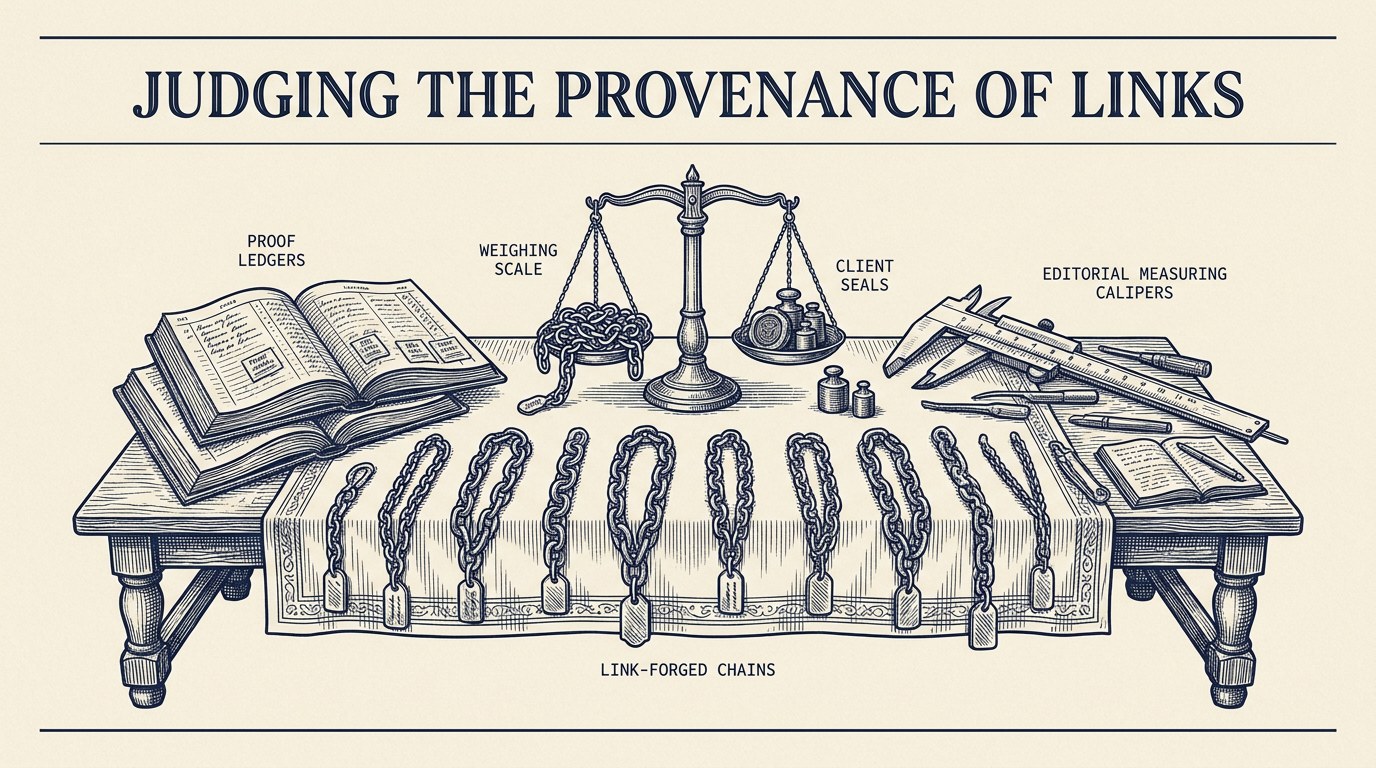
Programs evaluating a niche edit service should ask one operational question: walk me through how a single placement gets from prospect list to invoice. The honest answer is the same six-stage workflow. Vendors who cannot describe it in this much detail do not run this workflow.
Prospect discovery
The vendor pulls pages from competitor backlink profiles, runs topical searches in Ahrefs or Semrush, and surfaces 50 to 200 candidate pages per placement target. The buyer sees the long list, or at least the qualified short list, before placement begins.
Relevance vetting and outreach
Twenty to forty pages survive the relevance filter. The vendor opens an outreach sequence to the editor of each page. Response rates run between 8 and 15 percent. Of responders, half negotiate and half decline. The buyer receives a placement options shortlist with prices.
Quality verification before payment
After placement, the vendor verifies the link is live, the anchor matches what was agreed, the placement is contextual, and the page has not been deindexed. Many fraudulent services skip this step because verification reveals the placement quality.
07Measuring niche edit ROI honestly
Niche edit ROI should be measured, but on the right time frame and against the right metrics. Most programs measure the wrong things and cancel before the right signal arrives.
The 6-to-9-month signal window
For a B2B SaaS program with a target page already ranking on page 2 or 3 of search results, niche edit impact arrives 6 to 9 months after placement. Three things compound during that window: Google recrawls the placement page (every 3 to 6 weeks for most pages), reassigns authority weights (slow), and integrates the new links into the target page's overall profile (slower). Programs that cancel in month 3 cancel before the work is visible.
What to measure
Rank movement on the linked-to URLs is the primary signal. Referring domain growth is a secondary signal. Domain rating change is a tertiary signal and should not be the primary KPI because it is too coarse for short windows. Ahrefs on link velocity tracking over 12-month windows shows whether the placement cadence is producing the intended ranking shift. For the full reporting frame, see our link velocity tracking guide.
A real example
Workwize, a B2B SaaS Technotize partnered with from June 2024 through April 2026, moved from DR 27 to DR 71 over 22 months. Niche edits were one part of that authority gain, alongside guest posts, digital PR, and earned editorial coverage. The steepest DR growth ran from Q3 2024 to Q1 2025, directly ahead of the rise in pipeline.
08When niche edits are the wrong tool entirely
Niche edits are a concentration tactic. They work when a program has authority to concentrate. Several program profiles should pause niche edits entirely or postpone them until other work matures.
Pre-foundation programs at DR under 25
A site at DR 22 with 40 referring domains needs broad-base authority before concentration. Guest posting outreach, digital PR, and original research generate the referring-domain volume that makes a site eligible for niche edits to register. Buying niche edits at this stage spends budget on placements that need a different baseline to compound.
Programs without strong linkable assets
Niche edits point somewhere. If the destination page is thin, generic, or lacks the depth to justify the link editorially, the placement either does not happen (editor declines) or it happens on a page where editorial standards are low (farm). Linkable assets should exist before the niche edit campaign begins.
Categories with no editorial outreach surface
Some B2B SaaS verticals have almost no contextually relevant publishing surface. Highly regulated industries, narrow vertical SaaS in extremely small categories, and products serving 200-customer total addressable markets have nowhere to place niche edits with editorial integrity. Digital PR or industry-event sponsorship produces better authority returns. The full sequencing is covered in our B2B SaaS link building program overview.
09FAQ
How much does a niche edit cost for a B2B SaaS program?
Editorial niche edits cost between $80 and $2,500 depending on the placement page's domain rating, traffic, and topical relevance. For DR 35 to 55 placements, which is where most B2B SaaS programs concentrate, expect $200 to $600 per placement. Anything significantly below those ranges signals either a private blog network or a placement that will not survive editorial review on the target site.
How fast do niche edits start moving rankings?
The first measurable signal arrives 6 to 9 months after placement for most B2B SaaS programs. The signal compounds for another 12 to 18 months as the placement page is recrawled, authority is reassigned, and the new links are integrated into the target page's link profile. Programs expecting movement in the first 60 days are measuring the wrong window.
Are niche edits against Google's guidelines?
Editorial niche edits where the placement is genuinely useful to the placement page's readers, and where the link is disclosed if required, fall within Google's guidelines. Paid niche edits without proper disclosure, niche edits sourced from private blog networks, and exact-match anchor spam patterns violate Google's spam policies. The difference between the two cases is meaningful.
How do I tell if a placement is from a link farm?
Five signals: pricing significantly below market rates, the placement page has no organic traffic, the surrounding content is unrelated to the linked-to topic, the placement page exists primarily to sell links (high outbound link count, low original content), and the domain has a history of being penalized. Our guide to spotting niche edit farms covers the full diagnostic framework.
How many niche edits should a B2B SaaS program buy per month?
For a foundational program at DR 30 to 45, 3 to 6 placements per month is appropriate. For an established program at DR 50 to 65, 8 to 15 placements per month is appropriate. Above 20 placements per month across the program, anchor diversity becomes harder to manage and the manual action risk rises faster than the authority gain.
Where do niche edits fit alongside guest posts and digital PR?
Niche edits concentrate authority on existing assets. Guest posts and digital PR widen the referring domain base. A healthy B2B SaaS program runs all three at the same time, weighted toward whichever produces the cleanest signal at the current DR tier. The link insertion sub-pillar at Technotize covers the sequencing rules in full.
Link Insertion for B2B SaaS
The parent guide covers the full link insertion workflow: when to use niche edits versus guest posts, anchor distribution rules, vendor vetting, and the reporting cadence that catches farm output before invoices clear.
Read the link insertion sub-pillar →