On this page
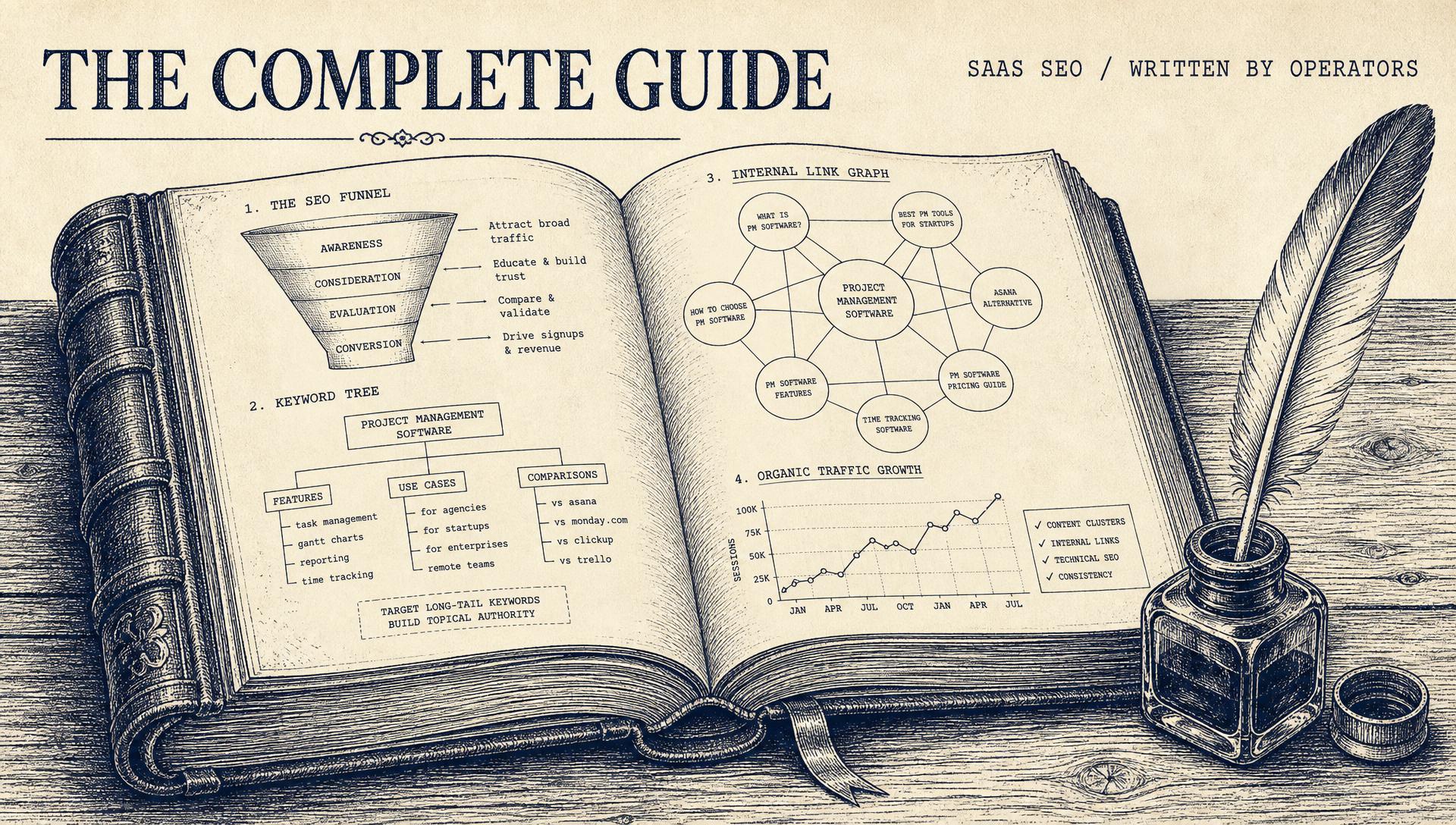
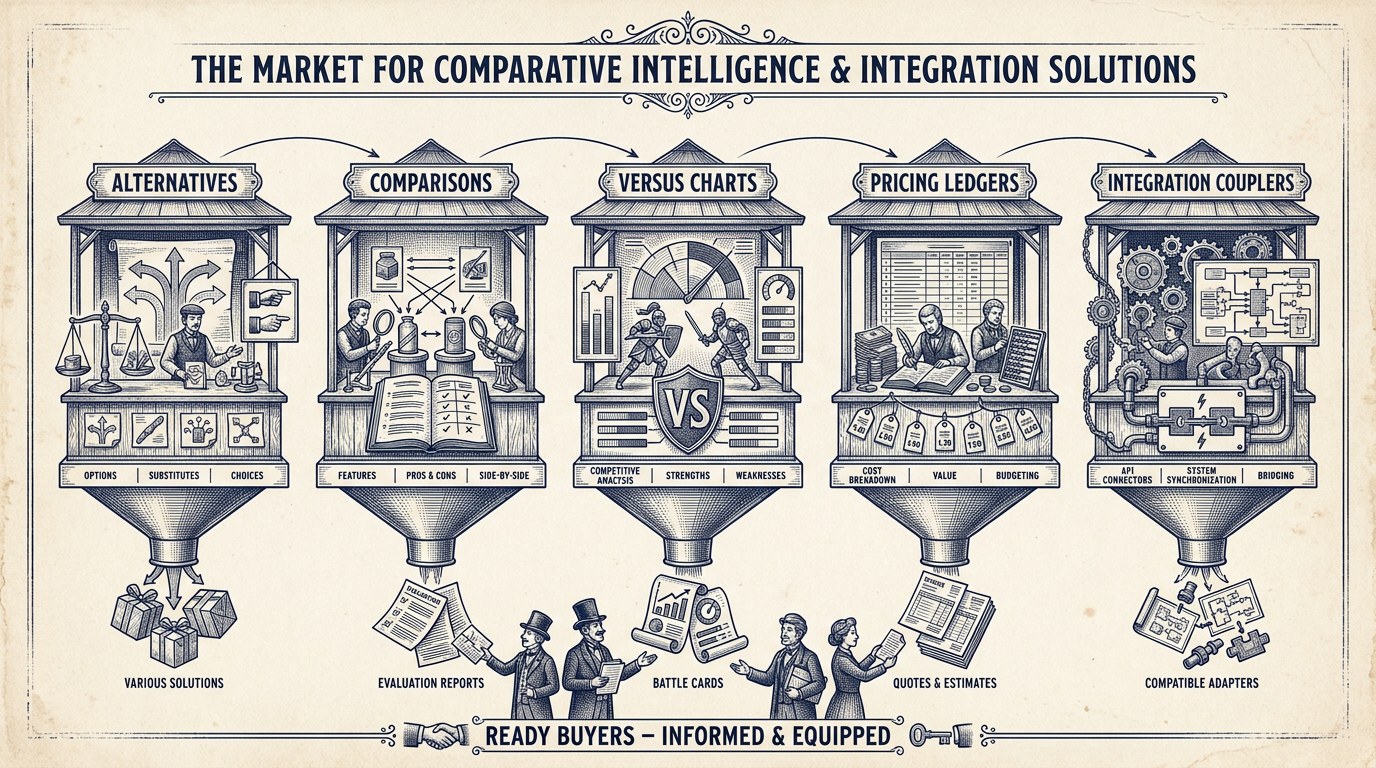
BOFU keywords have low search volume, high commercial intent, and produce most of the pipeline an SEO program generates. The five categories that matter for B2B SaaS (alternative, comparison, vs, pricing, integration) account for 60 to 80 percent of demo requests and trial signups from organic search even though they represent 15 to 25 percent of organic traffic. Programs that chase TOFU traffic and skip BOFU produce flat pipeline. Programs that prioritize BOFU first and add TOFU later compound faster. This is the operator playbook for the BOFU keyword tier.
01What BOFU keywords actually are for B2B SaaS
Bottom-of-funnel keywords are search queries from buyers in active evaluation. They have low search volume, high commercial intent, and produce most of the pipeline that organic search generates for B2B SaaS programs. The discipline that captures them sits in our keyword research services for B2B SaaS.
The actionable definition
BOFU keywords are queries where the searcher has already decided they need a category of solution and is comparing specific options. "Best CRM for small teams" is TOFU (the searcher is evaluating the category). "HubSpot alternatives" is MOFU/BOFU (the searcher has narrowed to HubSpot and is looking for alternatives). "HubSpot vs Pipedrive" is BOFU (the searcher is comparing two specific vendors in active evaluation). The further down the path, the higher the conversion intent per visitor.
Why BOFU keywords matter disproportionately in B2B SaaS
B2B SaaS sales cycles run 6 to 18 months. The buyer who searches "Asana alternatives" is typically 4 to 8 weeks from a purchase decision, with budget already allocated and internal stakeholders aligned. The buyer who searches "what is project management" is months or years from a purchase decision, may not have budget, and may not be the buyer at all. The pipeline conversion rate differential per visit is often 10x to 50x. Grow & Convert's BOFU keyword framework is the operator content that defined the modern BOFU SEO approach and is the topical SERP leader on this query.
BOFU versus TOFU and MOFU
The funnel model maps to keyword intent: TOFU (top-of-funnel, awareness, "what is X" or "how does X work"), MOFU (middle-of-funnel, evaluation, "best X for Y" or "X features"), and BOFU (bottom-of-funnel, decision, "X alternatives", "X vs Y", "X pricing"). All three stages matter, but they need different content patterns and different conversion paths. Most B2B SaaS programs over-invest in TOFU because volume is higher and KD is sometimes lower.
02The five BOFU keyword categories
Five categories cover most of the addressable BOFU keyword volume for B2B SaaS programs. Each has a different SERP pattern, different competitive dynamics, and different content requirements.
Alternative keywords
"[Competitor] alternatives", "[Competitor] competitors", "[Competitor] vs alternatives". These keywords capture buyers who have identified a specific competitor as the leading option and are looking for alternatives. The conversion intent is high because the buyer has done the category-evaluation work already. Content pattern: a comparison page that names the competitor, lists 5 to 10 alternatives, and positions the searched-for brand prominently. Programs that include their own brand in the comparison and link to product-specific case studies convert better than programs that publish a neutral listicle.
Comparison keywords (vs, versus)
"[Brand A] vs [Brand B]", "[Brand A] versus [Brand B]". These keywords capture buyers comparing two specific vendors in active evaluation. SERP intent is informational comparison, but content that demonstrates the searched-for brand's strengths converts. Content pattern: a structured comparison table covering pricing, features, use cases, and specific differentiators, followed by a recommendation framework.
Pricing keywords
"[Brand] pricing", "[Brand] cost", "how much does [Brand] cost". These keywords capture buyers evaluating budget fit. SERP intent is transactional. Content pattern: a pricing page or pricing comparison page with specific dollar figures or tier descriptions. The B2B SaaS pattern of hiding pricing behind "contact sales" hurts BOFU keyword performance because Google's SERP analysis prefers pages that answer the query directly.
Integration keywords
"[Brand] [Integration] integration", "[Brand] connect to [Platform]", "[Brand] API integration with [Tool]". These keywords capture buyers verifying technical compatibility before purchase. Content pattern: integration-specific landing pages with technical detail on the integration, setup steps, and use cases. Programmatic SEO architectures (covered in our broader sub-pillar) frequently target this category at scale. The cluster pattern overlaps with our integration page SEO patterns post.
Use-case keywords
"[Software category] for [Industry]", "[Software category] for [Team size]", "[Software category] for [Specific role]". These keywords capture buyers in a specific vertical or role evaluating fit. Conversion intent is medium-high; the searcher has narrowed to a use case but not yet to a specific vendor. Content pattern: a use-case landing page with industry-specific case studies, role-specific feature explanations, and a conversion path tailored to the segment.
03Finding BOFU keywords for your category
BOFU keywords don't surface easily from standard keyword research tools because the volumes are low and the patterns are brand-specific. Three sources produce the highest-yield BOFU lists.
Starting from competitor analysis
The competitor list from the B2B SaaS SEO competitive analysis work is the seed for alternative and comparison BOFU keywords. For each direct competitor, generate the bigram patterns ("[Competitor] alternatives", "[Competitor] vs [Your Brand]", "[Competitor] pricing", "[Competitor] reviews"). Most B2B SaaS programs have 5 to 7 direct competitors, which produces 20 to 40 BOFU keyword candidates per pattern.
Mining product feature pages
Your product's feature pages name the features and integrations your platform supports. Each feature is a potential BOFU keyword (with the right qualifier). Each integration is a potential integration keyword. Each use case mentioned in marketing copy is a potential use-case keyword. Auditing your own marketing pages typically surfaces 30 to 80 BOFU candidates that the SEO team had not been tracking.
Customer call recording analysis
The words buyers use to describe what they're evaluating, which competitors they considered, and what tipped their decision are the highest-fidelity BOFU keyword source. Sales discovery call recordings (Gong, Chorus, or equivalent) surface the actual language buyers use. The keyword list extracted from 50 to 200 sales call transcripts is typically more pipeline-aligned than any tool-generated list.
04Volume versus intent, the BOFU trade-off
The strategic trade-off at BOFU is low volume against high commercial intent. The pipeline-per-visitor math, not raw volume, is the prioritization metric.
Why low BOFU volume is acceptable
A BOFU keyword with 50 monthly searches and 8 percent visitor-to-MQL conversion produces 4 MQLs per month. A TOFU keyword with 5,000 monthly searches and 0.2 percent conversion produces 10 MQLs per month, but with much higher content production cost (longer educational content) and lower per-MQL deal value (TOFU MQLs convert to opportunities at lower rates). The pipeline math frequently favors the BOFU keyword despite the volume gap.
The pipeline-per-visitor calculation
The prioritization metric is pipeline dollars per visitor. For a BOFU keyword: monthly volume × CTR × visitor-to-MQL rate × MQL-to-opportunity rate × average deal size. Plugging real B2B SaaS numbers: 50 vol × 25% CTR × 8% MQL × 25% opportunity × $40K ACV = $1,000 of expected pipeline per month per BOFU keyword. For the TOFU keyword: 5,000 × 8% CTR × 0.2% MQL × 15% opportunity × $40K = $480 of expected pipeline per month. The lower-volume BOFU keyword is the higher-pipeline keyword.
When to prioritize TOFU over BOFU
TOFU keywords matter in three scenarios: when authority budget can't yet reach BOFU competitor brand terms (the SERP for "HubSpot alternatives" is harder than category education), when topical authority signals need to be built before BOFU pages will rank, and when the company's brand awareness is low and TOFU content seeds the consideration set. In most other scenarios, BOFU prioritization compounds faster.
05Building BOFU content that converts
BOFU keyword rankings without converting content waste the pipeline opportunity. Three components separate BOFU content that converts from BOFU content that just ranks.
Content patterns by BOFU category
Each BOFU category requires a different content pattern. Alternative keywords: a comparison page naming 5 to 10 alternatives with structured criteria (pricing, features, use cases, target customer). Comparison keywords: a structured table covering specific dimensions plus a recommendation framework. Pricing keywords: an actual pricing page with dollar figures or tier descriptions. Integration keywords: technical detail pages with setup steps and use cases. Use-case keywords: vertical or role-specific landing pages with relevant case studies.
Conversion path design
The conversion path from BOFU content runs: page visit → trust signals (case studies, customer logos, specific outcomes) → comparison evidence (the searched-for brand performs well against the alternatives) → conversion CTA (demo request, trial signup, pricing inquiry). The path is short by design. Programs that interpose long-form educational content between the BOFU visitor and the conversion CTA lose pipeline.
Trust and proof requirements
BOFU buyers need proof, not promises. Three proof types convert: customer logos (the brand is used by companies in the buyer's tier), specific outcome data (case studies with named companies and named numbers), and social proof at the comparison level (G2 ratings, Capterra reviews, named customer testimonials). The trust signals are mandatory; their absence on BOFU pages is the single biggest converting-rate gap we see in audits. CXL's article on BOFU content for B2B SEO covers the same conversion-rate pattern from the conversion optimization perspective.
06The relationship between BOFU keywords and product-led growth
Product-led growth (PLG) changes the BOFU keyword conversion path. The conversion goal shifts from demo request to free trial signup, which changes content patterns.
BOFU keywords in PLG funnels
PLG companies (Notion, Linear, PostHog, etc.) convert BOFU traffic to free trial signups rather than sales demos. The keyword targets are the same five categories, but the conversion path is shorter (no sales gating) and the trust requirements are different (self-serve evidence and product transparency replace sales discovery).
Free trial signups versus demo requests
Free trial signups have higher conversion rates from BOFU traffic than demo requests for two reasons. First, less friction in the conversion event. Second, the buyer evaluates the product directly rather than evaluating a sales process. The trade-off is downstream: trial-to-paid conversion in PLG B2B SaaS typically runs 5 to 15 percent, compared to demo-to-close rates in sales-led B2B SaaS of 15 to 35 percent. The total pipeline mathematics work out similarly when modeled across the full funnel.
Self-serve buyer evidence
PLG BOFU content emphasizes self-serve buyer evidence: feature parity tables, transparent pricing, public roadmaps, customer-built integration directories, and product-led trust signals (developer communities, public usage stats, open-source visibility). The pattern looks different from sales-led BOFU content but serves the same conversion function.
07Measuring BOFU keyword performance
BOFU keywords are measured against pipeline contribution, not against traffic. The measurement infrastructure connects the keyword to the conversion event.
Tracking BOFU-attributed pipeline
Each BOFU keyword maps to a specific landing page. Track sessions, conversions, and downstream pipeline per landing page. Tag the BOFU landing pages distinctly in GA4 and the CRM so attribution can isolate BOFU contribution. The full measurement framework sits in the SEO ROI playbook for B2B SaaS, which we've documented in detail.
Conversion rate benchmarks
Visitor-to-MQL conversion rates by BOFU category in 2026: alternative keywords typically 5 to 12 percent, comparison keywords 6 to 14 percent, pricing keywords 8 to 18 percent, integration keywords 3 to 8 percent, use-case keywords 4 to 10 percent. The ranges depend heavily on trust signal density and conversion path design. Act-On's SEO guide to bottom-of-funnel keywords covers complementary conversion-rate benchmarks across the upper, middle, and lower funnel keyword stages.
When to refresh BOFU content
BOFU content needs refresh discipline. Competitor pricing changes invalidate pricing comparison content. New feature releases obsolete comparison tables. Customer logo changes affect trust signal density. Refresh every 6 months for alternative and comparison content, every 3 months for pricing comparisons, and at every major product release for use-case content.
08Common failure modes and operational fixes
Four dominant failures.
The "volume-first prioritization" failure: ranking BOFU keyword candidates by search volume instead of pipeline-per-visitor. Fix: use the expected pipeline dollar calculation in Chapter 04 as the primary ranking metric.
The "competitor names off-limits" failure: avoiding alternative and comparison BOFU keywords because they name competitors. Fix: include competitor brand names; the keywords are searched for; not capturing them just leaves the buyer to find a competitor's response.
The "hidden pricing" failure: refusing to publish pricing pages, then failing to rank for pricing BOFU keywords. Fix: publish at least tier descriptions or starting-price information; the SERP penalty for hidden pricing on these queries is real.
The "BOFU as TOFU" failure: writing long-form thought leadership content to target BOFU keywords. Fix: BOFU content patterns are short, comparison-focused, and trust-signal-dense; not long educational pieces.
If you want this BOFU keyword strategy running on your program, book a 30-minute keyword strategy review with our team. Compare engagement options for keyword research engagements.
Part of the keyword research playbook