On this page
Most B2B SaaS content writing advice borrows from general blog-writing playbooks: long sentences, casual voice, listicle structure. For B2B SaaS specifically, that advice underperforms because technical buyers reject content that reads as marketing copy. Four operator-grade elements determine whether B2B SaaS content actually converts: claim density, technical-buyer voice, proof-point integration, and discovery-friendly structure.
This post covers the four-element framework, the voice patterns that technical buyers respond to, the sentence and paragraph rhythms that compound across long-form content, the proof-point integration patterns that earn trust, and the measurement structure that ties writing quality to pipeline outcomes.
01What B2B SaaS content writing actually is
B2B SaaS content writing is the operator discipline of producing prose that converts technical buyers in markets with 6 to 18 month sales cycles. It differs from general content writing in voice, structure, claim density, and proof-point integration because the audience and the buying motion are different.
What B2B SaaS content writing actually does
The discipline produces three distinct outcomes: topical authority that compounds across SERPs and AI Search engines, operator credibility that earns trust from technical buyers reading the content, and conversion paths that move buyers from problem-aware to vendor-aware over the long sales cycle. Generic content writing produces traffic. B2B SaaS content writing produces pipeline. This post operates within the content writing sub-pillar at the discipline level.
Why the discipline needs its own framework
The B2B SaaS audience is typically technical: engineers, technical product managers, platform leads, CIOs. They scan for specifics, proof points, and operator credibility. Powered by Search documents that technical-buyer content rejection is the single most common reason B2B SaaS content programs underperform their volume targets. The four-element framework addresses each rejection trigger explicitly.
02The four-element operator framework
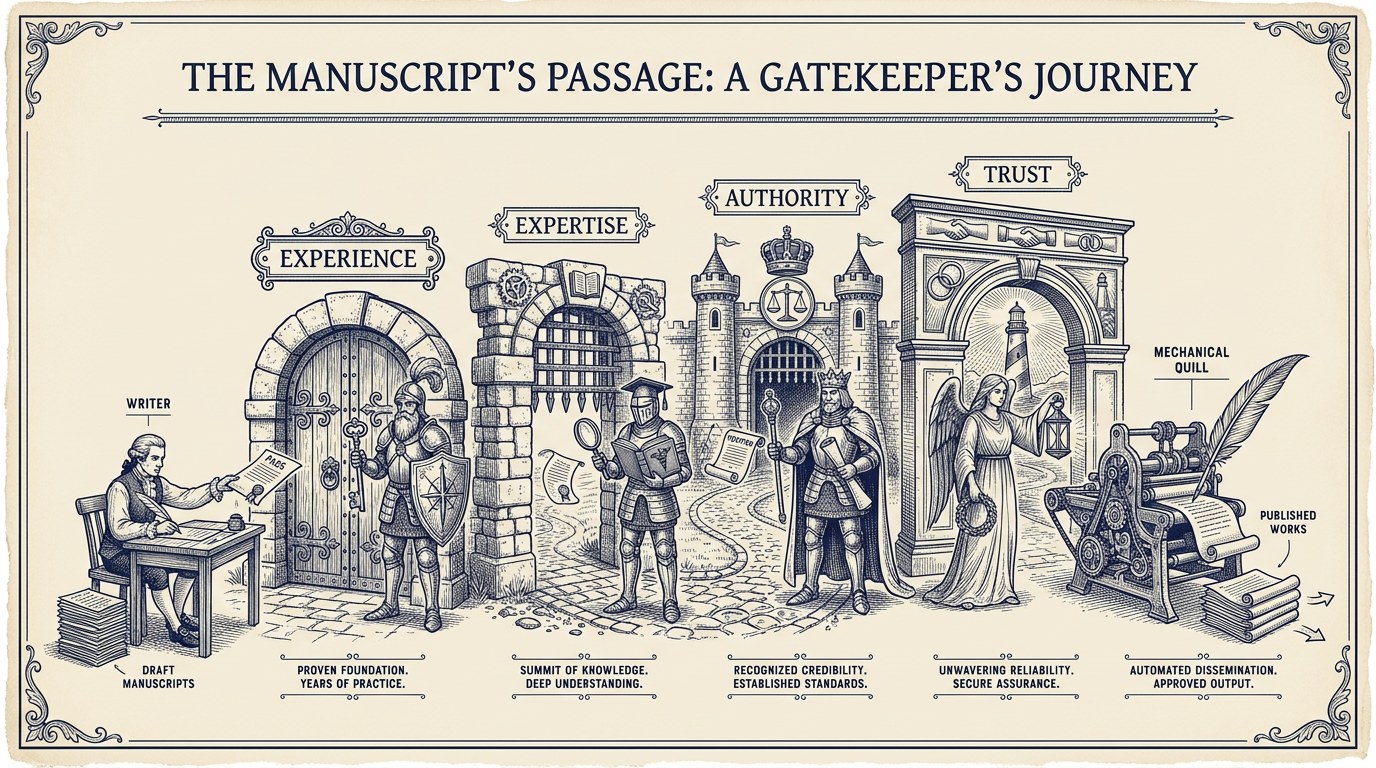
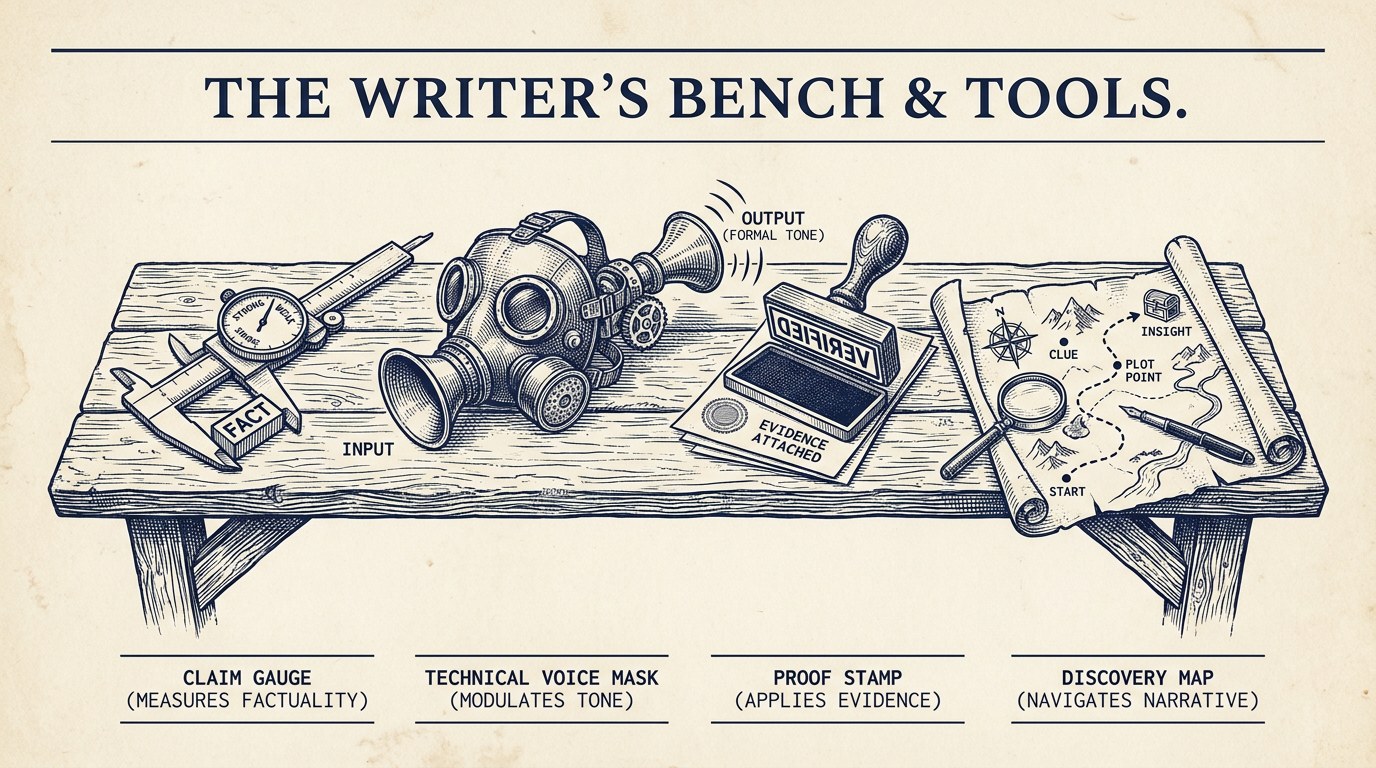
The framework covers the four elements that distinguish operator-grade B2B SaaS content writing from generic content. Each element has a specific function in the conversion path and a measurable quality signal.
The four elements
The elements below are listed in order of how technical buyers process content. Element 1 determines whether the buyer keeps reading; Elements 2 to 4 determine whether the buyer trusts what they read.
Element 1: claim density
Claim density is the number of decision-relevant claims per 100 words. Operator content carries 3 to 5 such claims; generic content carries 0 to 1. A decision-relevant claim is a specific assertion the reader can act on, dispute, or verify. "B2B SaaS sales cycles run 6 to 18 months" is a claim; "B2B SaaS sales cycles are complex" is not. Programs hitting the 3-to-5 range produce content technical readers complete; programs at 0 to 1 produce content abandoned after the first scroll.
Element 2: technical-buyer voice
Technical-buyer voice is defined more by what it excludes than what it contains. Excluded patterns: vague value statements, superlative claims without evidence, persona-based emotional appeals, and hedging language. Included patterns: direct claims, specific numbers, named examples, willing-to-take-positions framing. Animalz documents that voice consistency across long-form content is one of the strongest predictors of audience retention for B2B SaaS programs.
Element 3: proof-point integration
Each substantive claim should carry a proof point within 1 to 2 sentences. Proof types: specific numbers, named operator examples, citations to authoritative research, or operator anecdotes from named programs. Without proof, claims read as opinion. With proof, claims read as operator authority. The pattern integrates with the content brief template framework, covering Field 6 (required proof points) at the brief level.
Element 4: discovery-friendly structure
Discovery-friendly structure makes content compatible with both human technical buyers and search engines. Components: clear definitional opening in the first paragraph, named frameworks where structure justifies them, H2 structure that maps to TOC and schema, FAQ blocks that mirror question-form queries, and statistics with operator context. The structure produces SEO ranking compounding plus AI Search citation share without sacrificing readability.
03Why generic content writing fails for B2B SaaS
Generic content writing advice underperforms for B2B SaaS because it was developed for different audiences and different buying motions. The mismatch produces predictable failure patterns.
The audience mismatch
Generic content writing assumes consumer-like reading patterns: scan for emotional hook, follow a narrative, accept claims without verification. B2B SaaS technical buyers read differently. They scan for specifics first, evaluate claim density before committing to read the full piece, and verify proof points before trusting the source. CMI's annual B2B research documents the pattern across the broader B2B audience; technical buyers within B2B amplify these tendencies further. The integration with the four-constraint B2B SaaS content marketing strategy framework covers the broader strategic context.
The buying-motion mismatch
Generic content assumes short decision cycles where the content's job is to move the reader to a quick action. B2B SaaS cycles run 6 to 18 months across buying committees of 3 to 7 stakeholders. The content's job changes: build trust over the long cycle, equip internal champions to advocate, surface the proof points decision-makers need at each stage. Writing that pushes hard on a single CTA early in the journey actively erodes trust.
04Voice patterns that technical buyers respond to
Voice is the most consistent differentiator between content technical buyers complete and content they abandon. Three voice patterns recur across operator-grade B2B SaaS content.
Pattern 1: claim-led sentence structure
Operator content opens sentences with the claim, not with the qualifier. "Programs producing 4 to 8 cluster posts per month sustain compounding pipeline" is claim-led. The hedged version that buries the claim under qualifiers reads slower and signals less operator confidence. Claim-led prose reads faster and is consistent across long-form content from operator-credible B2B SaaS programs.
Pattern 2: period-heavy rhythm
Operator voice uses shorter sentences with periods over commas. Two-clause sentences read crisper than four-clause sentences. The rhythm produces a scan-friendly cadence that technical buyers prefer because they can extract claims faster. If you want to audit your current content writing against the four-element framework, book a 30-minute content writing audit with our team.
Pattern 3: willing-to-take-positions framing
Operator voice takes positions other writers hedge on. "Programs that try to produce 20 posts per month at thin quality lose to programs producing 4 posts per month at operator depth" is a position. "Different programs find different cadences work for them" is a hedge. Technical buyers reward positions because positions signal that the writer has operator experience and is confident enough to defend a claim.
05Sentence and paragraph patterns that compound
Sentence and paragraph structure compound across long-form content. Patterns that work at the sentence level multiply when applied consistently across 1,500 to 3,000 word pieces.
Sentence-level patterns
Three patterns at the sentence level matter most for B2B SaaS writing. First, claim-led structure. Second, specific numbers in place of vague qualifiers ("4 to 8 posts per month" not "regular cadence"). Third, named examples in place of generic descriptions ("Stripe, Supabase, Notion" not "leading B2B SaaS companies"). Each pattern compounds because technical readers register the specific signal and trust the writer more.
Paragraph-level patterns
The Claim-Evidence-Implication structure produces operator-grade paragraphs. Open with the claim, support with specific evidence (numbers, examples, citations), close with the implication for the reader. Two-paragraph rhythm sustains attention across long-form content: the second paragraph either deepens the first claim or pivots to the next claim with explicit transition. Programs writing in this rhythm produce content that compounds attention through long pieces.
06Integrating proof points without losing flow
Proof points are what separate authoritative content from opinion content. The challenge is integrating proofs without breaking the prose rhythm or producing citation-heavy paragraphs that read as academic rather than operator-grade.
Where proof points fit in the paragraph
Proof points sit within 1 to 2 sentences of the claim they support. "Sales cycles run 6 to 18 months" is the claim; "Gartner documents 13 content interactions on average across 6+ month evaluations" is the supporting proof point. Programs that batch proofs into a separate "research" paragraph break the Claim-Evidence-Implication rhythm and produce content that reads as report-style rather than operator-style.
Proof-point types and rotation
Five proof types rotate across operator content: specific numbers, named operator examples, citations to authoritative third-party research, operator anecdotes from named programs, and historical pattern references. Programs that use only one proof type (typically citations) produce content that reads as derivative. Programs that rotate proof types across paragraphs produce content that compounds operator authority across the piece. The relationship with the 8-field content brief framework connects via Field 6, which specifies the required proof points before writing starts.
07Measuring writing quality and iterating
Writing quality measurement separates programs improving over time from programs stuck in the same patterns. The KPIs that matter for B2B SaaS writing operate at the piece level and the program level.
Piece-level writing quality KPIs
Three KPIs catch most writing quality issues: time-on-page (whether readers complete the piece), scroll depth (where they drop off if they do not complete), and operator-claim density (the 3-to-5 per 100 words target). Pieces scoring high on time-on-page and scroll depth signal that the four-element framework is working; pieces with low scores signal which element is missing.
Program-level writing quality patterns
At the program level, quality measurement tracks consistency across writers and pieces. Three patterns emerge: claim density should be consistent across the program (variance under 30 percent piece-to-piece), voice patterns should be consistent (same writers maintaining voice across pieces, different writers converging on shared voice through editorial review), and proof-point density should be consistent (variance under 25 percent). The integration with the three-tier board SEO scorecard covers program-level reporting on content quality alongside SEO performance.
08Common failures and the marketing-copy trap
Three failure patterns account for most underperforming B2B SaaS content writing programs. Each one has a specific corrective discipline.
Three failure patterns
The patterns below appear in roughly 70 percent of the B2B SaaS content writing audits we run. Each one has a clear diagnostic signal and a corrective approach.
Failure 1: marketing-copy trap
The most damaging failure is hiring writers from B2C or general B2B backgrounds without recalibrating to B2B SaaS technical-buyer norms. The writers produce content that satisfies internal stakeholders (because it sounds professional) but fails to convert the actual technical audience (because it reads as marketing copy). The fix is explicit voice-and-tone documentation, plus brief design that prevents writers from defaulting to marketing-copy patterns.
Failure 2: claim-density collapse
The reverse failure is treating B2B SaaS writing as opinion essays. Writers produce 1,500 to 2,500 word pieces with 0 to 1 decision-relevant claims per 100 words. The content traffics but does not convert because technical buyers scan for claims, find none, and disengage. The fix is brief-level enforcement of claim density before writing starts, with editorial review catching drift mid-draft.
Failure 3: proof-point starvation
The third failure is producing content with strong voice and solid claims but no proof points. The content reads as confident opinion rather than operator authority. The fix is the 1-to-2-sentence proof point rule applied consistently, with the brief specifying the required proofs and the editorial review verifying their integration.
09FAQ
Seven questions covering the topics most commonly searched on B2B SaaS content writing.
What is B2B SaaS content writing?
B2B SaaS content writing is the operator discipline of producing prose that converts technical buyers in markets with 6 to 18 month sales cycles. It differs from general content writing in voice, structure, claim density, and proof-point integration. The discipline produces topical authority that compounds across SERPs and AI Search, operator credibility that earns trust from technical buyers, and conversion paths that move buyers from problem-aware to vendor-aware over the long sales cycle.
What are the four elements of the operator framework?
The four elements are: claim density, the number of decision-relevant claims per 100 words (target 3 to 5); technical-buyer voice, defined by the absence of marketing-copy patterns and the presence of direct, claim-led framing; proof-point integration, with each substantive claim carrying a proof within 1 to 2 sentences; and discovery-friendly structure, making content compatible with both human technical buyers and search engines including AI Search.
Why does generic content writing fail for B2B SaaS?
Two mismatches cause the failure. The audience mismatch: generic writing assumes consumer-like reading patterns; B2B SaaS technical buyers scan for specifics first, evaluate claim density before committing to read fully, and verify proof points before trusting the source. The buying-motion mismatch: generic content assumes short decision cycles; B2B SaaS cycles run 6 to 18 months across buying committees, which changes the content's job from quick action to long-cycle trust building.
What is claim density and how do I measure it?
Claim density is the number of decision-relevant claims per 100 words in a piece of content. A decision-relevant claim is a specific assertion the reader can act on, dispute, or verify. Operator content carries 3 to 5 such claims per 100 words; generic content carries 0 to 1. Measurement: highlight every decision-relevant claim in a piece, divide by total word count, multiply by 100.
What voice patterns work for technical buyers?
Three voice patterns recur across operator-grade B2B SaaS content. Claim-led sentence structure opens sentences with the claim, not the qualifier. Period-heavy rhythm uses shorter sentences with periods over commas, producing scan-friendly cadence. Willing-to-take-positions framing takes positions other writers hedge on, signaling operator experience and confidence.
How should proof points integrate into the prose?
Proof points sit within 1 to 2 sentences of the claim they support. Five proof types rotate across operator content: specific numbers, named operator examples, citations to authoritative third-party research, operator anecdotes from named programs, and historical pattern references. Programs that rotate proof types across paragraphs compound operator authority across the piece.
What is the marketing-copy trap?
The marketing-copy trap is the most damaging failure pattern in B2B SaaS content writing. Programs hire writers from B2C or general B2B backgrounds without recalibrating to B2B SaaS technical-buyer norms. The writers produce content that satisfies internal stakeholders but fails to convert the technical audience because it reads as marketing copy. The fix is explicit voice documentation plus brief design that prevents marketing-copy defaults.
This is the four-element operator framework under content writing.
The content writing sub-pillar covers the broader playbook, including the four-element operator framework, technical-buyer voice, the writing process, executive ghostwriting, and AI-assisted writing.