
On this page
Headless CMS adoption among B2B SaaS marketing teams has accelerated since 2022. The reasons are real: faster page loads, cleaner developer experience, content reuse across product and marketing surfaces. The trade-off is real too. SEO that used to work by default on WordPress or webflow now requires explicit engineering. Schema markup that was a plugin click is now a content model decision. Sitemap generation that was automatic is now a build step.
This post covers what actually changes for SEO when you go headless, how the five major platforms compare honestly, and the migration discipline that prevents ranking loss when teams make the switch.
01What headless CMS is and what changes for SEO
Headless CMS is a content management system without a default front-end. The CMS stores content as structured data accessed through an API. A separate front-end application (typically Next.js, Nuxt, or Astro) fetches that content and renders it as the website. This split changes everything about how SEO works compared to WordPress, webflow, or HubSpot CMS.
What a headless CMS actually is
In a traditional CMS, the content database and the website are one system. Editors write content. The CMS renders pages on every request. SEO fields like meta titles, schema markup, and sitemaps are built in. In a headless CMS, the content database lives in one place (the CMS) and the website lives somewhere else (the front-end application). The two communicate through an API. The marketing team works in the CMS. Engineering owns the front-end. SEO becomes a shared responsibility because both layers touch it.
This post sits within the technical SEO operational reference for B2B SaaS programs and connects to the full B2B SaaS SEO operator reference for category leaders at the pillar level. The diagnostic discipline for verifying headless implementations works correctly lives in the log file analysis operator playbook for B2B SaaS programs.
What changes for SEO compared to WordPress
Three things change. First, the rendering layer. WordPress renders every page server-side by default. Headless setups can render server-side, client-side, statically, or incrementally. Each choice has different SEO implications, covered in Chapter 03. Second, editor SEO fields. WordPress ships with Yoast or Rank Math, which gives every page meta controls. Headless platforms ship with content models that contain only what someone decided to include. Third, the publishing pipeline. WordPress publishes instantly. Headless setups publish through a build job that can take 30 seconds or 30 minutes.
The benefits are real. Performance is typically better because pages serve as static HTML from a CDN. Developer experience is cleaner because the front-end is a normal application instead of a PHP theme. Content reuse across surfaces (marketing site, product, mobile app, partner portal) is straightforward because everything reads from the same API. The discipline is configuring it correctly for SEO.
When headless is the right choice for B2B SaaS
Three signals indicate headless is worth the migration. First, content reuse across multiple surfaces. Second, performance ambitions that WordPress or webflow cannot meet. Third, engineering team capacity to own and maintain a custom front-end. Programs missing any of these three usually do better staying on the traditional CMS they have.
The signal that headless is not the right choice: a small marketing team without dedicated engineering support. Headless CMS adds engineering surface area that someone has to maintain. If the engineering team is not staffed to support marketing-driven content velocity, the build pipeline becomes a bottleneck that slows content shipping. WordPress with a good theme and SEO plugins outperforms a poorly maintained headless setup every time.
02The three SEO challenges every headless setup creates
Three challenges show up in every headless migration. Programs that address all three ship migrations that maintain or improve SEO performance. Programs that miss one or more ship migrations that lose 20 to 60 percent of organic traffic.
Challenge 1: rendering determines what Google sees
Google can crawl JavaScript-rendered content, but the process is slower, more expensive, and less reliable than crawling pre-rendered HTML. For SEO-critical pages, client-side rendering is a gamble. Google sometimes renders correctly. Sometimes it does not. The pages that fail to render correctly fall out of the index or rank poorly.
The fix is server-side rendering or static site generation for every SEO-critical page. Both produce HTML that Google sees immediately on crawl. Client-side rendering is acceptable for application surfaces that do not need to rank (logged-in dashboards, admin tools) but is the wrong choice for marketing pages. Chapter 03 covers the decision framework in detail.
Challenge 2: editors lose default SEO fields
WordPress installs Yoast by default. Every page gets meta title, meta description, schema markup, and OG tags through a plugin interface editors already know. Headless platforms ship with empty content models. Unless someone builds SEO fields into the content model, editors cannot set them.
The fix is including SEO fields in every content type the CMS ships. Meta title, meta description, OG image, canonical URL override (optional), and schema type selector are the minimum. Some teams add structured data fields (product schema, FAQ schema, article schema) into the content model so editors can configure rich snippets. The discipline is treating SEO as a first-class content model concern, not a developer-only concern.
Challenge 3: the build pipeline owns publishing speed
Marketing teams accustomed to pressing publish and seeing the page live in seconds now wait for a build job. For static site generation, this means rebuilding the entire site on every content change. For incremental regeneration, this means waiting for the affected page to rebuild. Build times of 5 to 15 minutes are normal in production B2B SaaS headless setups, and they affect how marketing teams operate.
The fix is build pipeline optimization: caching to skip unchanged content, parallel builds, Incremental Static Regeneration so individual pages rebuild without rebuilding the whole site, and webhooks that trigger builds only on content publish. If you want to walk through which of these three challenges is hitting your migration plan most, book a 30-minute headless SEO audit with our team.
03Rendering: SSR, ISR, SSG, and the decision framework
Rendering strategy is the single most important SEO decision in a headless setup. Get it right and SEO works without further intervention. Get it wrong and even the best content model and build pipeline cannot recover the losses. This chapter covers the four options, the trade-offs of each, and the decision framework for picking the right one by content type.
SSR (Server-Side Rendering)
SSR renders the page on the server when a request arrives. Every visitor (including Googlebot) gets fully rendered HTML. SEO is straightforward because Google sees the same content as users. The trade-off is server cost (every page request hits the server) and response time (rendering takes 100 to 500 milliseconds). SSR is the right choice for content that changes frequently, requires personalization, or cannot be cached at the edge.
For B2B SaaS marketing sites, SSR fits authenticated pages, real-time pricing displays, and content that varies by visitor. For most marketing pages, SSR is overkill because the content does not change between requests.
ISR (Incremental Static Regeneration)
ISR renders the page once, caches the result, and regenerates it on a schedule or on-demand via webhook. Visitors get cached HTML, which is fast and SEO-friendly. The cache refreshes when content changes without rebuilding the whole site. This is the Next.js-popularized middle ground between SSR and SSG, and it is the right pick for most B2B SaaS marketing surfaces.
Use ISR for blog posts, product pages, customer stories, and integration directories. Set the regeneration window based on content update frequency: 60 seconds for fast-changing pages, 24 hours for stable pages, on-demand for editorial control. ISR combines SSR performance characteristics with SSG SEO characteristics.
SSG (Static Site Generation)
SSG renders every page at build time. The output is static HTML served from a CDN. SEO is excellent because Google gets pre-rendered HTML on every crawl. Performance is excellent because the CDN serves the page in milliseconds. The trade-off is build time: every content change requires rebuilding affected pages, and on large sites, this can mean 10 to 60 minute build jobs.
Use SSG for documentation, evergreen content, and pages that rarely change. For sites with frequent content updates, ISR is usually better because it preserves the SSG SEO benefits while avoiding the full-rebuild cost.
The decision framework: pick by content type
Documentation, evergreen blog posts, and pages that rarely change use SSG. Blog posts and product pages with regular updates use ISR with a 60-second to 24-hour regeneration window. Personalized pages, authenticated pages, and pages that vary by request use SSR. Application surfaces that do not need SEO use client-side rendering. Match the rendering strategy to the page type at the routing layer, not at the site level. Mixed-rendering sites are normal and correct in headless setups.
04Comparing the five major headless platforms for B2B SaaS SEO
The five major headless CMS platforms for B2B SaaS are Contentful, Strapi, Sanity, Hygraph, and Prismic. Each supports the SEO patterns covered in this post. The differences are developer experience, pricing, and content modeling philosophy. This chapter compares them honestly across SEO-relevant criteria.
Contentful
Contentful is the most mature enterprise headless CMS. Strong content modeling, mature workflow features, generous free tier for small teams, expensive at scale ($300 to $3,000 monthly for production B2B SaaS use cases). SEO support is solid: webhook-driven build triggers, GraphQL and REST APIs, image optimization built in. The trade-off is rigid content modeling that requires upfront planning.
Best fit: enterprise B2B SaaS programs with dedicated content operations and engineering teams. Programs that need workflow, multi-language support, and enterprise compliance.
Strapi
Strapi is the leading open-source headless CMS. Self-hosted or Strapi Cloud, MIT licensed, strong developer adoption. SEO support is good through plugins (Strapi SEO Plugin, Strapi Sitemap Plugin). The trade-off is hosting and maintenance overhead. Self-hosting means engineering owns the database, the application server, and the upgrades. Strapi Cloud removes that overhead at a price ($99 to $499 monthly for typical B2B SaaS use cases).
Best fit: B2B SaaS programs with engineering teams that prefer open-source and have capacity to maintain infrastructure. Cost-sensitive programs that want to avoid vendor lock-in.
Sanity
Sanity differentiates on content modeling flexibility through Sanity Studio (a customizable editor interface) and the Portable Text format. SEO support is solid through community plugins. Pricing is usage-based and scales reasonably for marketing-team-sized projects ($99 to $999 monthly). The trade-off is the steeper learning curve for editors compared to Contentful's more conventional interface.
Best fit: B2B SaaS programs where the content model is unusually complex. Programs that value editor customization highly.
Hygraph
Hygraph (formerly GraphCMS) is GraphQL-native and built for federated content (combining multiple data sources into one API). SEO support is solid through built-in content modeling that includes SEO fields. Pricing is reasonable ($99 to $749 monthly for typical B2B SaaS use cases). The trade-off is smaller community compared to Contentful and Strapi.
Best fit: B2B SaaS programs with GraphQL-native front-ends and content distributed across multiple sources.
Prismic
Prismic differentiates on the Slice Machine approach, which gives developers and editors a shared component-driven editing model. Strong fit for component-heavy marketing sites. SEO support is solid through Prismic's built-in SEO fields. Pricing is reasonable ($100 to $750 monthly for typical B2B SaaS use cases). The trade-off is opinionated content modeling that may not fit all use cases.
Best fit: B2B SaaS programs with marketing teams that build pages from reusable components. Teams that want editors composing pages from components rather than filling structured forms.
The pattern across all five: choose based on your engineering preference, your content modeling needs, and your budget. The SEO capabilities are roughly equivalent. The implementation discipline matters far more than the platform choice. This is also where the architecture decision integrates with the cross-pillar measurement framework tracking organic outcomes on a quarterly cadence for verifying whether the migration delivered the expected SEO outcomes.
05Schema markup, sitemaps, and metadata management in headless
Schema markup, XML sitemaps, and metadata management work differently in headless than in WordPress. Each requires explicit implementation rather than plugin installation. Programs that treat schema, sitemaps, and metadata as engineering work get them done correctly. Programs that assume the CMS will handle them automatically often discover the gap after launch.
Schema markup in a headless setup
Schema markup gets generated in one of two ways in headless. Option one: the content model includes structured data fields and the front-end application reads those fields and outputs JSON-LD on the page. Option two: the front-end application infers schema from the content type alone. Most production B2B SaaS headless setups combine both: automated schema for content type defaults plus editor-controlled fields for type-specific data.
The discipline is consistency. Every page that should have schema gets schema. Every schema type validates against schema.org and Google's Rich Results Test. Schema lives in the page source HTML, not injected client-side. This is the highest-impact technical SEO work in a headless setup because most vendor templates leave it incomplete.
XML sitemap generation in headless
XML sitemaps in headless are generated at build time, not on request. The build process queries the CMS for every published URL, formats them into an XML sitemap, and writes the file to the static output. The sitemap rebuilds on every content change. For ISR setups, the sitemap rebuilds on the same regeneration window as content. The discipline is making sure the sitemap reflects only pages that should be in the index.
Most headless front-end frameworks (Next.js, Nuxt, Astro) provide sitemap libraries that read the content API and generate the sitemap automatically. The implementation is typically 50 lines of code. Programs that hand-maintain sitemaps in headless setups are doing unnecessary work and risk falling out of sync with published content.
Metadata management at the content model level
Meta title, meta description, OG image, OG title, OG description, Twitter card data, and canonical URL belong in the content model so editors can control them per page. The content model fields populate the page's head at render time. Without these fields in the content model, the front-end has to infer metadata from page content, which is acceptable as a fallback but suboptimal because editors lose direct control.
The recommended content model includes a Page SEO composite field on every content type with seven sub-fields: meta title (with character count validation), meta description (with character count validation), OG image (with dimension validation), OG title override, OG description override, canonical URL override, and a schema type selector for rich snippet control. This pattern works across all five platforms covered in Chapter 04.
06Build pipelines, edge functions, and CDN configuration for SEO
The build pipeline and CDN configuration determine whether a headless setup ships content fast and serves it fast. Programs that treat build pipelines as engineering infrastructure miss the marketing operations dimension. Programs that treat them only as marketing operations miss the engineering performance dimension. The right approach handles both.
Build trigger strategy for content velocity
Build triggers determine how quickly content goes from publish to live. The wrong default is rebuilding on every content save. A better default is rebuilding only on publish events, with manual override for editors who want to deploy a draft. For ISR setups, the build trigger is replaced by on-demand revalidation: editors press publish, the affected page rebuilds within seconds, and the rest of the site stays untouched. The on-demand revalidation pattern is the operational gold standard for content velocity in headless.
Implementation requires webhook configuration in the CMS and revalidation endpoints in the front-end. Most modern headless front-end frameworks (Next.js, Nuxt) support on-demand revalidation natively. The engineering work is typically half a day. The marketing operations benefit is significant.
CDN configuration: Vercel, Netlify, Cloudflare Pages
The three major hosting platforms for headless front-ends are Vercel, Netlify, and Cloudflare Pages. Each provides CDN-level caching, edge functions, and build hosting. SEO-relevant configuration is similar across all three: cache static HTML aggressively, cache assets at the edge, set up proper HTTP/2 or HTTP/3 delivery, configure security headers that do not interfere with crawling.
The trade-offs are pricing model, build minute allowance, and edge function capabilities. For most B2B SaaS marketing sites, all three perform adequately and the choice comes down to engineering preference.
Edge functions for SEO-critical logic
Edge functions handle SEO-critical logic that needs to run on every request without hitting the origin server. Common use cases: A/B testing redirects that preserve canonical signals, country-specific routing for international SEO, dynamic robots.txt generation for staging versus production environments, and bot detection for differentiated rate limiting. Edge functions run within 50 to 100 milliseconds globally, which keeps page response times fast.
The discipline is using edge functions sparingly and only for logic that genuinely needs to run at the edge. Most B2B SaaS marketing sites need three to five edge functions, not thirty.
07Migrating to or from headless without losing rankings
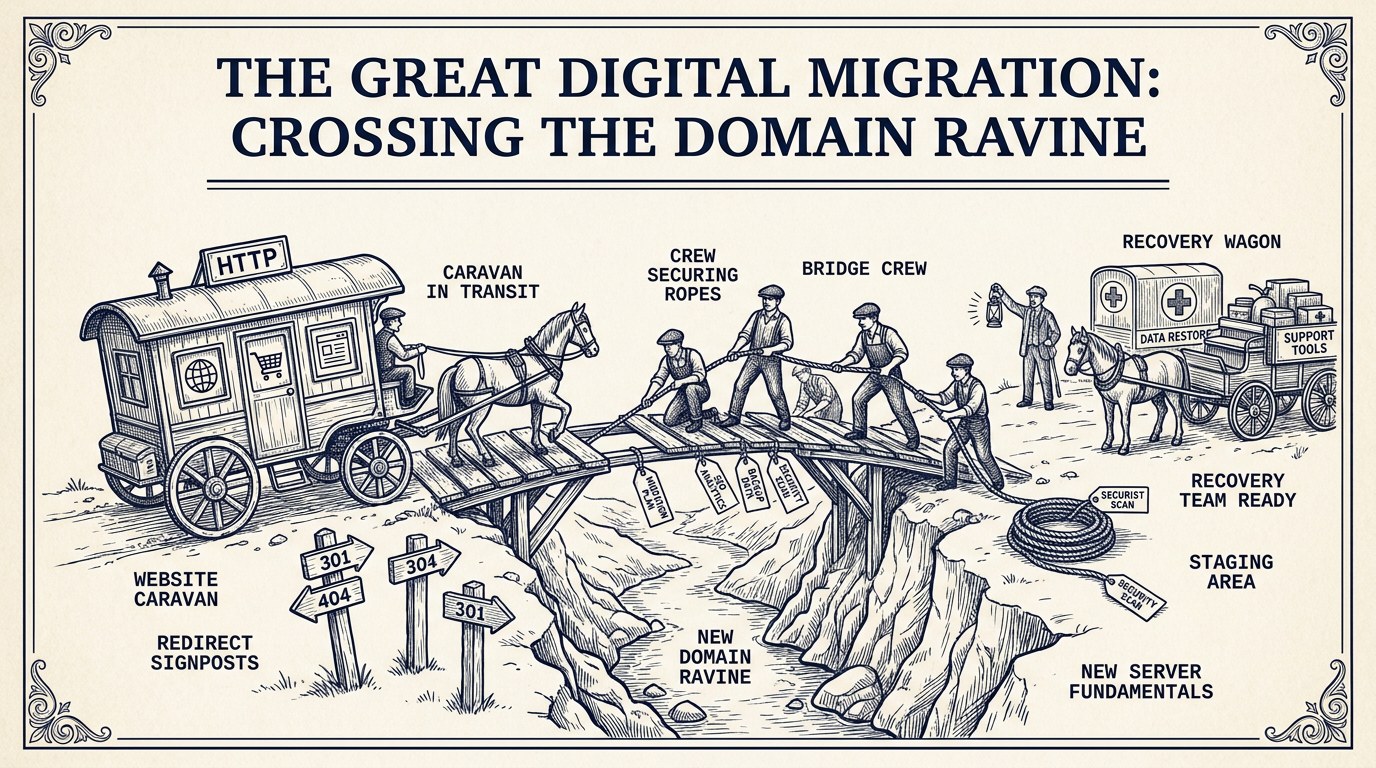
Migration is where most headless SEO disasters happen. The migration ships, traffic drops, and the team spends 6 to 12 months recovering. The recovery is mostly preventable. This chapter covers the migration discipline that maintains organic traffic across the cutover.
Pre-migration audit
The pre-migration audit captures the current state before anything changes. Crawl the existing site with Screaming Frog or Sitebulb. Export every URL, current rankings from Search Console, and traffic data from analytics for the last 12 months. Identify the top 100 pages by organic traffic. These are the pages that must not break during migration. The audit produces three deliverables: a complete URL list, a top-pages priority list, and a baseline traffic snapshot for post-migration comparison.
The audit also identifies content that should not migrate. Stale blog posts that produce no traffic. Year-old landing pages from defunct campaigns. Tag pages and author archives that fragment SEO equity. The migration is a clean-slate opportunity to leave behind content that adds noise.
URL preservation and 301 mapping
Every URL that changes during migration needs a 301 redirect from the old URL to the new URL. This is the single most important migration discipline. Without 301 mapping, the URL changes look to Google like the pages disappeared, and rankings drop accordingly. The 301 mapping needs to cover every URL that ranks for anything, every URL with external backlinks, and every URL with internal traffic above 10 visits monthly.
Implementation typically lives at the CDN or middleware level (Vercel vercel.json, Netlify _redirects file, Cloudflare Workers). The redirect rules ship before the migration goes live. After migration, the SEO team validates the redirects work by crawling the old URL list and confirming every URL redirects to the correct new destination with a 301 status code. Programs that ship migrations without complete 301 mapping lose 30 to 60 percent of organic traffic in the first 30 days.
The 60-day stabilization window
Post-migration, expect a 60-day window of traffic fluctuation. Google needs time to re-crawl every URL, process the 301 redirects, and update its index. Some pages rank lower temporarily as Google re-evaluates them at the new URLs. Some pages rank higher because the migration cleaned up technical issues. The pattern at 30 days shows whether the migration is on track. The pattern at 60 days confirms recovery.
08Common failures and the JavaScript indexing trap
Three failure patterns account for most underperforming headless implementations. Each one has a specific corrective discipline. The chapter also covers the recurring vendor claim about Googlebot's JavaScript execution capability, which is technically true but practically misleading.
Failure 1: trusting client-side rendering for SEO content
The most common headless failure is shipping client-side rendered marketing pages and assuming Google will execute the JavaScript. Google does execute JavaScript, but the process is slower, more expensive for Google, and less reliable than crawling pre-rendered HTML. For SEO-critical pages, client-side rendering is a gamble. The fix is auditing the rendering strategy by content type and migrating SEO-critical pages to SSG or ISR before they lose rankings.
Failure 2: shipping migrations without 301 mapping
The second failure is shipping a headless migration without complete 301 redirects from old URLs to new URLs. The migration ships, traffic drops 30 to 60 percent, and the team spends months figuring out which URLs broke. The fix is requiring 301 mapping as a release gate. The migration does not ship until every URL change has a corresponding redirect, validated against the pre-migration URL list.
Failure 3: assuming headless equals fast
The third failure is assuming headless is automatically fast. Headless setups can be very fast if configured correctly. They can also be very slow if configured badly. The variables that matter: rendering strategy, CDN configuration, JavaScript bundle size, image optimization, third-party script load. A static-generated Next.js site on Vercel with optimized assets can load in under 1 second. A poorly configured headless setup can be slower than a well-tuned WordPress site. Test performance before declaring victory on the migration.
09FAQ
What is headless CMS SEO and how is it different from traditional CMS SEO?
Headless CMS SEO is the discipline of running search engine optimization on websites where the content management system and the front-end application are separate systems connected through an API. The difference from traditional CMS SEO is that SEO features previously bundled into the CMS now require explicit implementation in the front-end application. A well-configured headless setup ranks as well as any monolithic CMS. A poorly configured setup with client-side rendering and missing schema underperforms badly.
Which is the best headless CMS for SEO?
No single platform is best for SEO. Contentful, Strapi, Sanity, Hygraph, and Prismic all support the same SEO patterns (server-side rendering, schema markup, sitemap generation, metadata management). The differences are developer experience, pricing, and content modeling philosophy. Choose based on engineering preference, content modeling needs, and total cost of ownership, not on which vendor markets SEO best.
Does headless CMS hurt SEO?
No. A well-configured headless CMS performs as well as or better than traditional CMS for SEO. The conditions for headless SEO success are server-side rendering or static site generation for SEO-critical pages, schema markup implemented at the content model level, XML sitemaps generated at build time, and proper editor SEO fields in every content model. Programs that ship headless without these conditions often lose rankings, which has produced the perception that headless hurts SEO. The platform is not the cause. The implementation is.
Can Googlebot render JavaScript in a headless CMS site?
Yes, but unreliably. Googlebot executes JavaScript using a version of Chromium, and pages rendered client-side can rank. The practical reality is that Google's JavaScript execution is slower, more expensive, and less reliable than crawling pre-rendered HTML. For SEO-critical content, server-side rendering or static site generation is the safer choice. Client-side rendering is appropriate only for application surfaces that do not need to rank.
How long does a headless CMS migration take to stabilize for SEO?
Headless CMS migrations stabilize on a 60-day window. The first 30 days show whether the migration is on track. The pattern at 60 days confirms recovery. Programs that ship migrations with complete 301 mapping and proper rendering typically maintain or improve organic traffic across the cutover. Programs that ship without 301 mapping lose 30 to 60 percent of traffic and take 6 to 12 months to recover.
What is the difference between SSR, ISR, and SSG?
SSR renders pages on the server when a request arrives. ISR renders pages once, caches the result, and regenerates on a schedule or via webhook. SSG renders every page at build time. All three produce HTML that Google sees on crawl. Most B2B SaaS marketing surfaces should use ISR for blog and product pages, SSG for documentation, and SSR for personalized pages.
How do I add schema markup in a headless CMS?
Schema markup in headless gets implemented in two ways. Option one: the content model includes structured data fields and the front-end application reads those fields and outputs JSON-LD on the page. Option two: the front-end application infers schema from content type alone. Most production B2B SaaS headless setups combine both. Schema lives in the page source HTML, not injected client-side. The implementation requires engineering work in the front-end application, not a CMS plugin installation.
Part of the technical SEO playbook
The strategic framework covering this discipline and how it connects to the broader B2B SaaS SEO program lives on the parent sub-pillar.