On this page
Stripe ranks for thousands of developer search queries that no marketing page could ever capture. Supabase, Twilio, Auth0, and Plaid run similar plays. Their documentation captures developers at the moment of evaluation, implementation, and troubleshooting. The technical depth of the docs creates surface area for AI Search engines to cite. The result is a compounding growth channel that produces signups, activations, and qualified pipeline at lower cost than any marketing content.
Most B2B SaaS programs with API products treat documentation as a support cost center rather than a growth asset. This post covers the four developer search intents documentation must serve, the page architecture that ranks each intent, the structured data patterns that earn AI Search citation, and the linking strategy that connects docs to marketing pages. The output is a framework that converts the largest underused SEO surface in your content architecture into a measurable growth channel.
01What API documentation SEO actually is for B2B SaaS
API documentation SEO is the discipline of structuring technical documentation so it ranks in search engines, gets cited by AI Search engines, and converts developer search traffic into signups, activations, and pipeline. For B2B SaaS programs with developer-facing products, documentation is a growth channel disguised as a support resource.
What developer documentation SEO actually means
The discipline covers four elements: page architecture optimized for developer search behavior, structured data that earns rich results and AI Search citation, internal linking that connects technical queries to marketing pages, and measurement that ties docs traffic to product outcomes. Matt Hackett, CTO and SaaS entrepreneur, framed the buyer signal directly: well-indexed, example-filled, hyperlink-saturated documentation is evidence that the team will not have to struggle to use a tool.
This post operates within the B2B SaaS technical SEO sub-pillar at the discipline level.
Why B2B SaaS programs underinvest here
The structural reason is organizational. Marketing teams own marketing pages; engineering or DevRel teams own documentation. Neither team has the joint mandate to optimize docs as a growth channel. Marketing does not write code examples; engineering does not write for search engines. The result is documentation that serves users adequately but never realizes its SEO potential. Nakora documents how the best B2B SaaS programs (Stripe, Supabase) close this gap with dedicated docs-growth roles rather than splitting ownership across marketing and engineering.
02The four developer search intents docs must serve
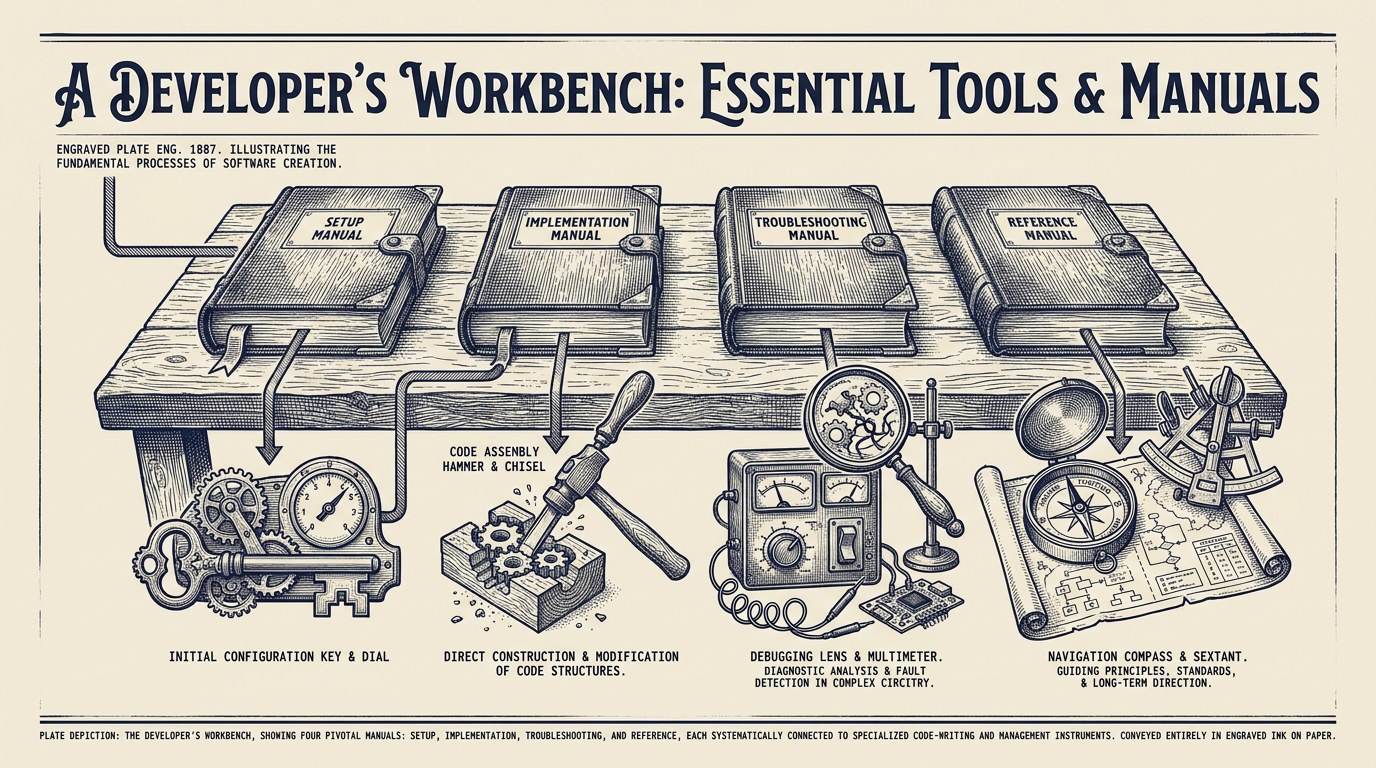
Developer search behavior differs from B2B buyer search behavior. Developers search task-first, scan results aggressively, and often arrive at the moment of implementation rather than the moment of evaluation. Four search intents account for nearly all docs traffic.
The four developer search intents
Intent 1: Setup and getting started
The developer is evaluating or starting integration. Queries: "stripe getting started," "supabase quickstart," "twilio first SMS." The docs page should serve a fast path to a working integration in under 10 minutes. SEO outcome: ranks for category-plus-action terms; converts evaluators into trial users.
Intent 2: Implementation (specific tasks)
The developer is implementing a specific feature. Queries: "stripe checkout session create," "supabase real-time subscription," "send sms with twilio python." This is the highest-volume intent across most B2B SaaS docs. Each task-specific page captures dozens of long-tail variations. Chilly Lizard frames this clearly: docs cover parameters, error strings, exact steps, and edge cases that marketing pages cannot substitute for.
Intent 3: Troubleshooting (error strings, edge cases)
The developer hit an error. Queries: "stripe 429 rate limit," "supabase RLS policy not working," "twilio error 21610." Troubleshooting pages convert the highest because the developer is actively blocked and motivated to find a solution. Each error-specific page captures a focused long-tail query with high conversion intent.
Intent 4: Reference (specific endpoints, parameters)
The developer needs specifics. Queries: "stripe charge object," "supabase select query syntax," "twilio messages resource." Reference pages auto-generate from OpenAPI specs in most modern docs systems. SEO outcome: captures parameter-level long-tail; signals topical authority to Google. If you want to map your docs against the four intents and find the coverage gaps, book a 30-minute docs SEO audit with our team.
03Structuring docs for SEO: page architecture and headings
Page architecture for docs differs from marketing-page architecture. Developers scan differently, search differently, and have different patience for content depth. Three structural patterns matter most.
Title tags and H1s for technical pages
Title tags and H1s should include both the task and the object. Strong: "Create an API key," "Authenticate with OAuth 2.0," "Handle 429 rate limit errors." Weak: "Authentication" (too broad), "Getting Started" (vague and overused). The pattern that ranks is task-first naming because that matches the way developers search.
First 200 words pattern
The first 200 words should state exactly what the page helps the developer do and who it is for. Example: "This guide shows how to authenticate requests using OAuth 2.0 for server-to-server integrations. You will create a client, request a token, then use the token to call the API." The pattern signals both the audience and the outcome, which Google and AI Search engines extract for snippet generation.
URL structure for docs sites
URLs should be flat and descriptive (/docs/payments/create-charge) not hierarchical and opaque (/docs/sec-7-3-a). Each meaningful task gets a dedicated URL. Redocly documents that 71 percent of commercial buyers begin research with generic Google searches and 90 percent of B2B researchers use search to research business purchases. The URL is the first signal Google associates with the topic; it must be readable.
04OpenAPI specs, code examples, and structured data
Three technical patterns separate B2B SaaS docs that rank from B2B SaaS docs that languish. Each is a one-time investment that compounds.
OpenAPI specs and discoverability
OpenAPI (formerly Swagger) specifications drive automated documentation generation with built-in search discoverability. Stripe's API reference is auto-generated from OpenAPI specs and provides a canonical example of the pattern. The specification produces per-endpoint pages with consistent structure, which signals topical authority across hundreds of pages.
Code example indexing
Code examples in multiple languages capture long-tail queries that no other content can. "Stripe Node.js example," "Supabase Python sample," "Twilio Ruby integration" are all winnable for B2B SaaS programs whose docs include code samples per language. Each language adds a long-tail dimension to the same underlying task.
Structured data for technical content
HowTo schema marks step-by-step procedures. TechArticle schema marks technical reference content. SoftwareApplication schema marks the product itself. The three schemas together earn rich results in SERPs and improve AI Search citation rates. Most B2B SaaS docs sites have no structured data; programs that add it earn outsized ranking and citation lift relative to the implementation cost.
05Internal linking: connecting docs to marketing pages
Documentation captures developer search intent. Marketing pages convert that intent into pipeline. The internal link pattern between docs and marketing pages determines whether the connection happens.
From docs to marketing: the link pattern
When a developer reads a docs page about a specific feature (webhooks, API rate limits, OAuth flows), the page should link contextually to the relevant product page, pricing page, or comparison page. The link does not interrupt the docs flow; it appears as a natural reference when the developer might want commercial context ("Learn more about webhook reliability on our infrastructure page"). Stripe, Supabase, and Twilio all run this pattern.
From marketing to docs: when it makes sense
The reverse pattern (marketing pages linking to docs) makes sense for two cases. First, when the marketing page describes a capability and the docs provide implementation depth ("See the API reference for the full webhook payload"). Second, when comparison pages need technical proof points ("Our rate limits are 100 requests per second per key, documented in the rate limiting guide"). Marketing pages without these links lose developer-audience trust because the proof is missing.
06AI Search citation for technical documentation
AI Search engines cite documentation at disproportionately high rates because docs structure matches the patterns AI engines extract. B2B SaaS programs that publish well-structured docs earn citation share that compounds.
Why AI engines cite documentation heavily
AI engines (ChatGPT, Perplexity, Claude, Google AI Overviews) extract content with clear definitional openings, step-by-step procedures, code examples, and structured information. Documentation has all four properties by design. The result is that docs earn citation share at 3 to 8 times the rate of marketing pages on equivalent topics. The mechanism is covered in the AI Search reference framework for B2B SaaS programs.
What docs structure earns AI Search citation
Three structural elements drive AI Search citation. First, the first-paragraph answer pattern (the first 100 words answer the implied question cleanly). Second, code examples in multiple languages (AI engines extract these directly into responses). Third, structured data that explicitly marks the content type (TechArticle, HowTo) and the canonical answer. Programs that ship docs with these three elements typically earn 30 to 60 percent citation share within their category.
07Measuring docs as a growth channel
Docs operate on different KPIs than marketing pages. Programs that apply marketing-page measurement to docs miss the actual growth contribution.
Docs-specific KPIs
The KPIs that matter for docs are: organic search traffic per docs page, signups initiated from docs pages, activations after docs-driven signups (did the user complete the tutorial?), and API call volume after docs visits. The fourth metric is the proxy for activation that ties most directly to product-led growth revenue. Pages that drive high traffic but no API calls indicate the docs are not closing the implementation loop.
Connecting docs traffic to signups and activations
Use UTM parameters on docs-to-signup links to attribute signups to specific docs pages. Track activation rate by source page. Programs running this pattern can identify which docs pages drive the most pipeline and prioritize docs investment accordingly. Stripe, Supabase, and Plaid all run this measurement; most B2B SaaS docs operations do not, which is why the docs-as-cost-center perception persists.
08Common failures and the docs-as-cost-center trap
Three failure patterns account for most underperforming B2B SaaS docs SEO programs. Each has a specific corrective discipline.
Three failure patterns
Failure 1: docs as cost center
The most damaging failure is treating documentation as a support cost rather than a growth channel. The docs team has no SEO mandate, no traffic targets, and no connection to product or marketing KPIs. The result is docs that serve existing users adequately but never produce signups. The fix is creating a docs-growth role that owns SEO outcomes on the docs surface.
Failure 2: marketing copy in docs
The reverse failure is marketing teams writing copy into docs. Developers respond to this poorly, so keep marketing copy out of documentation, especially docs aimed at developers. Marketing copy in docs reads as inauthentic, breaks developer trust, and degrades the SEO signal because the content drifts off-task.
Failure 3: ignoring developer search behavior
The third failure is applying marketing-page SEO patterns to docs. Long title tags ("The Complete Guide to Authentication for Your B2B SaaS Product") instead of task-first titles ("Authenticate with OAuth 2.0"). Lengthy introductions instead of fast-path tutorials. Generic URLs instead of descriptive paths. The fix is treating developer search behavior as a first-class design constraint and structuring docs accordingly.
09FAQ
What is API documentation SEO?
API documentation SEO is the discipline of structuring technical documentation so it ranks in search engines, gets cited by AI Search engines, and converts developer search traffic into signups, activations, and pipeline. For B2B SaaS programs with developer-facing products, documentation is a growth channel disguised as a support resource. Stripe, Supabase, Twilio, Plaid, and Auth0 are canonical examples of programs that treat docs as a primary growth channel rather than a cost center.
What are the four developer search intents docs must serve?
The four intents are: setup (getting started, installation, authentication queries), implementation (specific task queries like "send a payment with Stripe Node.js"), troubleshooting (error strings, edge cases, "429 rate limit Stripe API"), and reference (specific endpoints, parameters, response codes). Each intent has a different page structure, a different conversion path, and a different content production approach. Programs that map their docs against the four intents typically discover coverage gaps in two or more intents.
How is docs SEO different from marketing-page SEO?
Three differences. Title tags and H1s should name both the task and the object ("Create an API key" not "Authentication"). The first 200 words should state exactly what the page helps the developer do, not introduce the topic broadly. URL structure should be flat and descriptive (/docs/payments/create-charge not /docs/sec-7-3-a). Programs that apply marketing-page SEO patterns to docs produce worse results because developers scan differently, search task-first, and lose trust quickly when docs read like marketing copy.
What role do OpenAPI specs play in docs SEO?
OpenAPI specifications drive automated documentation generation with built-in search discoverability. The specification produces per-endpoint pages with consistent structure, which signals topical authority across hundreds of pages. Stripe's API reference is auto-generated from OpenAPI specs and provides a canonical example. Programs using OpenAPI also benefit from consistent code examples per endpoint per language, which capture long-tail queries like "stripe nodejs example" and "twilio python sample."
How do I connect docs traffic to signups and pipeline?
Use UTM parameters on docs-to-signup links to attribute signups to specific docs pages. Track activation rate by source page (did the user complete the tutorial after signup from a specific docs page?). Monitor API call volume per docs-driven signup as the proxy for activation. The KPIs that matter for docs are organic search traffic per page, signups initiated from docs, activations after docs-driven signups, and API call volume. Programs running this measurement can identify which docs pages drive the most pipeline.
Why do AI Search engines cite documentation heavily?
AI engines extract content with clear definitional openings, step-by-step procedures, code examples, and structured information. Documentation has all four properties by design. Docs earn AI Search citation share at 3 to 8 times the rate of marketing pages on equivalent topics. Programs that publish well-structured docs (with first-paragraph answer patterns, code examples in multiple languages, and TechArticle/HowTo schema) typically earn 30 to 60 percent citation share within their category, which compounds buyer discovery.
What is the docs-as-cost-center trap?
The docs-as-cost-center trap is the structural failure of treating documentation as a support cost rather than a growth channel. The docs team has no SEO mandate, no traffic targets, and no connection to product or marketing KPIs. The result is docs that serve existing users adequately but never produce signups or pipeline. The fix is creating a docs-growth role that owns SEO outcomes on the docs surface and connects docs performance to product KPIs like activation and API call volume.
Part of the technical SEO playbook
This is the API documentation SEO framework under technical SEO.
The technical SEO sub-pillar covers the broader operator framework for B2B SaaS technical SEO including indexing, crawl budget, schema, and rendering.
Read the technical SEO sub-pillar →