On this page
Most B2B SaaS content teams in 2026 are either using AI badly or refusing to use it at all. The teams using it badly produce content that fails E-E-A-T evaluation, reads like everyone else's output, and damages trust signals. The teams refusing to use it altogether produce slower at higher cost than competitors who have figured out the discipline.
The workflow below is what we run, and where the boundaries actually are.
01What AI-assisted writing actually means
AI-assisted writing is a phased workflow where AI handles specific production phases and humans handle others. The split matters because the failure modes cluster around the phases where teams give AI the wrong job.
AI does well on phases that are pattern-recognition heavy and don't require operator depth: outlining against a brief, drafting transitional sentences, generating headline variations, light grammar and style polish. AI does badly on phases that require operator-grade judgment: the SME interview, the contrarian operator angle, the named failure modes, the specific customer examples. Asking AI to do those phases produces generic output dressed up as expert content.
The teams getting AI-assisted writing right are not the teams using fancier prompts. They're the teams enforcing the phase boundaries.
02Where AI demonstrably helps
Four phases where AI compresses time without quality cost. First, outlining: given a production-ready brief, AI generates a credible H2 outline in seconds that takes a human writer 20 to 30 minutes. The output needs editorial review but provides a strong starting point.
Second, transitions and connective prose: AI writes acceptable bridges between paragraphs that human writers find tedious. Saves cumulative hours per piece across a production cadence.
Third, headline and meta description variations: AI generates 10 to 20 headline candidates in under a minute. The writer picks the best two and refines. Faster than coming up with options from scratch.
Fourth, grammar, voice consistency, and final polish: AI catches passive voice, inconsistent terminology, and grammar errors faster than human editors. Capability is well-documented in resources like OpenAI's text generation guide, which describes the pattern depth that makes these tasks reliable.
03Where AI kills voice and credibility
Four phases where AI consistently fails and where teams that try anyway produce content that hurts the brand. First, the SME interview. No prompt structure replicates a 30-minute conversation with an operator who's been in the work for years. The verbatim phrases, the specific examples, the named failure modes: none of this comes from AI synthesis.
Second, the contrarian operator angle. AI is trained on the median of internet content, which means it converges to consensus positions. Operator-grade content is contrarian by definition. AI will not produce a defensible contrarian position on demand.
Third, specific customer examples with verifiable detail. AI invents customer scenarios that sound plausible but didn't happen. Publishing those is reputation risk.
Fourth, verified citations. AI confidently fabricates citations to sources that don't publish what's claimed. This is the single most damaging failure mode and the reason verification discipline is non-negotiable.
04The 5-step AI-assisted workflow
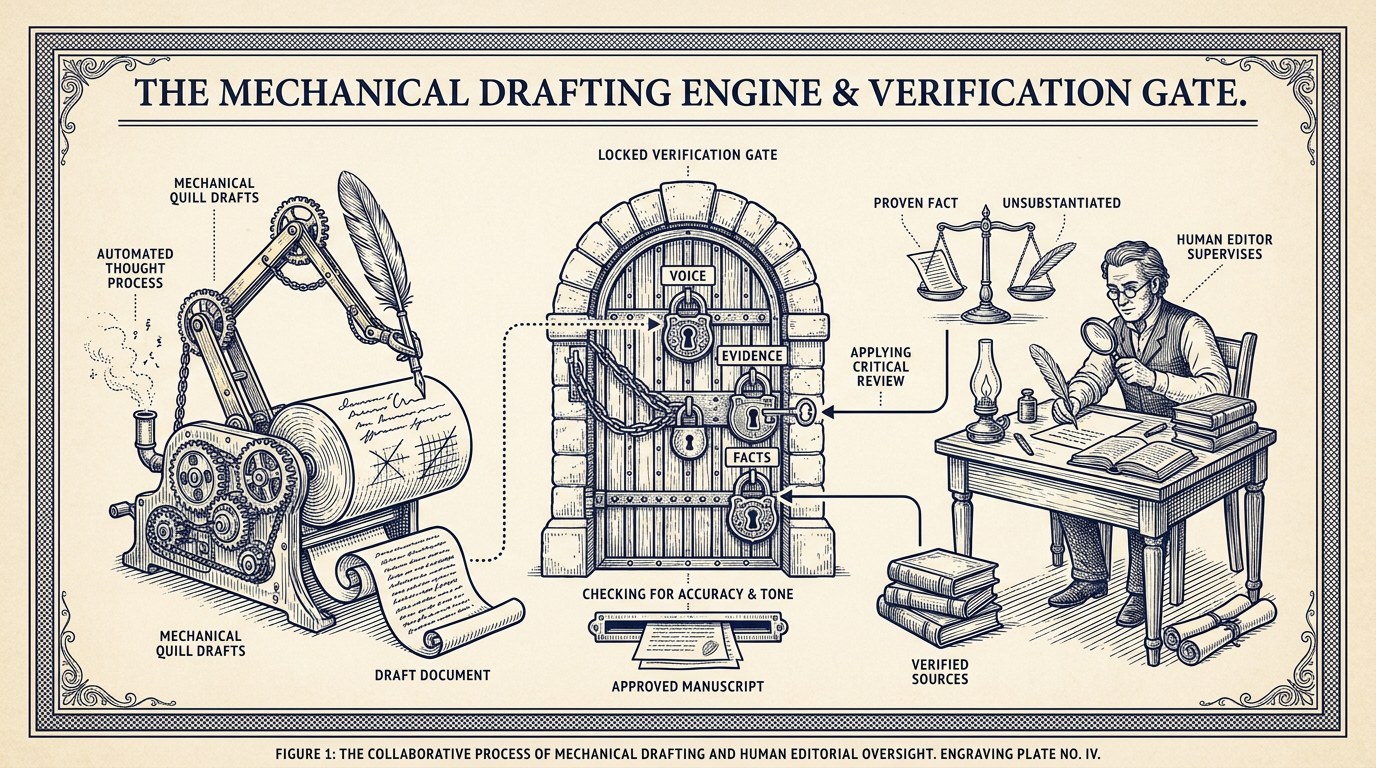
The workflow that works has five steps and one verification gate. Step 1: human writes the production-ready brief (six elements per our standard process). Step 2: AI generates an H2 outline against the brief. Editor reviews and adjusts. Step 3: human conducts the SME interview, no AI substitute, transcript captured. Step 4: human drafts the body, pulling SME quotes verbatim, using AI for transitions and polish only. Step 5: verification pass against every citation, every customer example, every specific number.
The verification gate sits at step 5 and catches the fabricated-attribution failure mode. Nothing publishes without verification. The cost is roughly 15 minutes per piece. The benefit is no embarrassments shipped to the live site.
05The verification discipline
Verification is the difference between AI-assisted writing that compounds trust and AI-assisted writing that erodes it. Every citation in the draft gets a manual click-through: does the linked URL actually contain the claim being attributed to it. Every specific number gets a primary source check. Every customer example gets an SME confirmation that the scenario is real.
Tooling helps. Anthropic's Citations feature on the Claude API grounds model output in user-provided source documents with sentence-level traceability, which is the architectural pattern that makes AI-assisted citations verifiable rather than fabricated. Teams using this kind of grounding produce different content than teams using unconstrained generation. The verification gate still applies, but it catches less because the upstream tooling is sound.
Without verification discipline, AI-assisted writing produces fabricated attribution as a baseline behavior. With it, AI-assisted writing produces verified output faster than human-only workflows. The discipline is the difference, not the model choice.
06Google's position on AI content (and what it means)
Google's evaluation of AI-generated content has been consistent and well-documented. Google's guidance on creating helpful, reliable, people-first content explicitly states that the evaluation is the same regardless of authorship. Helpful content ranks. Content that fails the helpful-content evaluation does not, whether produced by AI or humans.
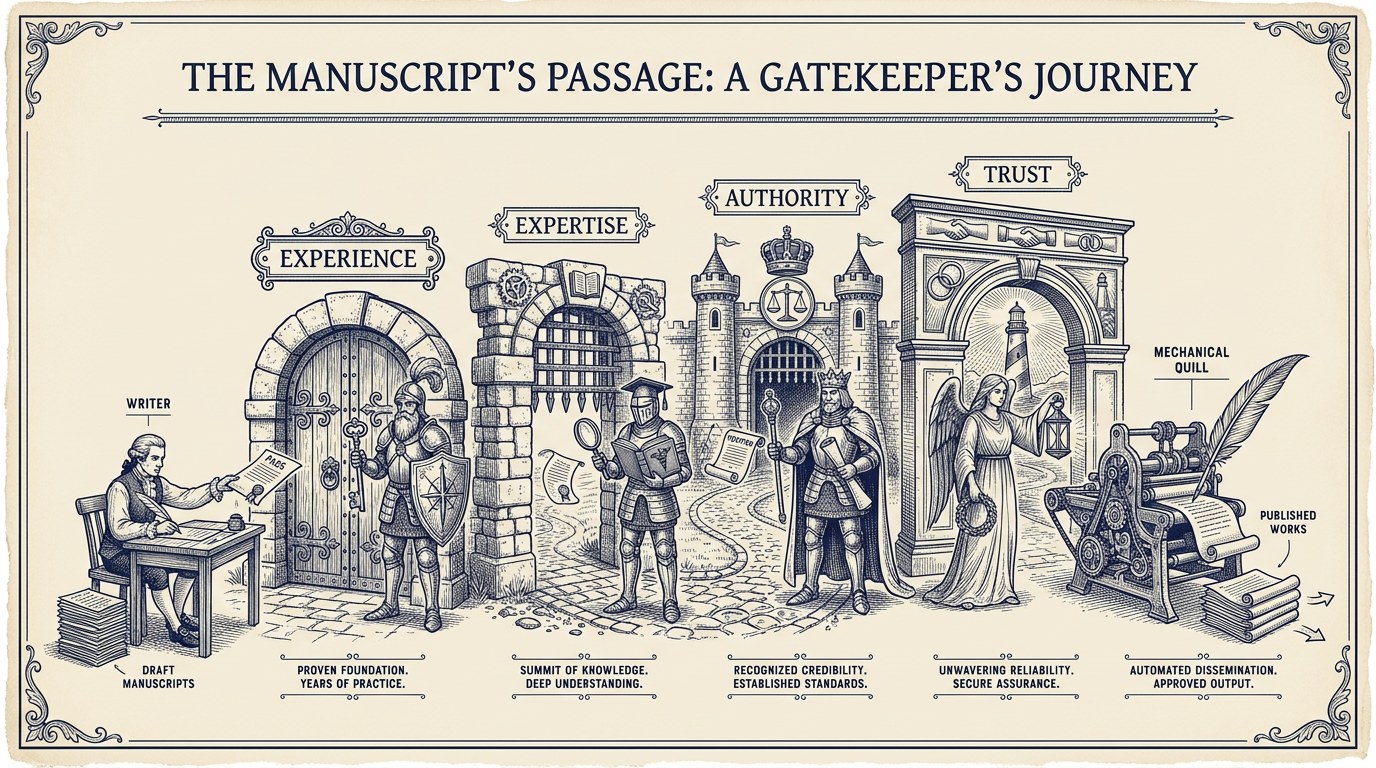
What this means operationally: the question is not "is this AI or human." The question is "does this demonstrate Experience, Expertise, Authoritativeness, and Trustworthiness." AI-assisted workflows that include real SME interviews, verified citations, and operator-grade angles can clear that bar. AI-only workflows that skip those phases cannot.
Schema.org's Article specification applies the same way: the publishing standards (author, datePublished, headline, articleBody) are the same regardless of how the content was produced. AI-assisted content with proper schema, verified citations, and SME-grounded examples is indistinguishable from human-only content in evaluation terms.
07Cost economics: AI-assisted vs human-only
The cost math favors AI-assisted at scale, but only when process discipline is intact. A standard cluster post takes a human-only workflow roughly 12 to 16 hours from brief to publish. The same post in an AI-assisted workflow with full discipline takes 8 to 10 hours: the SME interview, drafting, and verification still take human time, but outlining, transitions, and polish compress.
At a cadence of 8 to 12 pieces per month, the difference compounds to 30 to 50 hours of capacity reclaimed monthly. That capacity goes to more pieces, deeper SME interviews on existing pieces, or distribution work. Teams that pocket the time savings without redirecting them produce no quality gain.
What kills the math: programs that skip the SME interview to "save cost." The output becomes generic, fails to rank or convert, and the program produces nothing. That's the most expensive failure mode, regardless of production cost per piece.
08Common failure modes and operational fixes
Four dominant failure patterns. The skip-the-SME failure: programs eliminate SME interviews to cut cost. Fix: SME interview is non-negotiable in the workflow. Cost savings come from AI compressing other phases, not from eliminating the SME phase.
The unverified-citation failure: AI fabricates plausible citations and they ship. Fix: verification gate at step 5, no exceptions.
The voice-flattening failure: AI polish removes the operator language captured in the SME interview. Fix: the writer pulls SME quotes verbatim, AI doesn't rewrite them.
The fancy-prompt failure: teams optimize prompts thinking that's where the value is. Fix: prompts matter at the margin. Workflow structure matters at the core. Get the structure right first.
If you want this running on your content program with the verification discipline intact, our content writing engagement covers the full workflow. Pricing for production scales is on our pricing page.
09FAQ
Should we just hire AI tools and skip the writers?
No. The phases where AI fails (SME interview, contrarian angle, specific examples, verification) are the phases that determine whether the content ranks and converts. Skipping writers means skipping those phases. The output is generic and doesn't perform.
What AI tools matter most?
The tooling choice matters less than the workflow. Any current foundation model handles outlining and polish well. What matters more is whether the model supports grounding (Claude's citations feature, retrieval-augmented patterns) and whether the workflow enforces verification. Those choices compound more than the model selection.
Does Google penalize AI-generated content?
No. Google penalizes content that fails the helpful-content evaluation. AI-generated content that demonstrates real expertise and value ranks. AI-generated content that doesn't fails, but human-generated content that doesn't fails the same way.
What's the biggest mistake teams make?
Trusting AI citations without verification. AI confidently fabricates source attributions that look real, link to real domains, and contain claims those domains don't actually publish. Without verification, this ships and damages credibility when readers click through.
How does this fit with the standard content writing process?
It is the standard process with AI inserted at specific phases. The brief, SME interview, and verification phases stay fully human. AI assists with outline, transitions, and polish. Read our content writing approach for the full process.
Sub-pillar
Content writing for B2B SaaS
This post belongs to our sub-pillar on content writing for B2B SaaS, which sits under our content marketing pillar. See the full system for SME-grounded writing, editorial workflow, and voice.