On this page
B2B SaaS sites with mature content engines have 200 to 1,000 pages. Internal linking at this scale is not "add a few links per article." It is an architectural decision that determines how PageRank flows through the site and which pages compete effectively for rankings. Programs that get internal linking right see 5 to 15 percent ranking lifts across their cluster within 90 days. Programs that neglect it watch their content rank 6 months slower than it should and never quite catch up.
This is the architectural model we use on every B2B SaaS engagement, the anchor text discipline that matters, and the diagnostic workflow for finding the isolated pages that are silently dragging your cluster down.
01The hub-and-spoke architecture
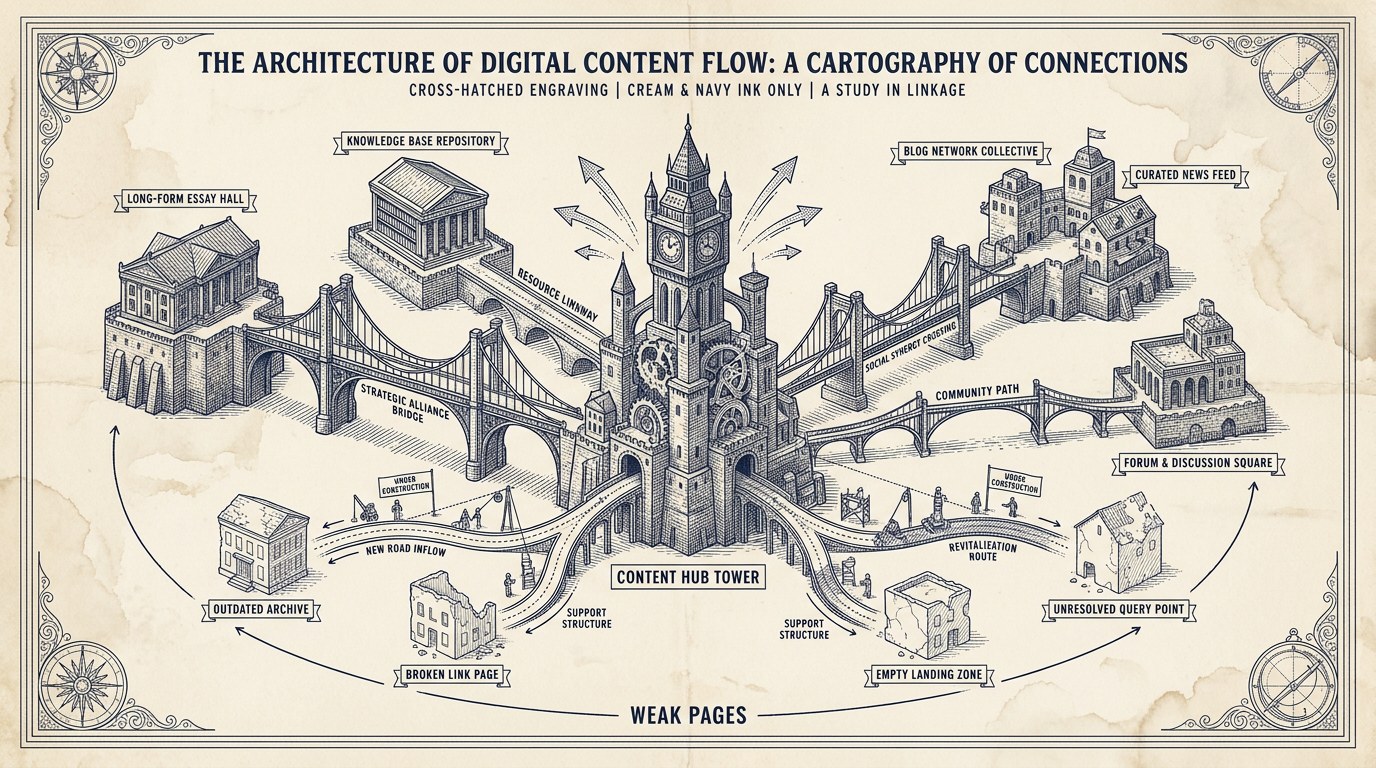
Internal linking on a B2B SaaS site with cluster architecture follows a hub-and-spoke pattern.
Master pillar (the hub)
The central authority page. Every sub-pillar links UP to it. Most service pages link to it. Industry pages link to it. The homepage may link to it. The master pillar should accumulate 50 to 150 internal links over 12 to 18 months.
Sub-pillars (the inner ring)
Each sub-pillar links UP to the master pillar (one strong link with descriptive anchor text). Each cluster post within the sub-pillar's cluster links UP to the sub-pillar. Sub-pillars receive 20 to 50 internal links each at maturity.
Cluster posts (the outer ring)
Each cluster post links UP to its parent sub-pillar (one link, descriptive anchor) and SIDEWAYS to 2 to 3 sibling cluster posts within the same cluster. Cluster posts receive 5 to 15 internal links each at maturity.
Service pages and industry pages
Link UP to the master pillar with descriptive anchor text. Link to relevant sub-pillars when methodology is referenced. Receive links from cluster posts that describe the work being done.
Case studies
Link UP to the master pillar and to the relevant sub-pillars whose methodology produced the case study results. Receive links from sub-pillars and cluster posts as proof points.
The pattern: every page in the cluster has a clear UP link, clear SIDEWAYS links, and explicit DOWN links from its parent. Bidirectional. Specific. Topical.
02Why the hub-and-spoke works
Three reasons.
PageRank flow
Internal links pass authority. The master pillar accumulates the most authority because it has the most internal links. Sub-pillars inherit a share. Cluster posts inherit a share of that. The result: every page in the cluster has more authority than it would as an isolated piece.
Topical authority signal
Google reads the bidirectional linking pattern as a signal that the site has comprehensive coverage of the topic. The master pillar's claim to rank for the head term is reinforced by the surrounding sub-pillars and cluster posts that all explicitly connect to it.
Crawl efficiency
Internal links are how Google discovers new pages. A new cluster post linked from three existing pages gets crawled within hours. A new cluster post linked from nothing gets crawled within days, sometimes weeks. The crawl efficiency directly affects how quickly new content can rank.
03Anchor text discipline
The anchor text used in internal links matters significantly. Three rules.
Descriptive over generic
"Click here" produces zero topical signal. "Learn more" is barely better. "B2B SaaS keyword research playbook" tells Google what the destination is about. Always use descriptive anchor text.
Vary, but stay topical
Three internal links to the same page with three different but topically related anchors is healthier than three links with identical exact-match anchors. Use variations: "B2B SaaS keyword research playbook," "the four-stage buyer intent framework," "how to find migration keywords." Each variation reinforces a different ranking dimension.
Avoid exact-match overuse
Linking to a page targeting "saas seo strategy" with the anchor "saas seo strategy" 50 times across the site looks like manipulation. Mix in branded anchors (if the page is named something specific), descriptive variations, and contextual phrases. Google's algorithm has been suspicious of exact-match anchor patterns since the Penguin update in 2012. Internal linking inherits some of that scrutiny.
04Body content vs footer vs navigation
Different placement, different weight.
Body content links
The strongest signal. Inline within paragraphs, surrounded by relevant context, with descriptive anchor text. The default for cluster relationships and methodology references.
Navigation links (header menu)
Strong signal but applies to every page on the site. Use the header navigation for top-level structure (services, industries, pricing, etc.). Do not stuff topic-cluster links into the header.
Footer links
Weaker signal than body content but stronger than zero. Use the footer for site-wide navigation, secondary brand pages, legal pages, social links. Some sites stuff every cluster page into the footer for "internal linking benefit." This produces minimal signal and can look like keyword stuffing.
Sidebar or related-content widgets
Variable strength. The "related posts" widget at the bottom of a blog post produces decent signal if the related posts are actually topically related (algorithmic) versus randomly related (template). Implement carefully or skip.
05The isolated pages problem
The biggest internal linking issue on B2B SaaS sites is pages with fewer than 3 internal inlinks. These pages are isolated. They will not rank well regardless of content quality.
The diagnostic, in Screaming Frog:
- Crawl the full site
- Open the "Internal" tab, filter to "Indexable"
- Sort by "Inlinks" column ascending
- Pages at the top of the list (lowest inlinks) are the isolated pages
What to do with isolated pages:
Option 1: Link to them more
If the page is genuinely useful and topically relevant, find 3 to 5 contextually relevant pages on the site that should link to it. Add those links with descriptive anchor text. Republish.
Option 2: Retire them
If the page is no longer useful or has no commercial relevance, 301 redirect to a more relevant page. Or 410 if there is no good redirect target.
Option 3: Accept they will not rank
For pages that are useful but tangential (legal pages, "About us," some FAQ pages), accept they will not rank and stop expecting them to.
Most B2B SaaS sites we audit have 15 to 40 percent of their pages in the "fewer than 3 inlinks" bucket. Fixing this is one of the highest-ROI technical SEO activities possible.
06The 4-hour audit
The full internal linking audit on a 200 to 500 page site takes 4 to 8 hours. The output is a remediation list and a 5 to 15 percent ranking lift within 90 days.
The workflow:
- Crawl with Screaming Frog (1 hour). Configure to follow internal links only, ignore parameters, exclude logged-in app pages.
- Identify isolated pages (30 minutes). Sort by inlinks ascending. List every page with fewer than 3 inlinks.
- Identify over-linked pages (30 minutes). Pages with 100+ inlinks are usually fine, but check for unintended over-linking on low-priority pages.
- Audit anchor text (1 hour). For the top 20 traffic pages, look at the anchor text of every internal link pointing to them. Are anchors descriptive? Varied? Topically relevant?
- Audit cluster bidirectionality (1 hour). For each sub-pillar, verify it links UP to the master pillar and DOWN to its cluster posts. For each cluster post, verify it links UP to its parent sub-pillar and SIDEWAYS to 2 to 3 siblings.
- Build remediation list (1 hour). For each issue identified, list the specific action: which page needs which link, with which anchor text, in which section.
- Implement (1 to 2 hours). Make the changes. Most can be done in CMS without engineering involvement.
- Monitor (90 days). Track ranking changes for the top 20 traffic pages and the cluster sub-pillars. Expect 5 to 15 percent ranking lifts within 90 days.
07Internal linking at scale
For B2B SaaS sites with 500+ pages, manual internal linking does not scale. Three approaches at scale.
Programmatic linking via templates
Cluster post templates that automatically include up-links to the parent sub-pillar and sideways links to sibling posts. Configured once, applies to every new cluster post.
Algorithmic related-content widgets
Templates that automatically link to related content based on shared tags, categories, or topical similarity. Useful but requires good metadata.
Periodic audit and refresh
Even with programmatic and algorithmic linking, manual audits every 6 months catch drift, gaps, and over-linking that automated systems miss.
Most B2B SaaS sites at 500+ pages need a combination of all three. Programmatic linking handles the bulk. Algorithmic widgets handle the discovery edge cases. Periodic manual audits catch what slips through.
08Part of a larger technical playbook
For the full B2B SaaS technical SEO process, see our B2B SaaS technical SEO checklist. For related deep dives, see Subdomain vs subfolder for B2B SaaS docs and blog and Schema markup for B2B SaaS.
Where this fits in the broader playbook
This piece sits inside the engineering-aware technical SEO playbook, which is one chapter of the B2B SaaS SEO pillar covering the complete discipline. For deeper framing on the same discipline, see our B2B SaaS technical SEO framework.
Closely related reading from the same sub-pillar
- the JSON-LD playbook , how schema and internal linking compound.
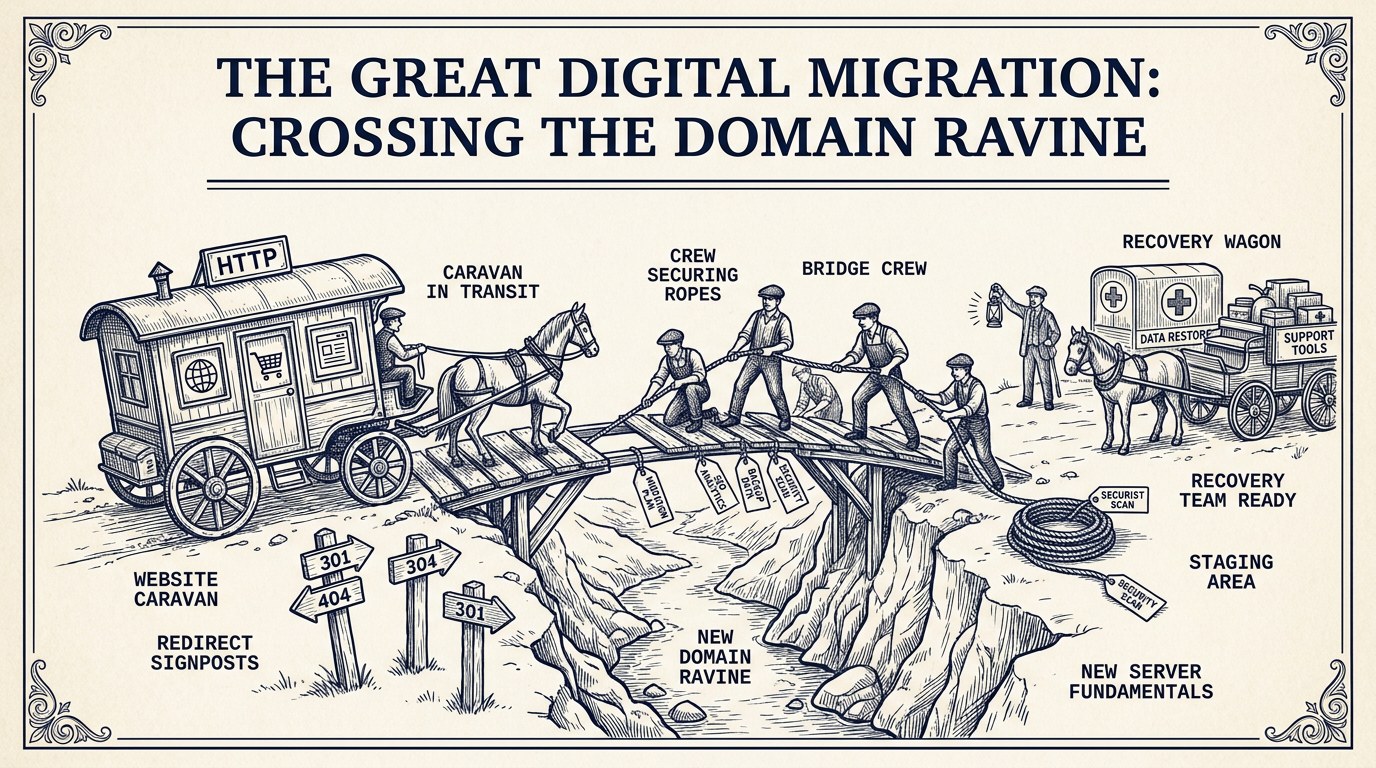
- the migration playbook , preserving internal-link equity through migration.
- the subdomain/subfolder decision , how site architecture shapes internal linking.
From other corners of the program
- our link insertion playbook , the cross-cluster discipline that compounds this work.
- the operator framework on B2B SaaS link building , the upstream pillar this connects to.
When you're ready to put this into a program, set up a working session or see how we structure pricing. Average response time: under 4 business hours.